
Tanzania is building sustainable cassava-seed systems for high-quality seed through cassava seed entrepreneurs. However, women are often shut out of such business opportunities due to their lack of land, capital, and social norms that limit their mobility and literacy.
A project designed to consider women’s needs has overcome some barriers by modifying the selection requirements for cassava seed entrepreneurs (CSEs) and providing targeted support.
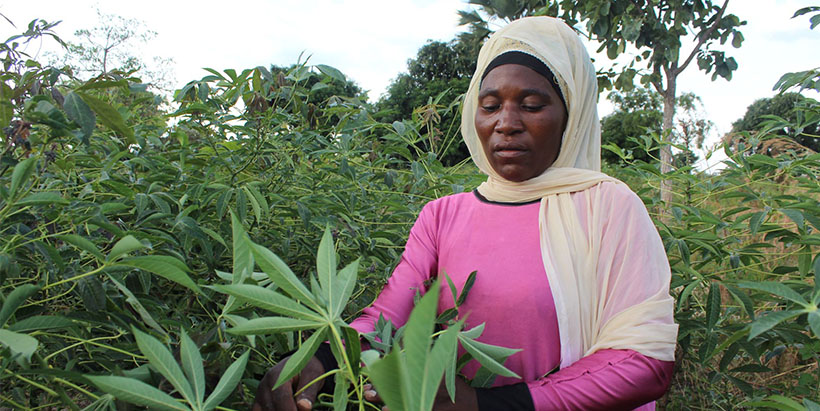
Saada Mkuyu – a 47-year-old farmer from Ulasa, Urambo district, Tabora region – is among the farmers who received knowledge, extension support, and cassava seeds as start-up capital from the project to become a CSE.
“My cassava seed business has changed my life; it makes me walk confidently,” she said. “I can provide for my family with food and household needs from my cassava ‘shop’ [farm],” she added with a big smile.
The International Institute of Tropical Agriculture (IITA) collaborated with the Tanzania Agricultural Research Institute (TARI), and Cornell University to work on the Muhogo Bora project.
IITA gender researcher in cassava Dr Millicent Liani, said that the modified CSE requirements focused on enhancing gender responsiveness in the project by improving the ‘reach’ of women and other disadvantaged groups. The new requirements have been implemented in 19 districts across four regions of Tanzania’s Western and central zones.
“Our early cassava study highlighted women’s lack of land, capital, and inability to meet the prerequisite isolation distance for seed production, among other challenges for women participating in the CSEs,” Dr Liani said. “This project aimed to increase women’s participation as CSEs. This was achieved by amending the selection requirements.”
The focus on women has positioned the Muhogo Bora project as a trailblazer and inspiration for root and tuber CSE projects in sub-Saharan Africa – the project serves as a model for inclusive and equitable seed-system development.
Other than intentionally modifying CSE selection requirements, strategies included providing support systems and addressing participation barriers such as lack of access to childcare or increasing awareness about savings and loan programs. The project is also developing new avenues to deliver planting materials to hard-to-reach rural areas to encourage women’s participation.
Saada said that she knew only about traditional cassava farming before the project, which she learned from her late parents. She was unaware that cassava farming had improved varieties and that cassava seeds were a business.
“When I started cassava seed farming, people laughed at me. They said I made a wrong move to opt for cassava against tobacco,” she said.
Saada is now happy with her choice of having a cassava seed business. The business has brought her increased income and surplus food. It has also saved her from tedious hours of tobacco farming, which requires much more care to reach the standard for accepted products.
About 1,200 CSE household members, including women, men, and their children, stand to benefit directly from this project, a potential to reach more than 3,500 rural farmers as customers.
Florentine Mkenda, the head of the agriculture section in the Urambo district, noted that the initiative to increase women’s participation has significantly benefitted families and communities.
“Women are very committed to their businesses; they manage to increase their income, and they contribute to increasing the availability of the improved seeds in the community,” explained Mkenda.
Collaboration and support from communities and spouses are key factors for women’s sustainability as CSEs because men are the decision-makers in most households, although women implement most of the agreed-upon agricultural decisions.
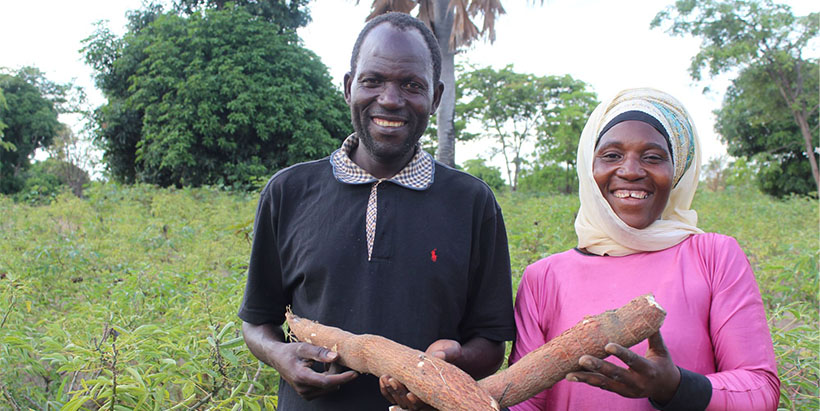
“I support my wife because she respected me by informing me of her intention to participate in the project. I had no objection to her advancing her knowledge for our family development, which was provided for free,” Saada’s husband, Ruhinda Ruhinda, explained.
The couple’s collaboration has expanded their cassava seed farm from two to five acres. In the upcoming planting season, they expect buyers of the improved varieties from their community and the surrounding areas.
The support Ruhinda gives to his wife conveys that breaking through the hard walls of cultural norms and tradition demands the presence of a male spouse in women’s issues. This ensures they do not feel attacked and excluded by initiatives that improve their wives’ welfare.
Contributed by Gloriana Ndibalema
Contributed by
Recent stories