
IITA has taken another step in implementing a circular economy within the Institute by launching two biogas installations for power generation and waste management. The IITA Youth in Sustainable Waste Eco-Recycling Program (IITA Y-SWEP), under the supervision of Deputy Head of Facility Management Services Martins Akeredolu, on 19 January inaugurated the Anaerobic Digestion Biogas Installations on the IITA campus in Ibadan, Nigeria.
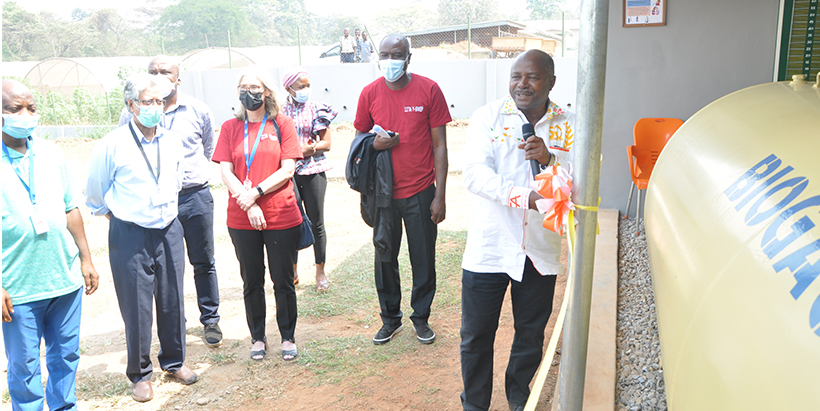
IITA Director General Dr Nteranya Sanginga presided over the official ribbon-cutting ceremony attended by senior management personnel and external project partners.
In her opening remarks, an enthusiastic Deputy Director General for Corporate Services, Hilde Koper, hailed the initiative, providing the general IITA Staff Canteen and Cappa Canteen with energy supply for cooking. She noted that these biogas installations are small steps to help IITA become greener, adding to earlier efforts, including installing solar panels for electricity, solar streetlights, and a waste separation system.
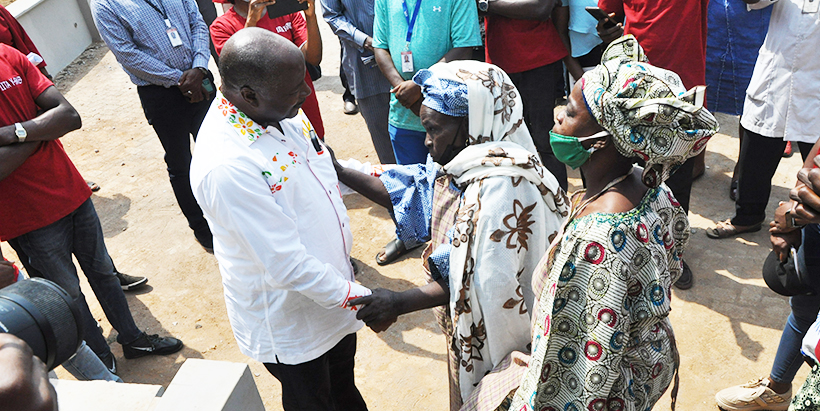
“We started the separation of waste in 2019, and we can use the biodegradable waste to keep filling both of these installations,” she said. Koper encouraged everyone to embrace the plan of collecting biodegradable waste such as the fallen leaves on the campus and crop residues, including maize husks and cassava peels. “They can all help with keeping these biogas installations going,” she concluded.
Rehashing the origin and importance of the biogas project, Akeredolu cited the nuisance of unused waste in sub-Saharan Africa as an opportunity for which the biogas initiative is a pilot. He hoped that the project would provide a cost-effective alternative to environmental hazards, including deforestation for firewood and poor household and industrial waste management, including endemic postharvest waste.
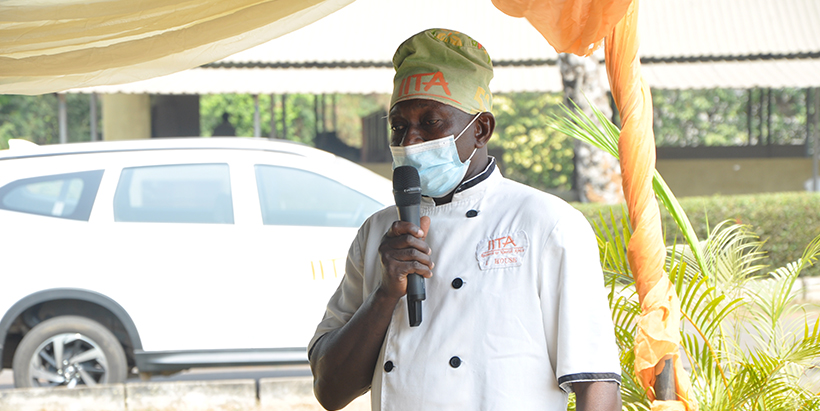
The IITA Y-SWEP Team Lead Oluwole Ijiti highlighted a promise that DG Sanginga made to the operators of the Cappa Canteen to provide a viable alternative to cooking with firewood. “Sir, I am proud to let you know that the promise you made to them on 21 January 2021 has been fulfilled today,” he announced.
Ijiti also noted that since the initiative produces biogas and biofertilizer, it is a gateway to further research opportunities for IITA mandate crops and fertilizers.
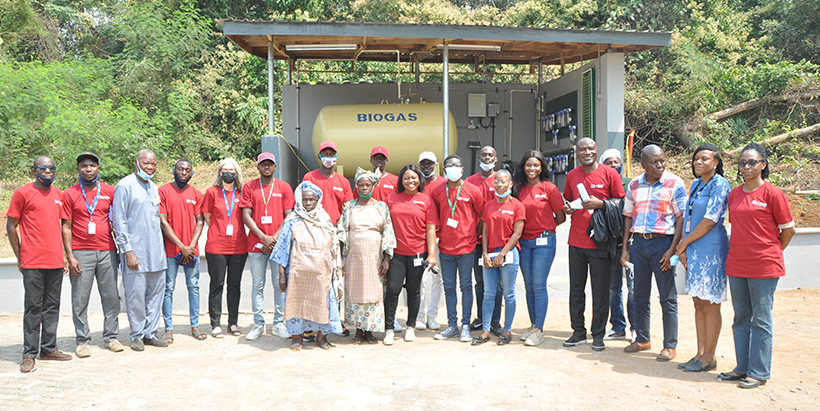
Appreciative staff from the canteen hailed the project team for helping them transition from the challenging and hazardous firewood stoves to the greener and more cost-effective biogas cooking method.
DG Sanginga lauded the project team and the result of their long-awaited biogas installations; two biodigesters for the Staff Canteen (20 m3 and 147 m3 biodigesters) and a 50 m3 biodigester for the Cappa Canteen. He encouraged the team to begin considering opportunities to scale the initiative to the external community, such as power generation and waste management for community markets and abattoirs. He promised to support their scaling efforts, starting in Oyo State, and hoped to see this sustainable energy and waste management solution exported to other parts of sub-Saharan Africa and other regions.
Contributed by
Recent stories