
The World Bank Country Director for Nigeria, Dr Shubham Chaudhuri, paid a courtesy visit to IITA–CGIAR Headquarters and met with the Director General, Dr Simeon Ehui, on 17 August. His visit aimed at learning about the existing agricultural innovations at the Institute and exploring scaling up these technologies with private sector involvement.

Chaudhuri congratulated DG Ehui on assuming the office of IITA Director General and CGIAR Continental Director for Africa.
He highlighted a major concern about ensuring that innovations reach farmers across the continent. He expressed his delight in scaling innovations through research and technology to ensure they reach smallholder farmers and improve their livelihoods, particularly for smallholder farmers in sub-Saharan Africa.
Following the point of discussion, he stated that partnerships with the private sector are the major way to scale innovations. In addition, IITA Business Incubation Platform (IITA-BIP) CEO Adebowale Akande said support strategies should be provided for the private sector to be engaged. IITA Molecular Geneticist Rabbi Ismail mentioned that there should be business orientation of the improved vegetative and clonal crops.
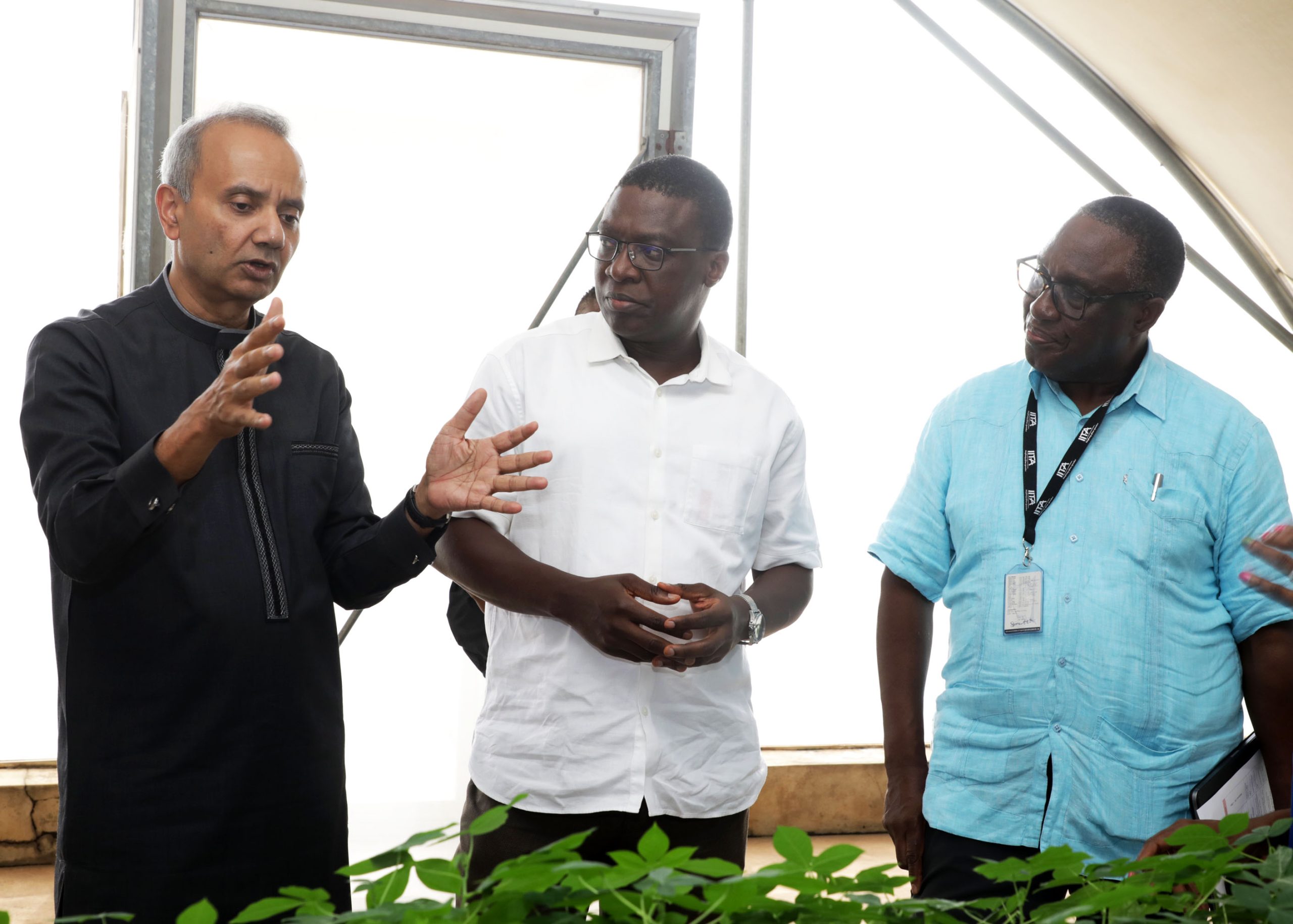
According to Chaudhuri, scaling innovation would create opportunities for the private sector and make improved crop varieties available to the end-users through existing channels of distribution.
Chaudhuri and the IITA Senior Management Team toured IITA’s facilities, including the Genetic Resources Center (GRC), Semi-Autotrophic Hydroponics (SAH), BIP, and Cassava Processing and Utilization Units.
At IITA-BIP, Akande highlighted the unit’s activities, sharing some success stories and companies that have adopted the technologies through partnerships such as Unilever, Sultry Farms, and Flour Mills.
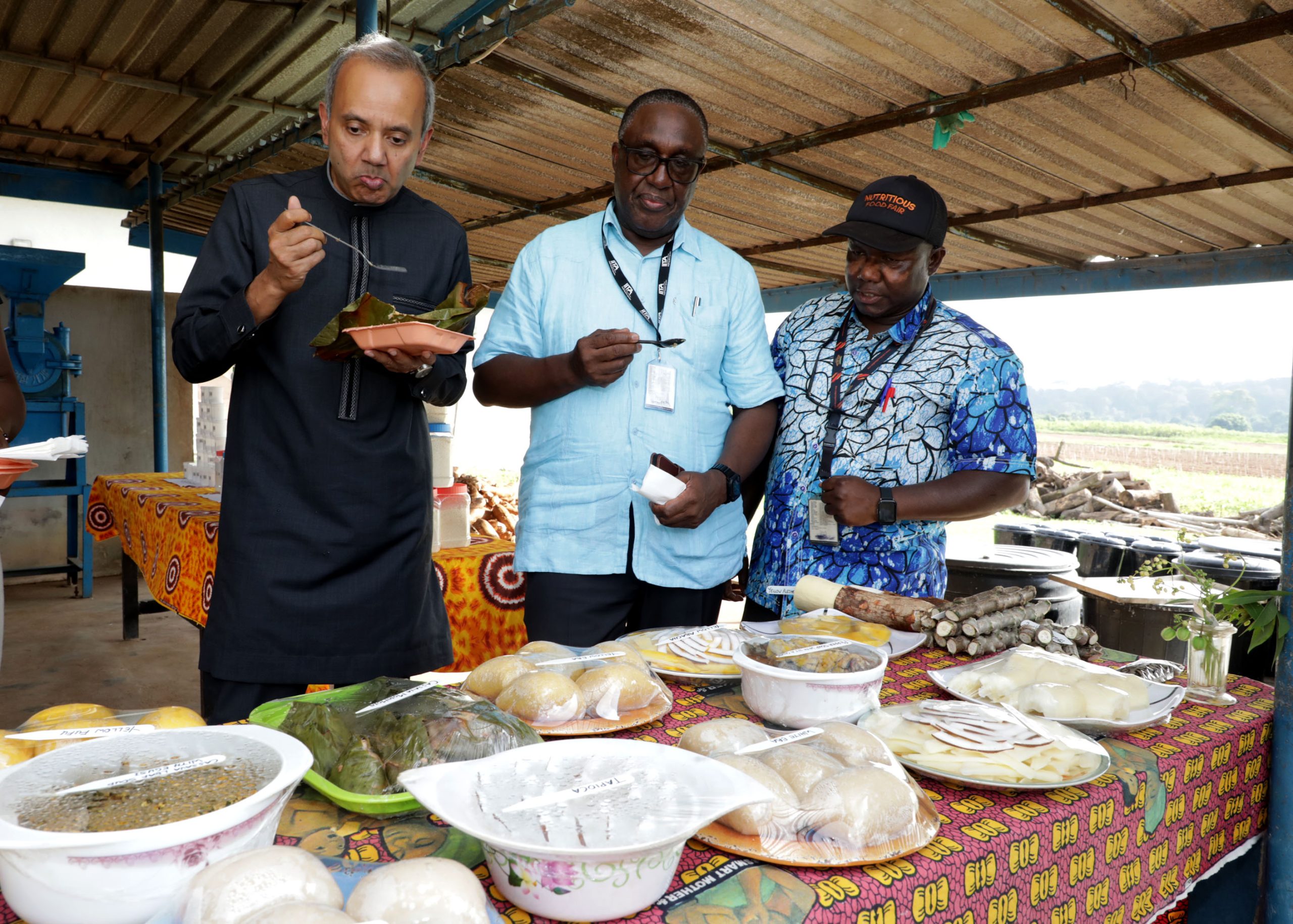
Wrapping up the visit, the World Bank Country Director was astonished by IITA-BIP, which has helped push out innovations to and through the business world by hands-on demonstration to the private organizations. He added that the technologies are commercially viable and have the potential to raise farmer’s income in sub-Saharan Africa.
Contributed by Anita Akinyomade
Contributed by
Recent stories