
IITA partners with GCA for phase two of the SAPZ project in Nigeria
15 August 2025
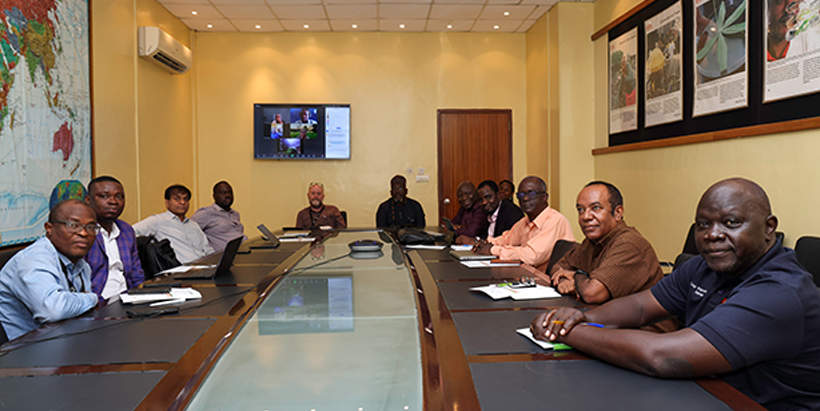
As part of the mission dedicated to championing climate-resilient agri-food systems and ensuring food security for millions of farm families in sub-Saharan Africa, IITA–CGIAR is partnering with the Global Center on Adaptation (GCA) to provide technical assistance for phase two of the Special Agro-Industrial Processing Zones (SAPZ) project in Anambra, Ekiti, and Niger states in Nigeria.
A two-day preparatory workshop was held from 11 to 12 August at IITA Headquarters, Ibadan, to kick-start this collaboration. The session brought together GCA and IITA scientists to the project’s implementation strategies in-depth. The GCA Global Program Lead, Oluyede Ajayi, and Food Security Specialist, Oluwabunmi Ajilore, attended in person, while stakeholders from the three target states joined virtually.
In his welcome address, the IITA Director for West Africa, Michael Abberton, emphasized that climate resilience and plant health remain central to IITA’s research agenda. He added that the Institute is delighted to engage in discussions that will shape agricultural transformation in the participating states.
Delivering the opening remarks, Deputy Director General, Partnerships for Delivery, Tahirou Abdoulaye, described the SAPZ project as a strategic intervention for advancing agricultural change in Nigeria. He reaffirmed IITA’s commitment to the partnership, noting that “collaboration in this project provides an opportunity for change” and improved livelihoods across Africa.
The second phase of the SAPZ project focuses on three key components – Digital soil health and facility mapping, digitalization of seed supply and distribution systems, and capacity building for climate-resilient foundation seed production.
IITA scientists showcased a range of climate-adaptive solutions and technical innovations tailored to the needs of Anambra, Ekiti, and Niger States. Presentations highlighted IITA’s digital tools, seed quality assurance systems, and laboratory services. Notably, Lava Kumar, Head of IITA’s Virology and Germplasm Health Unit, discussed digital solutions for seed quality management.
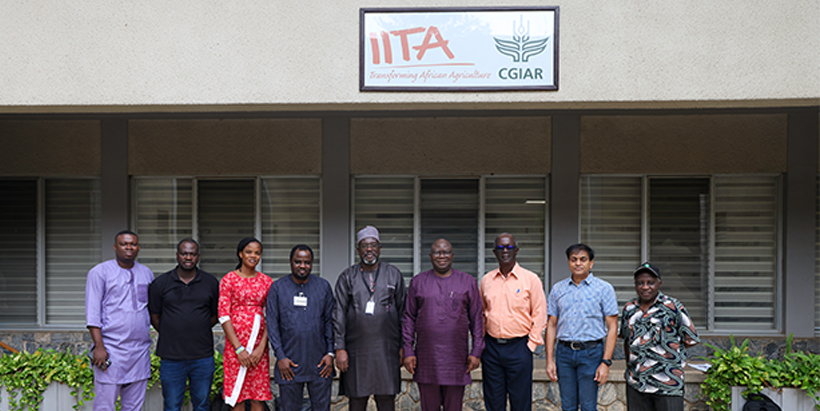
Simultaneously, the IITA Analytics Services Laboratory Manager, Joseph Uponi, detailed the laboratory support available to strengthen agricultural value chains. Representatives from IITA’s Project Development and Administration Unit (PDAU) and the Finance Directorate also outlined their roles in supporting the project’s success.
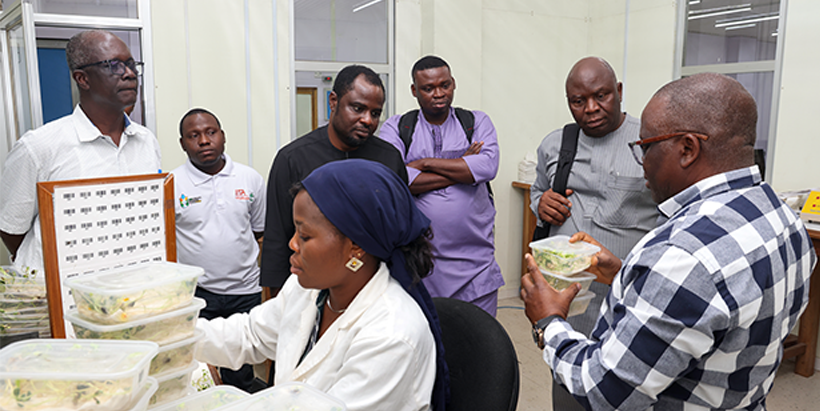
Following the workshop, GCA delegates toured several of IITA’s research facilities, including the Virology Laboratory, Gene Bank, Nodumax, Semi-Autotropic Hydroponics facility, and the Aflasafe production plant. The visit offered firsthand insight into IITA’s research capacity and potential impact on agricultural transformation.
The workshop concluded with a strategic meeting between the GCA team and IITA management to agree on next steps, reaffirming both organizations’ shared commitment to fostering climate resilience, agricultural productivity, and improved livelihoods in Nigeria.
Contributed by Ochuwa Favour Daramola
