Food and nutrition insecurity is a major challenge facing the global community. To fill the food and nutrition security gap in a world with a population predicted to exceed 9 billion by 2050, IITA-CGIAR is focused on generating agricultural innovations that contribute to food and nutrition security.

Nutrition insecurity in the developing world has been linked to the high cost of protein foods and the low nutritional quality of some of the traditional foods that provide daily meals for millions in Africa. Fortified foods are not readily available for most families due to the high poverty level.
One of the crops that fit the bill for adequate nutrient and mineral composition and can help eradicate food and nutritional insecurity if adopted into the major food systems is the Bambara groundnut (BGN).
There is a significant variation in nutrient and antinutrient factors among Bambara groundnut accessions. A study was carried out by scientists from IITA and North-West University, South Africa, to show the degree of variability of nutrient and antinutrient components such as percentage ash, moisture, protein, fat, tryptophan, tannin, and phytate content in seeds of 95 accessions.
Due to its high protein and fiber content and a good balance of essential amino acids, the Bambara groundnut is considered a complete food, an excellent alternative to meat, and an ideal component for animal feed.
The study showed that the two traits—carbohydrates and tryptophan—are high in more than half of the accessions, while the others have high amounts of the remaining traits, including the antinutrient factors.
According to the study, tryptophan is a precursor of auxin—an essential growth hormone in plants—and bioactive compounds such as nicotinamide, melatonin, and kynurenine in humans.
The level of tryptophan recorded in the study shows that Bambara groundnut can help get the quantity of tryptophan recommended by the World Health Organization (WHO), which is 1.70, 0.85, and 0.66 for infants, children, and adolescents, respectively.
During the research, clustering was done to show the relatedness between the accessions in response to the various traits. While cluster analysis grouped accessions into four main clusters, high heterogeneity was observed among the accessions for the various traits studied.
This study confirmed the high diversity in the components of nutrients and antinutrients previously reported in BGN.
Results from the study will aid in identifying parent lines for improved breeding programs and offer opportunities for selecting and breeding the crop for beneficial nutrient compositions.
While legumes have become immensely important as alternative sources to nutrient fortified foods, BGN can successfully improve food and nutritional security even more than some major crops in Africa.
Contributed by Timilehin Osunde
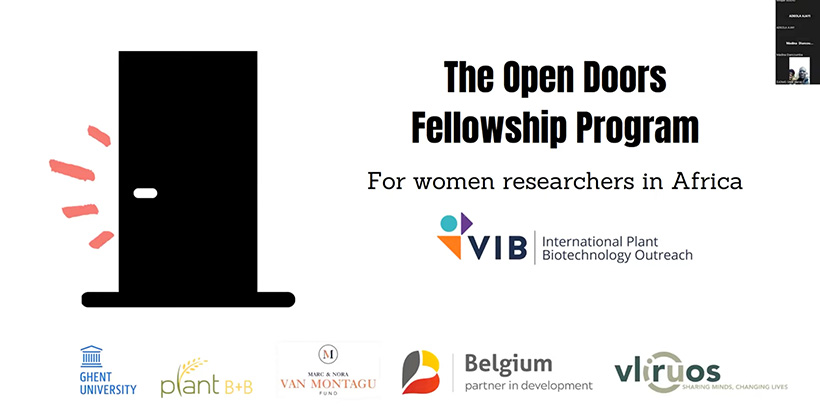 The Open Doors Fellowship Program is a 20-month training and mentoring program split into two phases of an initial 3-month research stage in Belgium, and a second phase that lasts 17 months. During the program, Fellows are given incentives that support their research work at their duty stations, and are exposed to peer support and mentoring network.