Youth migration from rural to urban areas is often attributed to a lack of employment in the rural areas. Statistically, more youth crowd up the cities searching for better opportunities, and those who stay back may find opportunities for income and livelihood in excess. In Kyotera District, Uganda, just like in many other countries, this is the case.
 

Trainees
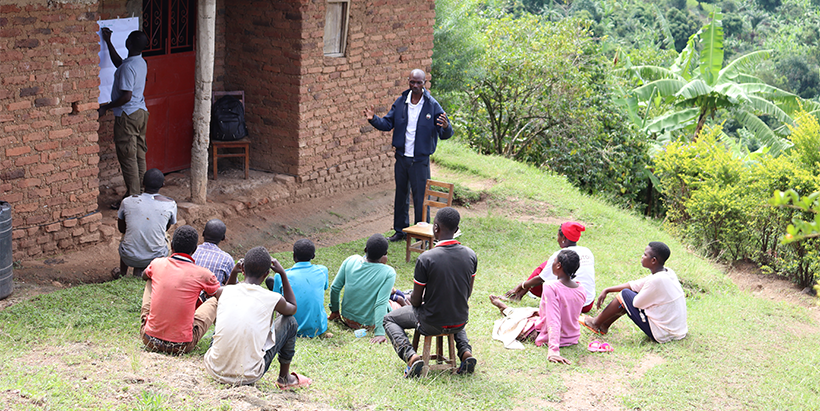
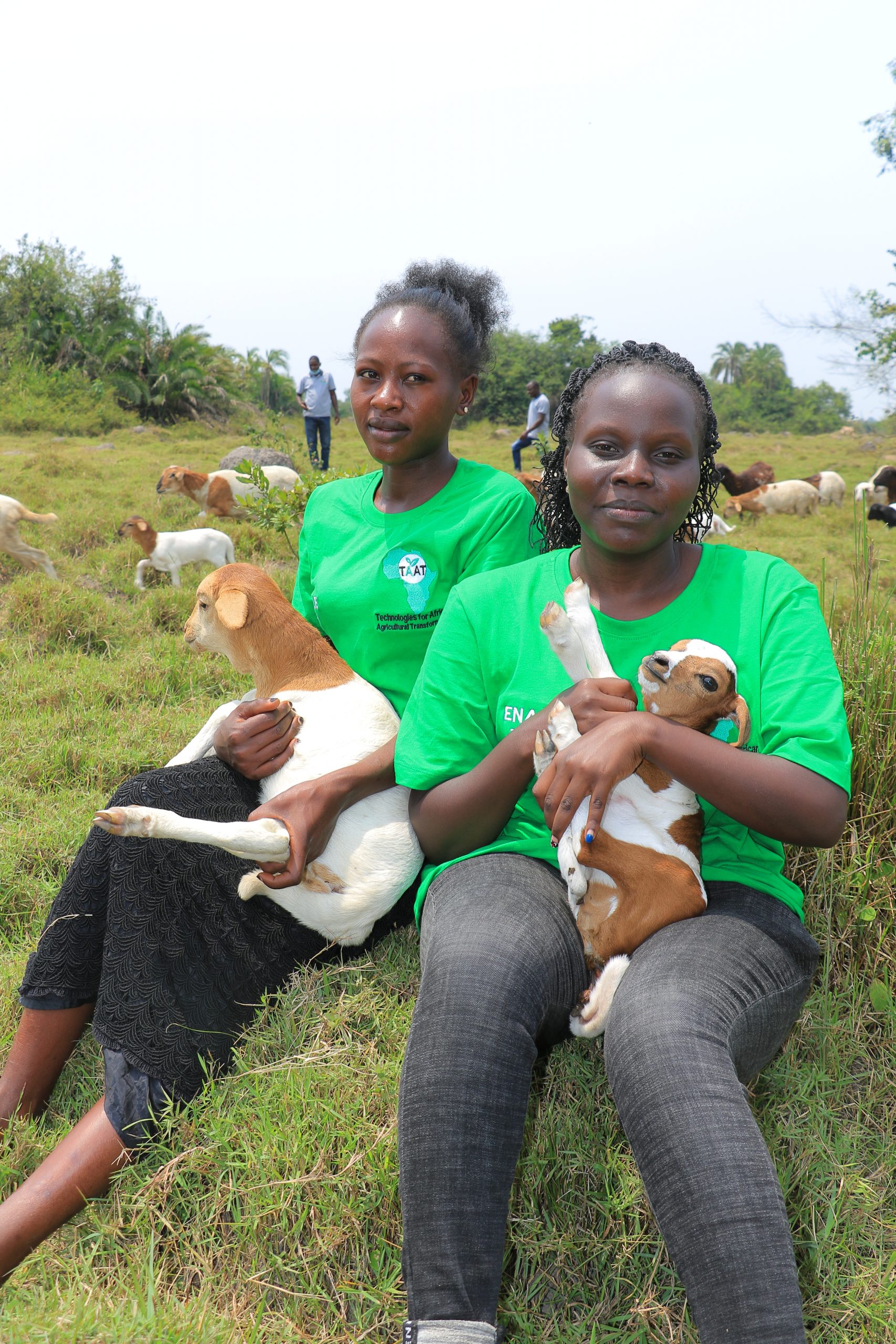
ENABLE-TAAT livestock training participants, Diana and Sumaiya from Rakai, in Kyotera District, Uganda.

In 2020, Diana Nikum and Sumaiah Nakate were caught up in the COVID-19 pandemic-induced lockdown that caused many schools and organizations to shut down. They took the opportunity to participate in livestock training through the youth compact of the Technologies for African Agricultural Transformation (TAAT) project.

After the training, both ladies purchased five exotic breed sheep. They herded the sheep on a massive expanse of land abandoned by those who went to cities searching for opportunities.

Eight months later, they had grown their enterprise from five to 105 sheep, with a projection to have up to 130 sheep before the end of the year. With very minimal input, both ladies are running a profitable business. “There is so much grass around for the sheep to eat, and we get free vaccines from other herders in the community,” Diana said during an interview. The ladies have the vision to diversify into value addition as the enterprise expands further.

Apart from the technical training, the youth compact, also known as ENABLE-TAAT, also renders business development services. Diana and Sumaiah have now developed their business plan and have received funding from Equity Bank Uganda to expand the enterprise.

Sponsored by the African Development Bank (AfDB) as part of its Feed Africa Initiative, TAAT’s main objective is to improve the business of agriculture across Africa by raising agricultural productivity, mitigating risks, and promoting diversification and processing in 18 agricultural value chains within eight priority intervention areas.

Led by IITA, ENABLE-TAAT provides capacity building and technical assistance to establish and expand youth-led agribusiness enterprises along TAAT value chains, such as high iron beans, cassava, fish, maize, small livestock, rice, and orange-fleshed sweet potato.
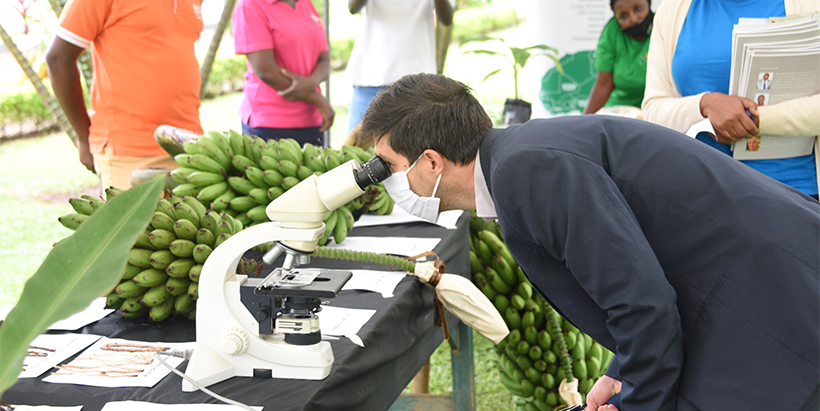
His Excellency Rudi Veestraeten, the Belgian Ambassador to Uganda, visited the IITA-Uganda substation at Sendusu on 30 October. The Ambassador was accompanied by the Deputy Head of Mission and Head of Belgian Development Cooperation, Mr Koen Van Acoleyen.

The Belgian Ambassador to Uganda commends IITA’s efforts to transform the agriculture sector

Showcasing IITA’s banana research to the Deputy Head of Mission and Head of Belgian Development Cooperation, Mr Koen Van Acoleyen during the tour of IITA-Uganda substation at Sendusu.

The visit was on the invitation of Rony Swennen, IITA’s senior banana breeder. The Ambassador and his deputy were received by the banana and cassava breeding and research teams, the IITA Youth Agripreneurs, and Dr Chris Omongo, who was representing the Director of the National Crop Resources Research Institute (NaCRRI), the institute of the National Agricultural Research Organisation (NARO) that hosts IITA Sendusu.

During the half-day visit, the IITA research team showcased efforts by IITA and partners to improve livelihoods, enhance food and nutrition security, increase employment, and preserve natural resource integrity in sub-Saharan Africa. This was done through a presentation, an exhibition of the banana and cassava breeding programs and the Ugandan Youth Agripreneurs, and a tour of the laboratories and fields.

IITA team exhibiting the Institute’s research to Ambassador Rudi Veestraeten and Deputy Head of Mission, Mr Koen Van Acoleyen, during the tour.

The banana and cassava breeding programs gave the visitors a visual walkthrough of the importance of the two crops as the primary staple foods in Uganda and the region, the production constraints, the breeding goals, the breeding process, and the milestones achieved since the start of IITA-Uganda in 1992. The Agripreneurs showed the visitors some of their products, such as the orange-fleshed sweet potato flour, which is popular with children as a good source of vitamin A.

The visit ended with a meeting with the IITA staff in Sendusu, where the Ambassador commended the IITA Youth program as a good way to encourage the youth to join the agricultural sector. ”I saw this program on youth, where you teach them not only to grow these crops but also to sell and process them into various products,” the Ambassador said while addressing staff at Sendusu station.

Prof Rony Swennen explaining IITA banana research to H.E. Rudi Veestraeten and Deputy Head of Mission, Mr Koen Van Acoleyen, as they toured the Institute’s laboratories at Sendusu

The Ambassador encouraged the youth to venture into value addition and processing of agricultural products such as coffee but emphasized skills development and experience sharing. He noted that, although 85% of Ugandans are involved in agriculture, the vast majority are still practicing rudimentary forms of farming that have spanned generations. Also, one of the effects of COVID-19 is that many people have left cities, where they earned their living, to return to their small farms for survival. The Ambassador promised to support IITA-Uganda in its mission in the region.

ENABLE-TAAT has organized an in-depth mentorship and capacity development exercise benefitting 75 youth in Kalangala, Uganda. Many of the beneficiaries are enterprise owners at different levels in various value chains. The learning exercise aimed to inspire the youth to generate income through the various food commodities available under the Technologies for African Agricultural Transformation (TAAT) program. They would afterward scale their ideas, dreams, and businesses across Africa’s agricultural sector.

Field activities during training in Kalangala.

This interaction covered seed multiplication, seed bulking, the practice of proper agronomic methods, and integrated pest and disease control management, with which the participants were already involved. However, many beneficiaries were more excited about value-addition activities such as baking donuts, daddies, crisps, and chapati using orange-fleshed sweet potato (OFSP). The prospect of making huge profits through value-added products increased the participants’ enthusiasm.

Participants in a breakout session discussing preferred commodities.

They also learned to process sweet potato roots and vines into animal feed, usually discarded in farms. A few of them who have been practicing value addition were asked to share their success stories to motivate the participants.

The exercise concluded with participants learning to develop business plans for their agribusiness ventures. They created marketable ideas to address community challenges such as nutrition benefits and health values, processing, marketing strategies, and attitude changes, among others.

ENABLE-TAAT continues to provide mentorship for all the beneficiaries and facilitating linkage to funding using their business plans.

In Uganda, the GIZ Employment and Skills for Development in Africa (E4D) program partnered with IITA-Uganda and Olam Food Ingredients (OFI) to improve the livelihoods of 5,000 coffee farmers in the Mount Elgon region of the country. Instead of blanket support provided through traditional service delivery models, the partnership will co-design a suite of scientifically tested living income strategies tailored to the diverse needs of coffee farmers in Uganda.

The project, which started in February 2021 and will continue for two and a half years, aims to improve farmers’ livelihoods by enabling them to optimize their investment in coffee, earn more from other on-farm activities, and thus reduce the living income gap by 20 percent.

Smallholder Coffee farmer in Ugandan.

IITA-Uganda Climate-Smart Agriculture Team Lead Sarah Margiotta said, “IITA researchers will build on existing experience and data from Olam, IITA, GIZ, the LI Community of Practice (LI COP), and other publicly available information to determine specific farmer typologies within a sample set of 2,000 farming households in the OFI farmer network.”

In line with past research showing many variances between farmers, the project will conduct a farmer segmentation exercise to identify different clusters of farmers with similar characteristics. “By better understanding specific farmer characteristics, the private sector can more effectively target extension service delivery models,” Margiotta added.

The project implementers will identify, test, assess, measure, and apply the most efficient living income strategies for different farmer segments to reduce the living income gap and enable them to afford a decent standard of living for all members of their households.

“As the backbone of Uganda’s economy, the agriculture sector is critical to the country’s economic development, and this growth will be realized when smallholders increase their yields and incomes. By implementing this project, E4D contributes to the Ugandan Government’s target to increase coffee production from 4.6 million bags a year to 20 million bags a year by 2025,” said Donald Agaba, E4D Team Lead.

According to Yves-Pascal Suter, Senior Strategist, OFI Corporate Responsibility & Sustainability, the project will achieve this by considering the very diverse realities of farming households to provide tailored and specific advice and services. Working on the ground with the coffee farmers will illustrate the importance of looking at the farm as a whole, showcase the best pathways to improve the livelihoods of these families. It will also show how to exploit the potential synergies between crops and livestock and highlight the different existing resources and social structures.

“With OFI as a partner, the project will be looking at all this through an economic lens in terms of return-on-investment for the farmers. Crucially, this innovative project is also scalable and should help guide and inform further actions in the region, as well as globally,” Suter concluded.

The IITA Uganda Climate-Smart Agriculture (CSA) Team conducted focus group discussions with more than 150 smallholder coffee, vanilla, and cocoa farmers in Kasese district, western Uganda, last May.

The activity is part of a collaboration between the Sustainable Food LabUSAIDTouton, and IITA that brings together the private sector, agricultural researchers, and smallholder farmers to improve smallholder farmer livelihoods.

Kasese – about 370 kilometers west of Uganda’s capital city, Kampala – is located on the border between Uganda and the Democratic Republic of the Congo in the Rwenzori mountains. The mountain range includes Africa’s third highest glacial peak after Kilimanjaro and Mount Kenya – Mount Margherita which stands at 5,109 meters.  

Coffee has been grown in the Rwenzori region for generations. Top-quality Ugandan Arabica coffees are among some of the best in the world, according to Coffee Review. In 2018, it was estimated that only 12% of households in the Kasese landscape had electricity, 29% had piped water, and only 3% of households had modern toilet facilities. IITA and Touton are supporting farmers in this landscape to improve their livelihoods from diversified strategies.

The IITA research team and Touton.

The IITA research team and Touton field staff jointly conducted focus group discussions with subgroups of men, women, and youth in three subcounties (Kyondo, Kisinga, and Kyarumba). Meetings took place on the slopes of the mountains in churches, school rooms, and in homesteads hosted by the community. The community shared their experiences, challenges, and opportunities for improved livelihoods.

This engagement allows IITA and Touton to better understand the different experiences and perceptions of the farming community, with farmers speaking of their challenges in making a decent living from smallholder farming. Issues of land size, low productivity, lack of extension support and knowledge of good agronomical and climate-smart practices, were among some of the issues highlighted.

IITA’s David Mukasa, lead researcher, says: “There are a number of issues to address such as soil fertility, improved crop varieties, and improved knowledge of good agricultural and climate-smart practices. The IITA team will consolidate and analyze the data collected and recommend strategies to address the production constraints of the Rwenzori farmers.”

Faith Okiror, IITA Communications and Behavioral Change Expert conducted the women’s focus group discussions, said: “It is always exciting to interact with the women smallholder coffee farmers whose knowledge adds invaluable insight into the research conducted by IITA. Understanding the challenges and opportunities of the women farmers add context to the research findings.”

Women’s focus group discussions

The youth sub-group discussions were conducted by David Amwonya, the IITA Uganda Climate-Smart Agriculture Team Data Analyst. He said: “The focus group discussions will help us validate data collected by Touton in a household survey conducted with a sample of 357 farmers from the same groups.” David is leading the analysis of the data collected back in Kampala. Preliminary results will be further analyzed by the research team to identify actionable strategies that will contribute to improved farmer livelihoods in the region.

Touton and IITA are committed to continue to partner with Kasese’s smallholder coffee, vanilla, and cocoa farmers through their producer organizations in testing the co-developed strategies to improve the knowledge and capacity of the farmers for improved livelihoods and climate resilience in the region.

A study looking for additional sources of resistance to the deadly fungal disease of banana, black Sigatoka, has identified 11 new accessions that are potential sources of resistance to Pseudocercospora fijiensis. These accessions are from a collection of banana germplasm maintained by IITA at Sendusu, Wakiso District in Uganda. They can be used to broaden the current narrow genetic base for ongoing efforts to breed bananas with resistance to the disease.

Black Sigatoka, caused by P. fijiensis, is one of the most devastating banana diseases. In commercial banana-growing systems, black Sigatoka is primarily managed using fungicides. However, this method of controlling the disease is not feasible for resource-limited smallholder farmers. Therefore, developing banana varieties resistant to P. fijiensis remains one of the most effective ways to support smallholder farmers to protect their bananas, income, and food security.

Black Sigatoka is one of the most devastating banana diseases.

Currently, breeding banana resistant to P. fijiensis is dependent on a narrow gene pool of resistance genes, mostly from the wild banana accession, Calcutta 4 and the edible Pisang Lilin banana. P. fijiensis can reproduce sexually in nature; thus, it can evolve, generating variants that can overcome existing sources of resistance. There is a need to diversify the pool of resistance sources to ensure the durability of developed resistant cultivars. Therefore, the identification and introgression of new and effective P. fijiensis resistance genes into banana hybrids and cultivars is necessary.

The team evaluated 95 banana accessions under field conditions in Sendusu to identify additional sources of resistance. Eleven of these accessions responded to P. fijiensis infection in a similar manner to Calcutta 4, a cultivar widely used as a source of P. fijiensis resistance genes. Therefore, these 11 accessions could be used as parents in IITA and NARO’s banana program in East Africa.

“Some of the accessions identified to be resistant to black Sigatoka like Tani, Truncata, Balbisiana, Long Tavoy, Pahang, Pisang KRA, and Malaccensis 0074, are diploids and can be useful for breeding programs,’’ Janet Kimunye, IITA PhD student and the lead author, explained.

Banana inflorescence and fruits infected with black sigatoka disease.

Other accessions that grouped with Calcutta 4, like Pisang Lilin, Monyet, and Cacambou, allowed the pathogen to sporulate. Thus, their reaction is more appropriately described as intermediate or partial resistance characterized by typical but slow symptom progression up to necrosis. “The resistance provided by these accessions needs to be stacked to develop cultivars with durable black Sigatoka resistance,’’ recommended George Mahuku, Senior Pathologist at IITA.

The study was drawn from IITA Uganda and Tanzania in collaboration with researchers from the Department of Plant Pathology, Stellenbosch University, University of Hohenheim, and the Laboratory of Tropical Crop Improvement, KU Leuven, Belgium.

This study was part of the project ‘Improvement of banana for smallholder farmers in the Great Lakes Region of Africa’, under the CGIAR Research Program for Roots, Tubers and Bananas (CRP-RTB) framework. The findings can be found in a paper ‘Sources of resistance to Pseudocercospora fijiensis, the cause of black Sigatoka in banana’ published in Plant Pathology on 24 May.

IITA management and the Scientific Advisory Group (SAG) of the Accelerated Breeding Better Bananas (ABBB) project—the biggest banana breeding project—have praised the project for its solid achievements in improving the production and productivity of banana in Tanzania and Uganda, despite the challenges posed by COVID-19.

Notable achievements include the official release of new banana hybrids of the popular cooking banana ‘matooke’ in Tanzania—the first-ever hybrids locally bred, and the rolling out of the innovative Banana breeding Tracking Tool (BTracT) currently operational across all project breeding sites.

Banana project applauded for making record progress amidst the COVID-19 pandemic

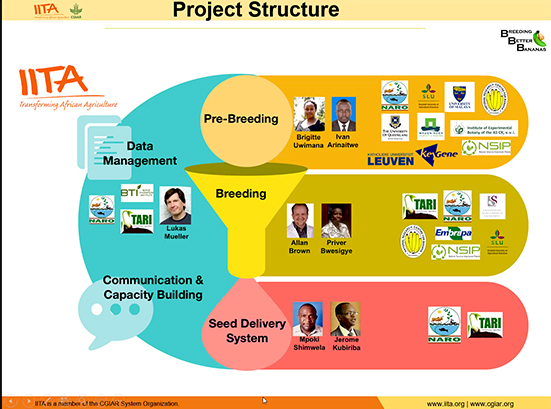
An overview of the research themes and partners under the ABBB project.

The team reported their achievements during the project’s annual review and planning meeting held virtually on 17-20 May to review progress and results and discuss a way forward as the prject transitions into the Excellence in Breeding  (EiB) platform under One CGIAR in 2022.

In her opening remarks, Leena Tripathi, IITA Director for Eastern Africa Hub, appreciated the hard work and commended the project on its achievements. These included good collaboration with national partners—the National Agricultural Research Organization (NARO) and Tanzania Agricultural Research Institute (TARI), which contributed towards improving banana breeding systems and changing the lives of banana farming communities.

Banana project applauded for making record progress amidst the COVID-19 pandemic

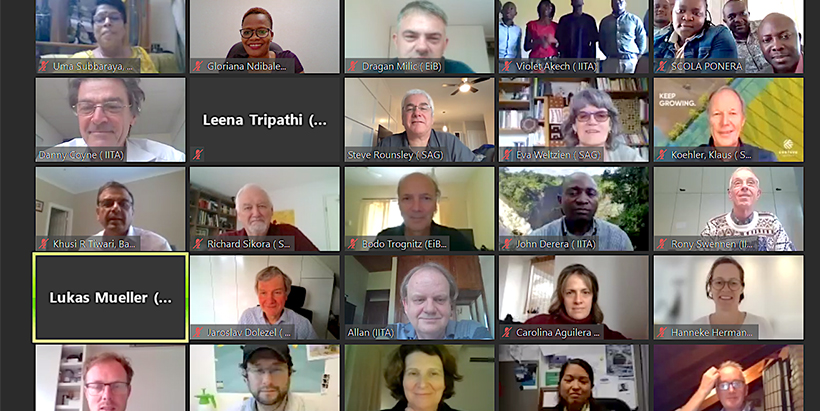
A group photo of the virtual annual meeting of the ABBB project.

“Major achievements of the project include the official release of NARITA hybrids in Tanzania; development and deployment of the banana tracking tool, which is key for modern banana breeding programs, and efforts in training the next generation of banana breeders, including IITA and partner staff in Uganda and Tanzania as well as several PhD and masters’ students,” she said.

The project team and partners highlighted the results and challenges under the project’s research themes and future outlook. The themes are pre-breeding,  breeding (divided into two subthemes: Matooke and Mchare), data management, communication and capacity building, and seed delivery/variety release systems.

Highlighting the project’s successes, Prof Rony Swennen, the project coordinator, noted that the project’s breeding was currently guided by the product profile for the parents and the final product to ensure it met the consumers’ demands.

“We developed the product profiles together with our colleagues at NARO; however, we still need to work on it further because what we have now was only done by breeders. We need to have the consumers and market intelligence to refine the elements,” Swennen said.

He further noted that the team is linking hybrids with sensory acceptability, an important element to start evaluating for quality. The bases are developed by NARO using the preferred traits with measurements in the laboratory. Furthermore, the first Mchare hybrids have been selected for preliminary yield trials.

Giving their feedback on progress and achievement, Eva Weltzien-Rattunde, SAG member, also commended the good and clear division of roles and responsibilities between the national research institutes and IITA.

“There is good integration of pathology work during pre-breeding and breeding work,” Weltzein-Rattunde said.

The ABBB project seeks to strengthen the banana breeding programs in the two countries towards developing new high-yielding hybrid banana varieties with resistance to key pests and diseases.

The project is led by IITA in cooperation with TARI and NARO and brings together other institutes and banana breeding programs across the globe. There were 125 participants, including other delegates from Excellence in Breeding, the private sector (BayerNSIPKeyGene), and the NGO, MEDA.  This work is part of the CGIAR Research Program on  Roots, Tubers and Banana, flagship 2.

Tagging products with barcodes for easy price retrieval in supermarkets is now a regular practice that people often take for granted. But beyond supermarkets, barcodes can be employed across a whole spectrum of settings, including by scientists in their research.

The Accelerated Breeding Better Bananas project has developed, adapted, finetuned, and deployed a fully operational Banana breeding Tracking Tool (BTracT), which uses barcodes. BTracT has also benefitted from the support and collaboration through the CGIAR Research Program on Roots, Tubers and Banana (RTB).  Researchers now use BTracT to routinely track each step of the breeding process of the breeding pipeline, from where the male parent’s pollen comes from to how the cooked product tastes.

Banana breeding project successfully implements modern track and trace system
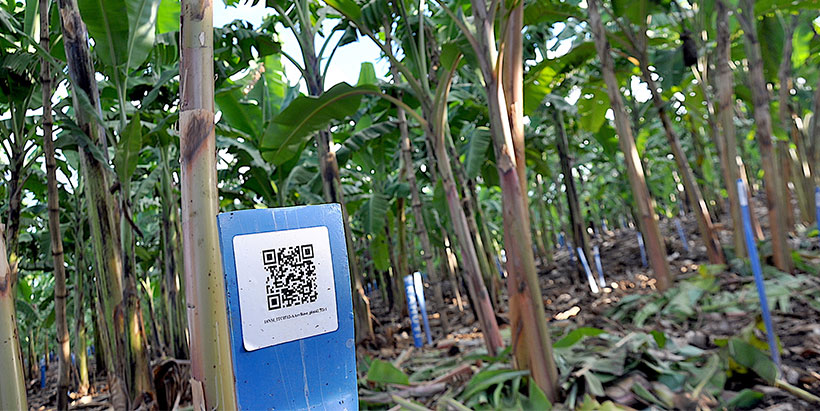
Barcoded trees in a banana breeding field.

Each plant in each location receives a specific barcode identity. Apart from parental pedigree and taste details, BTracT records agronomic performance, pest resistance, plant stature, color, and feel of cooked bananas. These details are stored on the global banana breeding database MusaBase for all to access. The banana breeding process is extensive, and the performance of plants studied over several years can help identify the best performing and most suitable bananas with the most desired traits.

“Having real-time upload of data allows supervisors to keep track of operations while away from the Station. If a problem occurs, I am aware of it almost at the same time as the people on the ground. It also simplifies reporting as data needed for reports can quickly be accessed, also from anywhere in the world,” IITA Banana Breeder Allan Brown explained.

While banana is an important food and cash crop for millions of subsistence farmers in developing countries, its yield is still low. In Uganda, for example, the average yield of banana is 10 t/ha/year, yet has a potential yield of 60 t/ha/year and above. The low yield is attributed to both abiotic and biotic constraints.

Banana breeding is the most feasible intervention to solve these constraints and involves several extensive steps.Accurately tracking a breeding program’s progress and performance at all the different levels is an involving and time-consuming activity but BTracT simplifies this process. By helping identify the best hybrids without laboriously wading through reams of data, BTracT is transforming banana breeding and revolutionizing the whole process.

BTracT allows data capture on handheld devices, synchronizes data from various locations, and enables querying and analytics on a central dashboard. “This definitely makes data collection much more efficient and accurate, to the joy of the research assistants… We now receive data much more timely, usually the day after collection,” said Violet Akech, a research associate on Banana improvement at Sendusu station.

BTracT is now fully operational with the IITA banana breeding programs in Sendusu, Uganda and Arusha, Tanzania, across the entire workflow. It is also fully integrated into MusaBase, enabling seamless real-time data handling and data flow.

“We are now able to mine the data collected to improve the efficiency of the breeding program and also have important insights into biological processes that have been bottlenecks in Banana breeding. We see this as an important step towards being a data-driven breeding program,” added Trushar Shah, one of the system’s developers.

Several private companies involved in banana tissue culture and seedling distribution systems are already enthusiastic about adapting BTracT to their systems. The banana breeding team is working closely with all interested partners to extend the use of BTracT to these systems.

The IITA Uganda Climate-Smart Agriculture (CSA) Program supports the Ugandan Government in its commitment to increasing coffee quality, volumes, and smallholder farmer livelihoods. The Institute’s activities closely align with the country’s agricultural agenda, with the IITA team collaborating with the Uganda Coffee Development Authority (UCDA) to implement the Uganda Coffee Roadmap.

By developing the Stepwise Climate Smart Investment Pathway (Stepwise) approach, IITA Uganda and partners under the CGIAR Research Program on Climate Change, Agriculture and Food Security (CCAFS) are promoting increased smallholder coffee farmer adoption of CSA practices in Uganda. Stepwise is helping farmers increase their yields and income through a practical stepped process towards applying good agricultural and CSA practices to manage their coffee farms.

Photo of Ugandan Farmers
An extension agent showing a farmer how to use the Stepwise Smartphone Application.

Test data from private-sector impact partners, Olam and Hanns R. Neumann Stiftung Foundation, demonstrated the Stepwise approach’s success showing more than 70% increase in yields and a 58% increase in adoption of good agricultural practices (GAP) among participating farmers in Mount Elgon and Luwero in central Uganda.

With the challenges caused by the COVID-19 pandemic, remote working made it possible to get more people involved in the conversation. Extension services have evolved, using ICT decision support tools and technologies to disseminate essential information to agents and farmers. This enabled the team to achieve an even greater level of efficiency.

The Stepwise Smartphone Application, the Shade Tree Advice Smartphone Application, and a participatory farmer evaluation approach used in implementing Stepwise all demonstrated success in the 2019/2020 period. IITA collaborated with World Agroforestry Center (ICRAF) to ensure that the Shade Tree Advice Smartphone Application content is evidence-based. The Government of Uganda and private sector agroforestry and coffee experts in Uganda also validated the tool content.

Ugandan coffee farmers enjoy increased yields through CSA technologies despite COVID-19 pandemic
The Shade Tree Advice Smartphone Application.

In 2021, IITA intends to continue to promote successful CSA technologies. The Institute will move into a scaling phase of these technologies, with the Stepwise Smartphone Application already accessible from Google Play Store.

In an article for the Uganda Coffee Platform Annual Report 2019-2020, IITA Scientist Sarah Margiotta said, “Through active engagement in global consortia such as the Living Income Community of Practice ISEAL Alliance, IITA will continue to bring new learning and innovations from around the world to the Uganda platform. Similarly, through shared learning and successes from the Uganda research, IITA will continue to leverage the private sector and development partner commitment and resourcing of CSA in Uganda.”

Though the coronavirus pandemic has disrupted many sectors, Margiotta noted that it offers agriculture, and the coffee subsector in particular, an opportunity to reflect on work methods and come together to harmonize the various tools and approaches already existing.

“With continuing support from USAID, GIZ, and other internal partners such as the Sustainable Food Lab, the IITA CSA Program in Uganda will continue to conduct research projects that allow for the design, testing, and scaling of innovative and sustainable approaches to improve the quality, yields, and smallholder farmer livelihoods and the transformation of Uganda’s coffee sector.