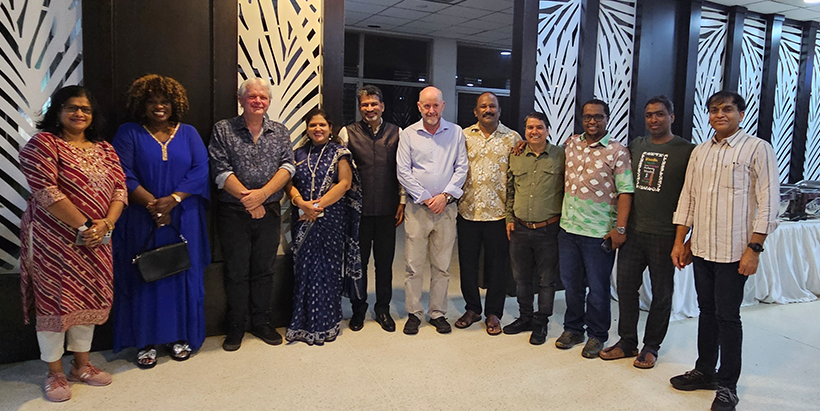
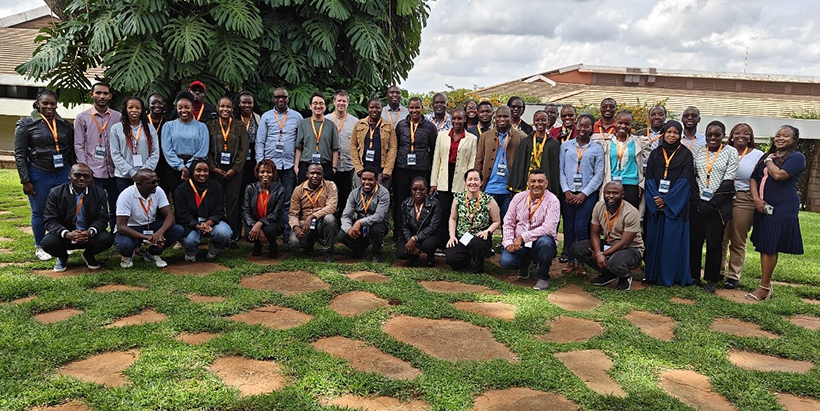
Participants after the workshop.

In partnership with the Bioconductor community, IITACGIAR hosted an intensive, week-long Bioconductor workshop in Nairobi. The workshop aimed to enhance bioinformatics expertise across Africa, and equipped participants with practical skills in genomic data analysis, with a special focus on RNA sequencing (RNA-seq) analysis.

The workshop commenced with a two-day introduction to R and Bioconductor, focusing on data handling, visualization, and reproducible research practices tailored for genomic data analysis. Midweek sessions zeroed in on RNA-seq workflows, guiding attendees through preprocessing to differential expression analysis using real-world datasets. The week concluded with a “Bring your own data” day, allowing participants to apply their newly acquired skills to personal projects under the close guidance of instructors.

Some of the highlights of the course delivery included the instructors’ use of sticky notes to create smoother interactions with participants. These served two main purposes: helping instructors quickly see whether participants were keeping up or needed support and collecting immediate feedback after each session. This real-time feedback allowed instructors to adjust and improve the upcoming sessions throughout the week. By day three, participants were divided into breakout rooms. Those who needed additional help based on their progress in the first two days received more focused support, while the rest of the group continued with the main sessions. By the end of the course, all participants had completed the intended material and developed a solid grasp of the content.

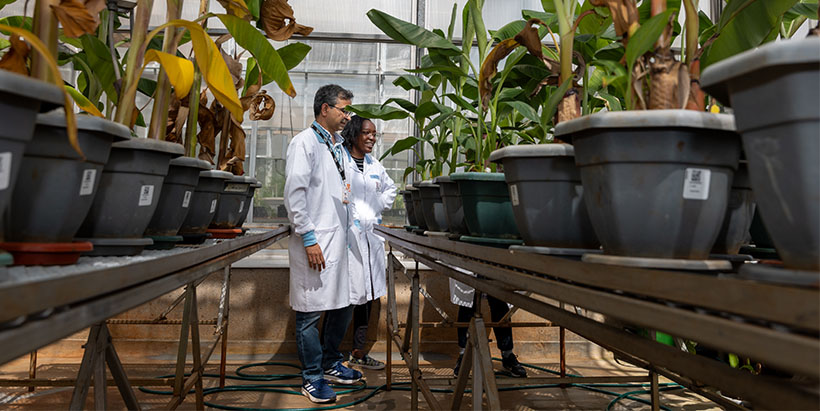
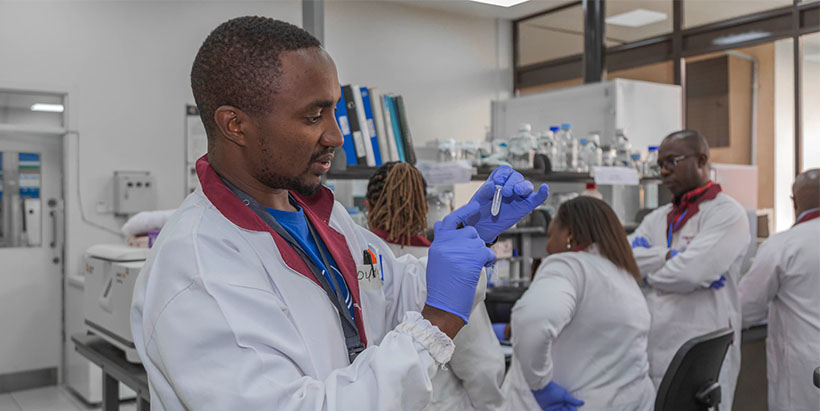
In addition to the workshop, attendees received a tour of IITA laboratories, giving them an up-close look at ongoing real-life projects. This experience provided invaluable insights into how bioinformatics skills can be applied to address current agricultural research and development challenges.

“Hosting this Bioconductor workshop at IITA Nairobi has been an exciting opportunity to bridge the gap between computational biology and agricultural research,” said IITA Bioinformatician Trushar Shah.

“It has been inspiring to see how quickly the participants have grasped complex bioinformatics concepts and applied them to their datasets,” he added.

The workshop was led by a distinguished team of Carpentries certified instructors from the Bioconductor community, including both local bioinformatics experts and experienced international instructors. This blend ensured a diversity of perspectives and expertise, fostering a strong collaborative learning environment.

This workshop, supported by the Chan Zuckerberg Initiative through an EOSS Cycle 6 grant, is part of Bioconductor’s expanded global training program. It reflects a commitment to building bioinformatics capacity in Africa. The success of this event shows the growing interest and investment in bioinformatics within the region.

Contributed by Rose-Harriet Okech

Genetic map showing the new insert.

Science often throws us a curveball, and it came from cassava this time. Researchers have uncovered a massive, previously unknown chunk of DNA in a farmer-preferred cassava landrace, shedding new light on the crop’s genetic complexity.

While digging into the genome of TMEB117, researchers stumbled upon a previously uncharted 9.7 Mb chunk of DNA sitting quietly on chromosome 12. This huge insertion does not exist in the current cassava reference genomes. It is like finding a hidden attic in a house you have lived in for years.

So, what is in this genetic attic?

It is packed with transposable elements, those nomadic pieces of DNA that copy and paste themselves around the genome. One group, the MUDR-Mutator superfamily, was especially overrepresented by the rowdy guests of the genomic party.

However, here is where things get interesting: on the border of all this genetic clutter are two unique genes—HDA14 and SRT2. These genes are involved in epigenetic regulation through histone deacetylation (how the genome decides which genes to turn on or off). Their presence suggests that this mysterious insertion may play a role in shaping the cassava genome’s chromatin architecture and perhaps even its expression behavior.

Michael Landi receiving his certificate for the Best Poster.

A PhD student, Michael Landi, led the work with support from IITA scientists Trushar Shah, IITA Virologist Livia Stavolone, and IITA Bioinformatician Andreas Gisel. The project was carried out in collaboration with researchers at the Italian Research Council in Bari, Dr. Laurent Falquet from the University of Fribourg, and Dr Adnan Niazi from the Swedish University of Agricultural Sciences. The PhD research was conducted under the supervision of Professor Erik Bongcam-Rudloff, who was also at the Swedish University of Agricultural Sciences.

Michael’s findings also made waves at the First African Plant Genomics Symposium, where he presented a poster on the TMEB117 insertion and won the Best Poster Prize.

Now, the team is zooming in even further, looking at DNA methylation patterns across this mysterious region to determine its function. Could it be regulating stress responses or influencing important traits? Only time and more data will tell.

For a crop that feeds over 800 million people, every new insight into cassava’s genome is a step toward better varieties and smarter breeding. In addition, as this study shows, sometimes the most fascinating discoveries are hidden in plain sight.

Contributed by Rose-Harriet Okech

IITA team with the Consul-General of India to Nigeria, Chandramouli Kumar Kern after the meeting.

The Consul-General of India to Nigeria, Chandramouli Kumar Kern, visited IITACGIAR headquarters in Ibadan from 31 May to 1 June, aiming to strengthen India-Africa collaboration in agricultural research and innovation. Lava Kumar, the IITA Head of Virology and Germplasm Health, moderated the meeting.

In his welcome remarks, the IITA Deputy Director General for Research for Development (DDG-R4D), Bernard Vanlauwe, introduced Kern to IITA’s mission, strategy, and core research programs. He also highlighted ongoing collaborations between IITA and Indian research institutions, including:

  • Development of Fusarium wilt-resistant banana varieties with the National Research Centre for Bananas (NRCB);
  • Root and tuber crop research with the Central Tuber Crops Research Institute (CTCRI), including capacity building on cassava gene editing and Bambara groundnut breeding;
  • Genetic resource exchange from IITA genebank and Indian organizations, including the National Bureau of Plant Genetic Resources (NBPGR). India;
  • Agronomy and soil health initiatives through the Excellence in Agronomy (EiA) program in Odisha, India; and
  • Biocontrol efforts include successfully introducing predators for papaya mealybug from IITA-Benin and ongoing discussions on scaling Aflasafe in India.

Vanlauwe remarked that a formal Memorandum of Understanding (MoU) between IITA and the Indian Council of Agricultural Research (ICAR) would broaden collaboration in breeding, crop protection, mechanization, and digital agriculture. He also highlighted the Nigerian government’s interest in replicating India’s successful Soil Health Card initiative, positioning IITA as a potential lead partner for implementation.

Contributions from IITA scientists further enriched the discussions. The IITA Cassava Breeding Program Lead, Ismail Rabbi, noted India’s impressive cassava productivity and called for strengthened cooperation to enhance disease resistance. Rajneesh Paliwal, IITA DNA Fingerprinting for Genetic Resources Management, recommended accelerating germplasm exchange and adopting Digital Sequencing Information (DSI) tools to modernize gene banking. At the same time, IITA Emeritus Scientist and Senior Plant Pathologist Ranajit Bandyopadhyay highlighted the need to scale Aflasafe to combat mycotoxin contamination in India.

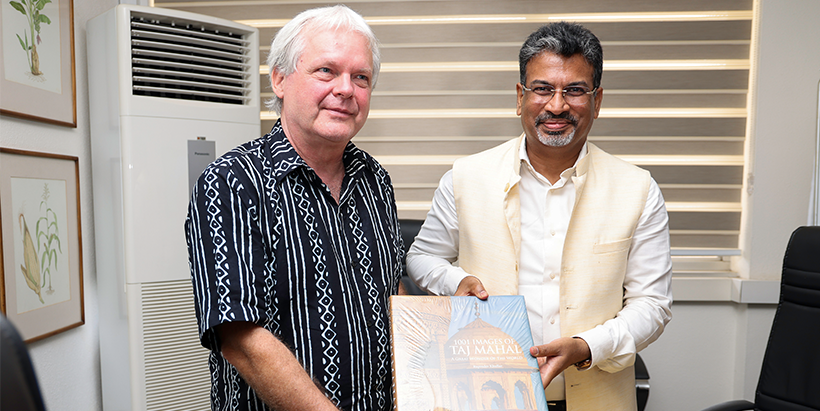
 The Consul-General of India to Nigeria, Chandramouli Kumar Kern presenting a gift to IITA Deputy Director General for Research for Development (DDG-R4D), Dr Bernard Vanlauwe during the visit.
The Consul-General of India to Nigeria, Chandramouli Kumar Kern presenting a gift to IITA Deputy Director General for Research for Development (DDG-R4D), Dr Bernard Vanlauwe during the visit.

Kumar emphasized the importance of scaling IITA innovations for the benefit of end users and reaffirmed the potential for mutually beneficial collaboration with ICAR and other Indian partners.

In response, Kern expressed his gratitude for the warm reception. He shared insights on India’s journey from food insecurity to self-sufficiency, driven by advancements in sustainable agriculture, soil health, renewable energy, and digital advisory services. He introduced India’s “Development Partnership” (DP) initiative, which provides grants, concessional loans, and capacity-building opportunities. He encouraged IITA to develop concept notes in partnership with Indian institutions that are aligned with DP priorities.

Kern offered to facilitate connections between IITA and stakeholders involved in India’s Soil Health Card Scheme to strengthen institutional ties. This initiative helps farmers identify soil types and adopt appropriate agronomic practices based on research disseminated by the government and extension agents. He emphasized the importance of continued engagement with the Indian High Commission and noted that Indian agricultural practices could be adapted and deployed in Africa with the support of IITA. The initial follow-up step involves organizing an exchange visit between ICAR experts and IITA and establishing a task force to identify mutual priority areas for Development Partnership grants.

Kern’s visit concluded after visits to Genebanks, Virology and Molecular Diagnostics, Cassava Processing, and the Aflasafe unit.

Contributed by Lava Kumar and Anita Akinyomade

Representatives of IITA, ICARDA and UAE.

At the 17th Khalifa International Award for Date Palm and Agricultural Innovation, the United Arab Emirates (UAE), Gates Foundation, and the International Center for Agricultural Research in the Dry Areas (ICARDA) launched the International Consortium for Red Palm Weevil Control (C4RPWC).

IITA will lead a critical workstream under the bold, new global initiative to combat the devastating Red Palm Weevil (RPW). This invasive pest, RPW, threatens date palms and livelihoods across the Middle East, North Africa, and beyond.

The Consortium for Red Palm Weevil Control (C4RPWC), officially launched at the prestigious Khalifa International Award for Date Palm and Agricultural Innovation ceremony in Abu Dhabi on 16 April 2025, brings together global scientific partners in a coordinated effort to tackle RPW through innovation, collaboration, and scaling. ICARDA leads the initiative, which was jointly supported by the United Arab Emirates and the Gates Foundation.

Date palm field in the United Arab Emirates.

IITA, through its Genome Editing Platform in Nairobi, Kenya, will lead Workstream 2: Biotechnological Innovations, exploring cutting-edge tools such as genome editing, RNA interference (RNAi), and microbiome disruption to target and weaken the pest’s biology. These novel technologies aim to deliver sustainable and precise pest control strategies, especially for regions where RPW has proven most destructive.

Speaking about IITA’s role, Dr Leena Tripathi, Director of IITA Eastern Africa Hub and Biotechnology Program Lead, emphasized the significance of leveraging biotechnology in integrated pest management strategies:

“Biotechnological innovations offer us a chance to strike at the root of the problem by targeting the weevil’s genetic makeup and biological processes. Through approaches like genome editing, RNA interference, and plant genome manipulation to build resistance, we can develop sustainable, precise, and environmentally friendly solutions. This reduces dependence on chemical pesticides and paves the way for sustainable, scalable solutions that can be adapted across different geographies.”

The consortium’s ambitious plan is structured around five scientific workstreams, each led by a specialized institution:

A date palm tree
A date palm tree
  1. Bio-based innovationsicipe, Kenya: Developing nature-based pest control methods using pheromones, fungi, and classical biocontrol agents.
  2. Biotechnological innovationsIITA, Kenya: Applying genome editing, RNAi, and microbiome disruption tools.
  3. Digital innovations & AIICRISAT, India: Creating predictive tools, IoT sensors, and AI platforms for early pest detection.
  4. Good agricultural practices (GAPs)ICBA, UAE: Promoting scalable field-level practices for prevention and control.
  5. Policy, institutions & global accessICARDA, UAE Regional Hub: Ensuring innovations are embedded in policy frameworks and accessible across borders.

Earlier this year, the Consortium partners convened during CGIAR Science Week to align the project’s vision and execution roadmap. For IITA, the opportunity to contribute its biotech expertise marks another milestone in its commitment to deploying scientific innovations that empower farmers, protect crops, and transform agriculture sustainably.

As the fight against RPW intensifies, the C4RPWC initiative presents a timely and coordinated scientific response, with IITA bringing its expertise in biotech innovation to the frontlines of this global challenge.

Contributed by Rose Harriet Okech

IITACGIAR has joined the Plant Breeding Innovation Management Program (PBIMP) under the Global Stewardship Group (GSG), reinforcing its commitment to responsible and ethical research in modern biotechnology, including Genome Editing. This strategic move marks another significant milestone in IITA’s continued leadership in agricultural innovation, particularly genome editing.

By joining the PBIMP, IITA aligns itself with an international community of research institutions and industry leaders implementing stewardship best practices in the use of genome editing technologies for crop improvement. The program promotes harmonized protocols, accountability frameworks, and capacity strengthening to ensure that research and development involving genome editing adheres to the highest standards of safety, transparency, and compliance.

This new engagement builds upon IITA’s well-established foundation in stewardship excellence. Since 2017, IITA has been a member of the Excellence through Stewardship (ETS) and has completed two audit cycles. As an ETS member, IITA has adopted robust stewardship systems that have guided its research activities across various transgenic crop platforms. This ensures safe and responsible deployment from the laboratory to the field.

“Joining the PBIMP is a natural extension of our longstanding commitment to biosafety and stewardship,” said Dr Leena Tripathi, Director of Eastern Africa Hub and Head of Biotechnology at IITA. “As we expand our use of genome editing to accelerate crop improvement, it is critical to maintain and enhance the rigorous standards that have defined our work in genetic transformation. PBIMP offers a collaborative platform to share, learn, and strengthen our stewardship systems in line with global best practices.”

Genome editing is a key component of IITA’s research portfolio, with applications in improving disease resistance, enhancing yield, and promoting climate resilience in staple African crops. As gene editing technologies mature, ensuring their responsible use becomes even more essential to build public trust and enable the delivery of safe, effective innovations to smallholder farmers.

Contributed by Rose-Harriet Okech

A landmark study published in Nature’s Communications Biology by IITA scientists showcases how CRISPR-based gene editing offers hope for East Africa’s banana farmers.

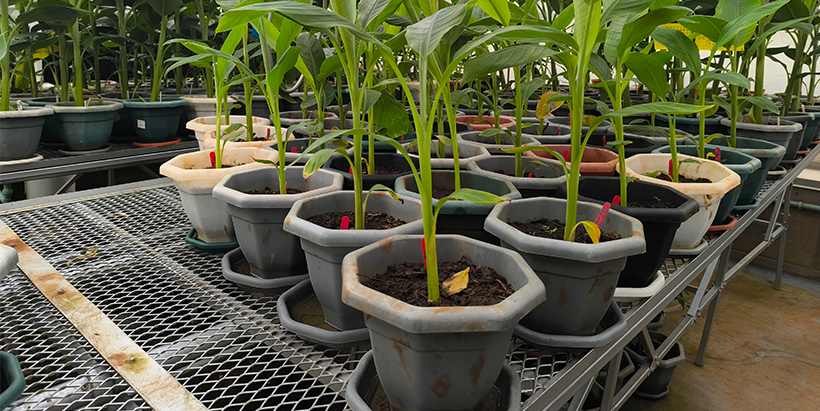
Edited banana plants growing in the screenhouse.

Scientists at IITA-CGIAR have made a major breakthrough in the fight against Banana Xanthomonas Wilt (BXW), a devastating bacterial disease threatening banana crops across East and Central Africa. The findings, recently published in Communications Biology, the prestigious journal from the Nature portfolio, demonstrates how gene editing can be used to develop disease-resistant banana varieties.

Using CRISPR-Cas9 technology, the IITA researchers precisely knocked out two banana endogenous genes, MusaPUB22 and MusaPUB23, in the BXW-susceptible ‘Sukali Ndiizi’ cultivar. Previously identified through transcriptomic studies, these genes were found to be more active in plants vulnerable to BXW. When the scientists turned these genes off, the banana plants were able to mount a stronger defense against the disease.

The results were striking: several gene-edited banana lines completely resisted BXW. Importantly, the plants maintained healthy growth, suggesting that disabling these genes does not compromise overall plant development.

“This publication not only affirms the high-quality science at IITA but also signals a new frontier for how we can use gene editing to address urgent agricultural threats in Africa,” said Dr Leena Tripathi, Director of IITA’s Eastern Africa Hub and Biotech Program Lead. “Gene editing gives us a powerful, precise way to improve crops while staying aligned with public and regulatory expectations. We’re excited to contribute a solution that could eventually protect millions of smallholder banana farmers from devastating losses.”

The study positions MusaPUB22 and MusaPUB23 as “susceptibility genes”—genes that inadvertently help pathogens by suppressing the plant’s immune responses. When these genes were disabled, the plants displayed enhanced resistance mechanisms, including hydrogen peroxide accumulation and activation of key immune-related genes.

Beyond its scientific contributions, the study has practical implications for developing disease-resistant banana varieties without introducing foreign DNA, making the gene-edited bananas potentially more acceptable to regulators and the public.

Contributed by Rose-Harriet Okech

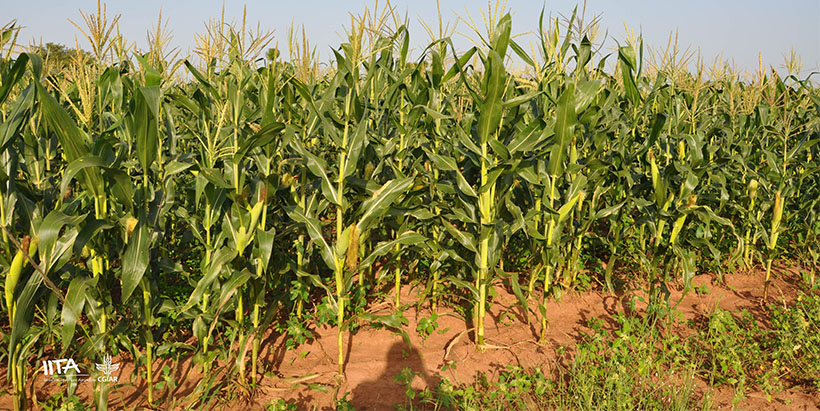
An on-site Maize trial field

In collaboration with Nigeria’s Institute for Agricultural Research (IAR), the International Institute of Tropical Agriculture (IITA) released a medium-maturing top-cross maize hybrid that combines tolerance to fall armyworm and drought with resistance to Striga hermonthica as SAMMAZ77. Compared to the previously released drought-tolerant and Striga-resistant hybrid commercialized in Nigeria (SAMMAZ50), SAMMAZ77 achieved 5–35% higher yields under combined stressors of fall armyworm infestation, Striga parasitism, and severe drought. This hybrid outperformed SAMMAZ50 by 13–164% in seven out of nine testing locations under rainfed conditions. Additionally, SAMMAZ77 showed 14–41% yield advantages over SAMMAZ68 (a 3-way cross TEGO hybrid released in Nigeria) in two of the Nigeria’s four major maize-producing states. On-farm trials conducted across four states further demonstrated 33–132% yield increases for SAMMAZ77 compared to farmers’ preferred maize varieties. These results position SAMMAZ77 as a critical innovation for sustaining maize productivity in Nigerian savannas, where overlapping biotic and abiotic stresses threaten crop production.

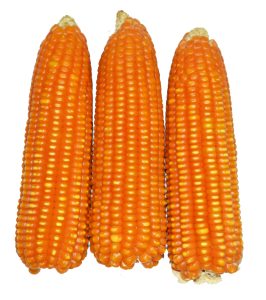
Vitamin A Maize cobs.

This breakthrough underscores IITA’s commitment to research-based solutions that address real-world challenges.

Working through strong partnerships with national research systems, CGIAR centers, the private sector, and farming communities, IITA is ensuring that improved varieties of crops like maize, cassava, cowpea, yam, soybean, plantain, and banana are reaching those who need them most, empowering farmers and improving food systems in Africa.

Contributed by Abebe Menkir, Hapson Mushoriwa and ‘Timilehin Osunde

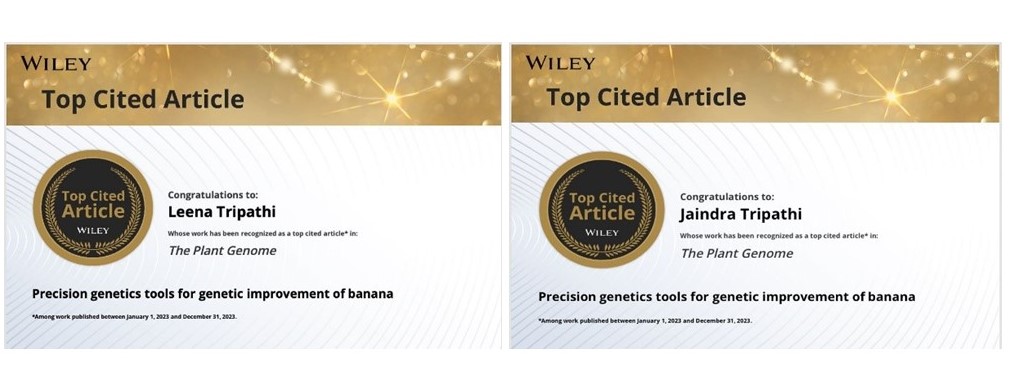
A review paper on the genetic improvement of bananas has been selected as one of Wiley’s most cited papers, highlighting its critical role in improving one of the world’s most important staple crops.

Published in The Plant Genome, the research probes into CRISPR/Cas genome editing techniques that could impact banana breeding, making the crop more resilient to devastating diseases. Led by a team of scientists from the International Institute of Tropical Agriculture (IITA), the widely referenced paper “Precision Genetics Tools for Genetic Improvement of Banana” addresses long-standing challenges in banana production and offers a precise, efficient, and sustainable solution for farmers worldwide.

Certificates of Recognition

The study explores genome editing techniques, particularly using CRISPR/Cas technology to develop disease-resistant banana varieties. Given the devastating threats posed by Banana Xanthomonas Wilt (BXW), Fusarium Wilt, and viral diseases, their work highlights the power of precision breeding in tackling these challenges. This paper highlights the limitations of conventional breeding methods and presents genetic engineering as a fast-track solution to safeguarding banana production, a staple crop for over 400 million people globally.


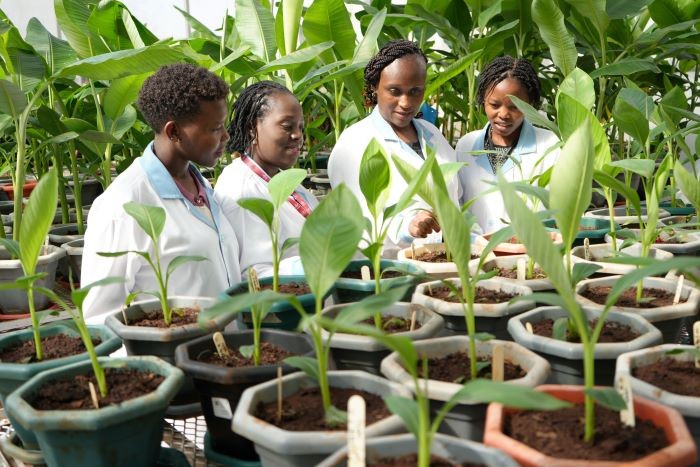
Members of the IITA Biotech team assessing edited plants in the glasshouse

Reflecting on the recognition, the IITA Eastern Africa Hub Director and Biotechnology Program Lead, Dr Tripathi, said, ” Genome editing offers a revolutionary approach to improving bananas, providing a precise, efficient, and sustainable solution to tackle major production challenges. This recognition affirms the impact of our research in shaping the future of banana biotechnology.”

This achievement further reinforces IITA’s leadership in agricultural research. IITA continues to advance genome editing in other staple crops, ensuring food security and economic stability for smallholder farmers across Africa.

To read the full study, click here: Precision genetics tools for genetic improvement of banana.

Contributed by Rose Harriet Okech

In transforming African agriculture, the International Institute of Tropical Agriculture (IITA) is tapping into cutting-edge genome editing tools to fast-track crop improvement. With technologies like CRISPR at its core, IITA is pioneering a new era in plant breeding—where precision, speed, and innovation are driving the development of resilient, high-yielding crops tailored for the continent’s toughest challenges.

Dr Jaindra Tripathi attending to the plants being screened in the greenhouse.

For decades, conventional breeding has served as the backbone of crop improvement. By crossing parent plants with desirable traits, breeders have been able to gradually improve yields, enhance disease resistance, and adapt crops to local conditions. However, this process can be time-consuming, unpredictable, and limited particularly for clonally propagated crops. It is often inadequate when addressing complex traits like drought tolerance or resistance to evolving pathogens. For tropical crops like banana, yam, and cassava—staples for millions across Africa—the challenges are even more pronounced due to limited genetic diversity and complex inheritance patterns.

Now, genome editing is offering a powerful alternative. Unlike traditional genetic modification, genome editing—especially using tools like CRISPR/Cas—allows scientists to make precise, targeted changes to a plant’s DNA without introducing foreign genes. It is like using molecular scissors, snipping out or tweaking specific genes to confer desired traits.

At IITA, a state-of-the-art genome editing platform is leveraging this technology to accelerate crop improvement. IITA’s dedicated laboratory team works on the entire gene editing process—from target identification and cloning to transformation—offering comprehensive support for agricultural research. By pinpointing and modifying specific genes responsible for disease susceptibility or poor yield, we can develop improved varieties faster, more efficiently, and more predictably than ever before. Genome editing does not replace conventional breeding, it enhances it.

It is a pre-breeding tool that helps breeders start the race from halfway up the track. By removing bottlenecks early in the process, like knocking out genomes that make plants vulnerable to disease, we empower breeders to focus on combining these improved lines with other elite traits.

PhD student Duncan Njora conducting molecular analysis in the lab.

“Genome editing is giving us a head start in breeding. By removing key barriers at the genetic level, we’re able to develop improved varieties faster – varieties that are not only more resilient and productive but also better aligned with the needs of African farmers,”  said Dr. Leena Tripathi, Eastern Africa Hub Director and Biotechnology Program Lead, IITA

One major breakthrough is in banana, where IITA researchers are using genome editing to control banana xanthomonas wilt (BXW), a devastating disease capable of wiping out entire plantations. By knocking out susceptibility genes and activating endogenous defense genes, IITA is developing disease-resistant banana varieties that could secure the livelihoods of millions of smallholder farmers across East and Central Africa.

For yam, IITA scientists are exploring how genome editing can optimize plant architecture, potentially reducing labor and environmental damage associated with staking of yam vines.

ITA’s commitment goes beyond research. The institute is cultivating a new generation of African genome editing experts. IITA is offering a comprehensive five-year training program in collaboration with Africa Plant Breeding Academy of UC Davis aimed at equipping African scientists with the knowledge and skills to use genome editing technologies. This training program, which combines theoretical lectures with practical laboratory experience, will train 100 scientists in genome editing and its regulation. The first group of students began their training in January 2023, with participants selected from various African countries. So far, 31 scientists have been trained, gaining valuable hands-on experience and knowledge, prepared to establish genome editing platforms at their own institutions.

In addition, IITA builds capacity of early-career scientists, training MSc and PhD students. Currently, 5 PhD students are actively being trained in the program, continuing to build their expertise in genome editing techniques, while others have already completed training.  Apart from the core training program, IITA is also collaborating with local universities in Kenya to provide technical support to PhD students working on genome editing projects. This collaboration allows for a more integrated approach to research and provides students with access to both IITA’s expertise and the resources of local academic institutions.

“Genome editing is not a silver bullet,” Dr. Tripathi emphasized. “But it represents a game-changing leap for crops that have long been neglected by global biotechnology. It’s about giving African farmers the tools they need to thrive in a rapidly changing world.”

With the dual focus on innovation and capacity building, IITA is positioning Africa at the forefront of agricultural biotechnology. From laboratories to farmlands, genome editing is unlocking a future where improved, resilient, and farmer-preferred varieties can become the norm—ensuring food security for generations to come.

Contributed by Rose Harriet Okech