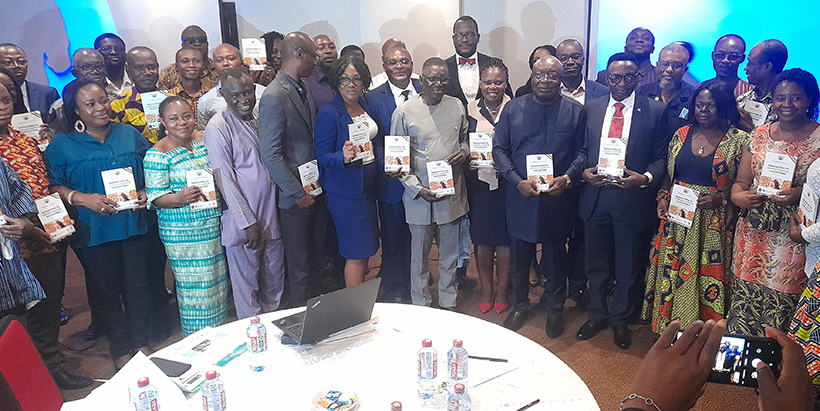
Representatives of IITACGIAR from Ibadan and Abuja participated in the launch of the Special Agro-Industrial Processing Zones (SAPZ) program held in Nigeria’s Federal Capital Territory (FCT), Abuja, in October.

The Nigeria SAPZ program, a government-enabled and private sector-led initiative, will mobilize private-sector investment to develop the value chain for selected strategic crops and livestock in seven selected participating states and the FCT for phase 1. These states are Cross River, Imo, Kaduna, Kano, Kwara, Ogun, and Oyo.
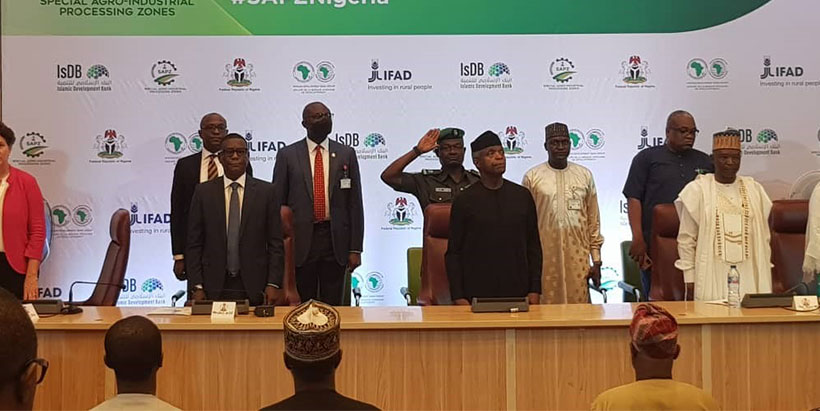
The Vice President of the Federal Republic of Nigeria, Yemi Osinbajo, at the launch ceremony.

The Vice President of the Federal Republic of Nigeria, Yemi Osinbajo, officially launched the event, co-financed by the African Development Bank (AfDB), International Fund for Agriculture Development (IFAD), and the Islamic Development Bank.

Representatives of the financing organizations provided the rationale for supporting the program’s implementation in Nigeria and advised the stakeholders to ensure that SAPZ is instrumental in creating jobs for the teeming unemployed young people in Nigeria, reducing poverty and hunger.

Highlights of the event included IITA showcasing the impact it has created through the Youth in Agribusiness initiative. Over the years, the co-financiers of SAPZ, AfDB, and IFAD, have supported various projects within the Youth in Agribusiness Office, creating jobs for the youth.

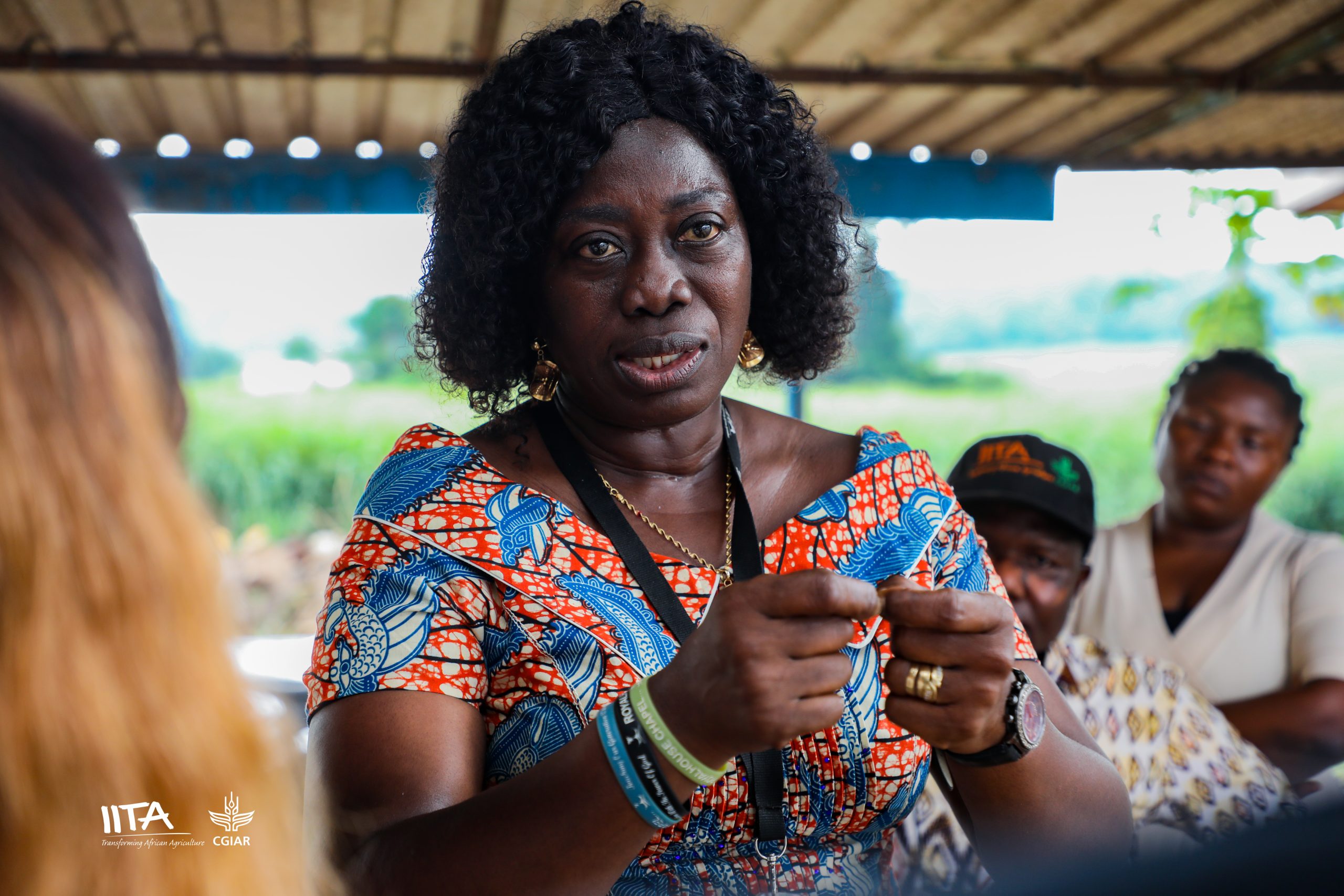
Beneficiaries from ENABLE-TAAT and I-Youth projects, supported by AFDB and Mastercard Foundation Young Africa Works, respectively, displayed how the various in-cash and in-kind support received from IITA through the projects mentioned above have improved their livelihoods and those of others. These beneficiaries include Kollab Agrotech CEO Alabi Samuel, F-Step Cassava Enterprise CEO Seun Ogidan, Leah Tari Samuel of PALMSAED farm, and Amina Ado of Innovative Youth in the Horticultural hub.
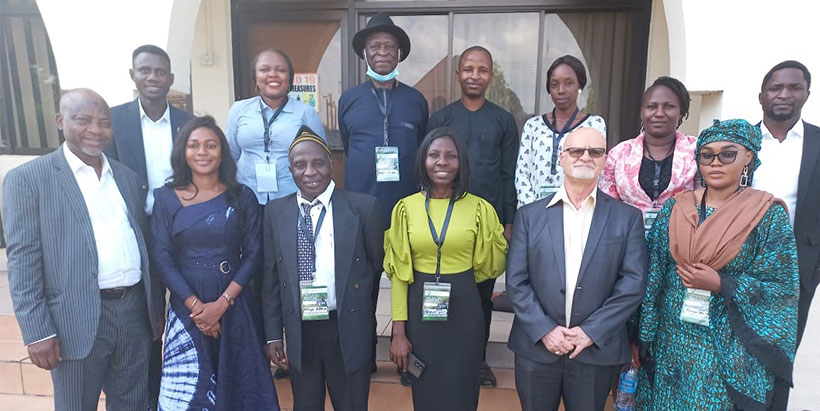
IITA staff from Ibadan and Abuja represented the Institute at the SAPZ program launch.

The beneficiaries explained the impact of the IITA Youth Agripreneurs (IYA) in starting their agribusiness journeys and how they are engaged in profitable enterprises that employ other youth. They concluded their speeches with highlights of the positive impacts that the SAPZ program will have on Nigerian youth in terms of job creation and hunger eradication. The audience, including the Vice President, applauded their testimonies and efforts.

Other presenters, including Youth Employment in Agribusiness and Sustainable Agriculture (YEASA) Project Coordinator Oluyemi Adunoye and I-Youth State Administrator Zaccheaus Isuwa, explained how they train and mentor youth to retain their interest in their chosen agriculture enterprise.

The event, attended by representatives of the public and private sectors, also served as a platform to create public awareness of the SAPZ program and enhance understanding of key actors’ roles in the implementation process.

Contributed by Adetola Adenmosun

Food insecurity, child malnutrition, and rural poverty remain key issues that sub-Saharan Africa continues to deal with. This is partly because most smallholder farmers are engaged in low-intensity, subsistence-oriented farming, resulting in low yields and insufficient income to access nutritious foods. Sustained agricultural productivity growth and commercialization are required to address these challenges.

Farmers selling farm produce for their livelihood.

Against this background, Julius Manda, an Agricultural Economist for the Africa Research in Sustainable Intensification for the Next Generation (Africa RISING) East and Southern Africa (ESA) project and other IITACGIAR researchers conducted some studies related to agricultural commercialization, food security, and nutrition in smallholder farm households. Their research tested the hypothesis of a positive correlation between commercialization and household dietary diversity, food security, and child nutrition in Ghana, Malawi, and Tanzania. Presenting the findings of the research in a seminar moderated by Leena Tripathi, IITA Director for Eastern Africa Hub, Manda stated that the results revealed how agricultural commercialization increased household dietary diversity and food security in the three countries—Ghana, Malawi, and Tanzania

In the study conducted in Tanzania, farmers’ concurrent participation in maize and legume markets resulted in the highest welfare gains compared with participating in the maize or legume markets alone. Moreover, participation in maize and legume markets increased with education, land, productive farm assets, adoption of improved technologies, and credit. Thus, promoting the adoption of intercropping and organic fertilizer applications is crucial to ensure the surplus of maize and legumes in markets. However, market participation decreased due to droughts resulting in the need to encourage climate-smart agriculture.

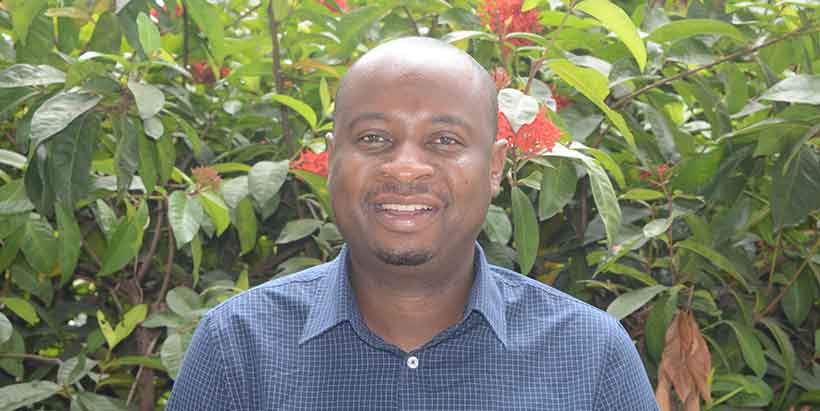
Agricultural Economist for Africa RISING ESA project, Julius Manda, led the study conducted in Tanzania.

Furthermore, Manda shared some of his achievements, including improving the quality of science communication and participation in conferences and seminars to promote IITA’s visibility. He also highlighted his active contribution to resource mobilization, including developing the One CGIAR Sustainable Intensification of the Mixed Farming System (SI-MFS) proposal.

Highlighting his plans for IITA, Manda outlined that he would, together with the SI-MFS Monitoring, Evaluation, and Impact Assessment (MELIA) team, conduct baseline studies in Bangladesh, Ethiopia, Ghana, Laos, Malawi, and Nepal. He added that he would conduct data analysis and report writing for the SI-MFS initiative.

Other plans include finalizing the Africa RISING project study on the Return on Investment (ROI). He added that donors are interested in seeing how much of their investment was put to good use and conducting a follow-up study on the willingness to pay (WTP) for quality maize and beans, specifically for urban consumers.

Contributed by Anita Akinyomade and Dr Julius Manda

Collaboration across institutions has become standard, leading to geometric success in many organizations. The Africa Project Development Centre (APDC), a training institution handling projects designed to build the innovative capacity of potential entrepreneurs across Africa, enjoyed such partnership as the organization’s staff participated in a training exercise anchored by IITACGIAR. As a leading agricultural project delivery and development organization, IITA-CGIAR prioritizes capacity development, engaging the APDC staff in a week-long instructional exercise at the Institute’s headquarters in Ibadan, Nigeria, from 3 to 9 October.

APDC trainees, Adannaya Okpara (left) and Amaka Chime (right) learning about HOTRAS activities with Resident Manager Bridget Mangulama (center).

The training was designed to expand the team’s technical know-how to run development projects in the agricultural sector. The facilitators dealt with budgeting and finance, resource mobilization, communication and knowledge management, youth in agribusiness, hospitality and travel services, and project management.

APDC Finance and Administration Service Manager, Adannaya Okpara, revealed that IITA Director General Nteranya Sanginga provided the platform for their young organization, which is about four years old, to learn from a mother institution as old as IITA. The leaders of both organizations have a working relationship they are happy to leverage. She said, “APDC is harnessing IITA as a strategic capacity development partner to offer leadership and management development programs that would enhance effective project development.” They also hope to gain knowledge from the different units of IITA, including its activities, modes of operation, and tested processes engaged to achieve the institution’s goal of enriching African Agriculture.

Head of IITA Project Development and Administration Unit (PDAU), Kayode Awobajo, emphasized the importance of project development to the team. He described it as a tool to anticipate possibilities and obstacles that may arise along a project path and to provide clear paths to achieving the project’s goal. He further encouraged the team to maximize the training to enhance productivity, especially in resource mobilization and better implementation of projects.

The trainees with IITA’s HOSTRAS and Communication Office staff.

The Head of Hospitality and Travel Services (HOSTRAS), Bridget Mangulama, highlighted the unit’s activities, including the organizational structure, funding, and general management, which exposed them to the operations and demands of hospitality management.

APDC Economic Research and Resource Mobilization Manager, Amaka Chime, said APDC is an organization focused on nurturing business ideas and building capacity in potential young entrepreneurs in various aspects of the agro-industry and the creative arts to create employment and improve livelihoods.

Chime commended IITA for its organizational structure and notable successes recorded in the past five decades. The team appreciated IITA for sharing their vast wealth of experience during the training.

Contributed by: Omolola Dare and Folake Oduntan

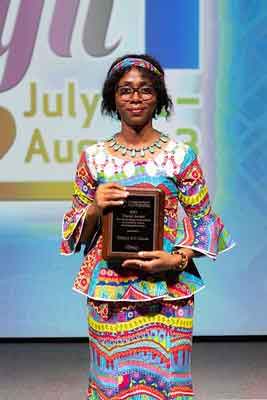
Dr Titilayo Falade showcasing her Travel Award for Food Safety Professionals 2021.

The prestigious International Association for Food Protection (IAFP) has awarded IITACGIAR Scientist Titilayo Falade a Travel Award for Food Safety Professionals working full-time in the field of food safety in a country with a developing economy. Falade, a recipient of the 2021 award, received the award at the 2022 IAFP conference in Pittsburgh, USA, after missing the 2021 event due to logistical challenges caused by the COVID-19 pandemic.

Falade is an Associate Scientist with IITA’s Pathology/Mycotoxin and Aflasafe Unit. She received this support in recognition of her contributions to food safety, including mycotoxin research in sub-Saharan Africa and food adulteration research. The award also acknowledges her work mentoring graduate students in food safety.

The conference allowed Falade to share her knowledge and collaborate with other researchers in addressing global food safety research. At the 2022 conference, she presented her research titled “Controlled fermentation with selected lactobacilli and yeast probiotics decontaminates aflatoxins in maize gruel and changes the amino acid profile differentially.”

IAFP’s mission is “To provide food safety professionals worldwide with a forum to exchange information on protecting the food supply.” Every year over 3,500 global members of the IAFP attend the annual meeting from over 50 countries. (https://www.foodprotection.org/about/past-awardees/travel-award-for-food-safety-professionals-in-a-country-with-a-developing-economy).

IAFP publishes the Journal of Food Protection, the leading global publication dedicated to food safety.

Contributed by Titilayo Falade

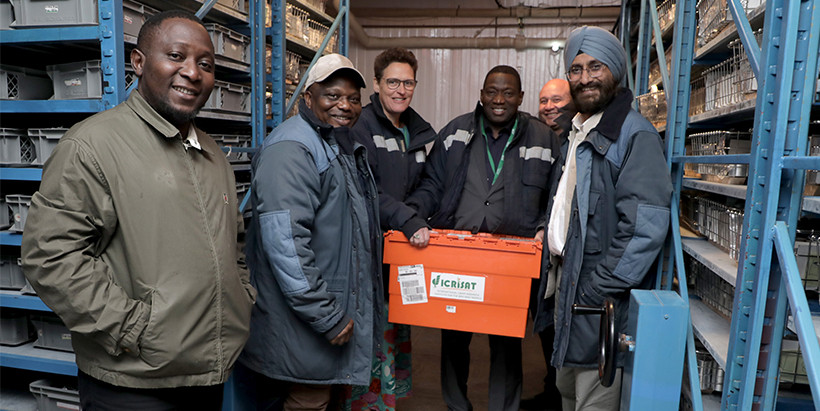
During its annual general meeting in IITA, Ibadan, from 11 to 15 October, the CGIAR Genebank Initiative agreed to engage more with farmers, understand their needs, and prioritize their preferences instead of imposing collections on them. The meeting, attended by CGIAR genebank managers, CGIAR partner initiatives, and partners from the National Agricultural Research systems (NARS), focused on strengthening cohesion among CGIAR centers and promoting accelerated breeding and other genetic innovation initiatives.

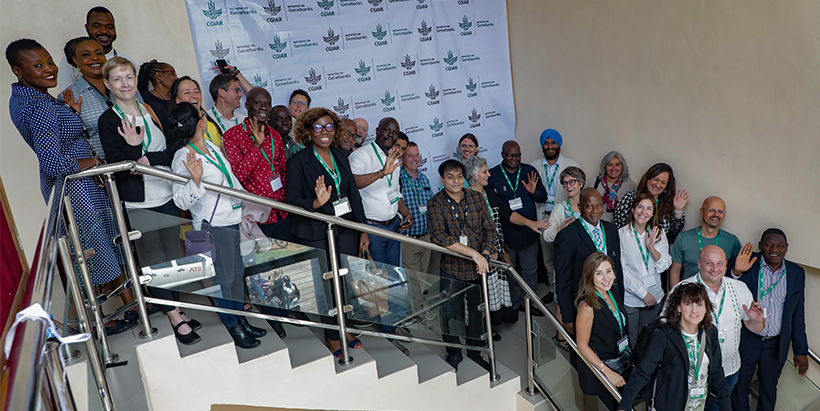
Participants at the CGIAR Genebank Initiative AGM.

Global Director for Genetic Innovation Sonja Vermeulen highlighted recent updates, including the NARS-CGIAR breeding network for Africa, partnership with national genebanks, and the CGIAR-Crop Trust partnership meeting to be held later in the year.

The International Center for Agriculture in the Dry Areas (ICARDA) Genebank Manager in Lebanon and Initiative lead for the genebanks, Dr Mariana Yazbek, introduced the structure and priority of the genebank initiative to national partners and stated that the annual general meeting aimed to connect CGIAR with stakeholders and national partners.

“We opted to have this meeting in Nigeria to communicate closely and strengthen collaboration with our national partners from Africa. We will have presentations from other initiatives within the CGIAR and our national partners and discuss our plans,” she said.

The five-day meeting featured presentations from breeders and national partners from Mauritius, Nigeria, Togo, Zambia, and Zimbabwe on their activities, priorities, needs, and areas of possible collaboration with the Initiative.

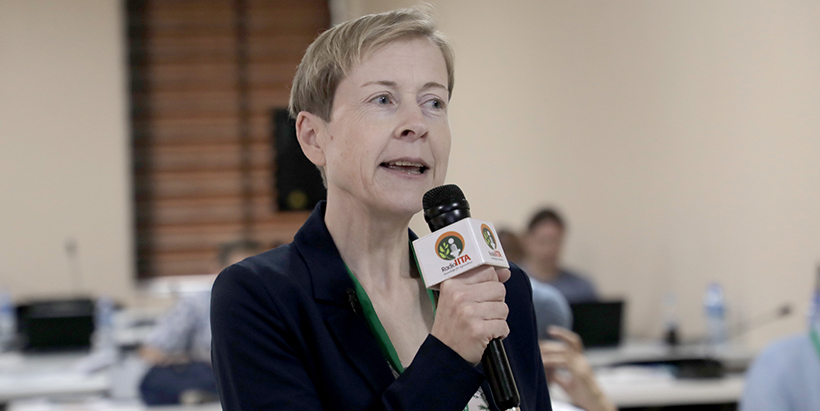
arhus University Senior Scientist and Work Package 2 co-Lead, Dr Fiona Hay, addressing the AGM.

Executive Director of the Forum for Agricultural Research in Africa (FARA), Dr Yemi Akinbamijo, presenting on African Food Systems, stated that the network between research institutions like CGIAR and FARA and national partners is crucial for Africa’s food systems and the world at large.

There were also in-depth presentations and discussions around the Initiative’s work packages—operations, capacity building, cryo-preservation, research, and optimization.

Some participants expressed delight at the first post-COVID convergence, as the AGM allowed them to liaise and share ideas around the Initiative’s current and subsequent work plans.

“It has been good hearing from the other initiatives, and it will be really good for concrete areas of collaboration with some of the partners present to be identified. It will be a great output,” said Aarhus University Senior Scientist and Work Package 2 co-Lead, Dr Fiona Hay.

According to Charlotte Lusty, Senior Director, CGIAR Genebanks, the meeting will further strengthen the network of genebank managers alongside the focus on partnership with national genebanks and national agricultural research programs.

“We really want to be able to reach out and make sure people know what is available in the genebanks, how they can ask for it, and how we can help them,” she said.

IITA West Africa Hub Director and Head of IITA Genetic Resources Center, Michael Abberton, who also co-leads the Initiative, explained that the team is working with the Accelerated Breeding Initiative. “There are active collaborations within the genebanks and the Accelerated Breeding Initiative. We hope to develop those further so that the appropriate deployment of germplasm from the genebanks within breeding is enhanced,” he stated.

The AGM also focused on updates, challenges facing the genebanks, and discussions on incorporating inputs and feedback from the national partners.

Some of the AGM participants during a tour of the IITA Genebank.

Participants also visited the genebank facility of the National Center for Genetic Resources and Biotechnology (NACGRAB), Moor Plantation, in Ibadan. The visit, influenced by the collaboration of NACGRAB and Crop Trust, involved a detailed tour of the facility and its accessions, allowing for further discussions between the collaborators on the support required to improve the productivity of the genebank.

Contributed by Tolulope Akinola

Theme: Genebanks

Keywords: Breeding, Genetics, Initiatives, Food systems

The CGIAR Women in Research and Science (WIRES) employee-led resource group recently had a virtual engagement to discuss the progress and new happenings in the group. The meeting, themed “Connecting and Mentoring, What’s new with WIRES!” was held on 24 October.

IITA women nutrition scientists perfecting a new recipe.

Giving the opening remarks, The Alliance of Bioversity International and CIAT Knowledge Sharing Specialist Arwen Bailey stated that the group was launched in July 2020 to empower and increase the visibility of women research and science professionals across CGIAR.

Bailey and other co-coordinators, International Maize and Wheat Improvement Center (CIMMYT) Technical Program Manager Aparna Das, IITA HarvestPlus Cassava Breeder Elizabeth Parkes, and International Center for Agricultural Research in the Dry Areas (ICARDA) Communication Consultant Nada Abdelhamid, shared their reasons for volunteering in WIRES. Participants also highlighted their expectations for the meeting.

Explaining the vision and mission of the group, Das stated that WIRES aims to provide tools and knowledge that support professional development. She added that this would create visibility for CGIAR women in science and research so their voices are heard and their contributions recognized. “We are an open community that accommodates both men and women who are willing to support the vision of WIRES,” she said.

HarvestPlus Cassava Breeder Dr Elizabeth Parkes is one of the WIRES coordinator

Discussing her reason for sponsoring WIRES, CGIAR Executive Managing Director Claudia Sadoff said she admires the efforts and engagement of the team in supporting women despite having other personal life activities. She added that the increase in the percentage of women scientists calls for more effort to train and empower these women. “Thanks for allowing me to be your sponsor,” she said. International Livestock Research Institute (ILRI) Director General Jimmy Smith, also a sponsor, stated that his motivation to join the cause stems from his experience raising daughters.

Highlighting how intending volunteers can support WIRES, Das spoke on mentorship as a promising strategy to advance Gender, Diversity and Inclusion (GDI) in the workplace as it offers access and advocacy for women. Explaining the criteria for engagement, she stated that a mentor must be passionate about advancing GDI, while the mentee must be a middle to senior-level career woman researcher/scientist with an appetite to learn. “Registration for the program will begin in November, and the program will kick off in December. Interested mentors and mentees who meet the criteria can register and be trained,” she said.

Other new WIRES initiatives coming up before the end of 2022 include “Random coffee,” where members can schedule to meet physically or virtually to build a vibrant relationship and network, and “Focus groups” for discussions that will ensure continuous improvement for WIRES.

Closing out the meeting, CGIAR Global Director of People and Culture, Fiona Bourdin-Farrell, summarized ways volunteers can help to advance women in science and research in CGIAR. She mentioned that it starts with joining the WIRES team, being a part of the mentoring program, engaging in the random coffee pilot, and joining focus groups. “You can contribute to the information in the newsletter. You can also register as both mentor and mentee as long as you meet the criteria,” she concluded.

Contributed by Ochuwa Favour Daramola

With the world doing everything to save people and the planet from human activities contributing to environmental degradation and climate change, IITA organized its first-ever Green IITA Week (#GreenIITAWeek) with activities and lectures propelling people to “think and live green.” The event, which took place from 26 to 30 September, was anchored and driven by IITA Corporate Services, including the Forest Center, Facilities Management Services, HOSTRAS, IITA School, and the Waste Museum, Ibadan.

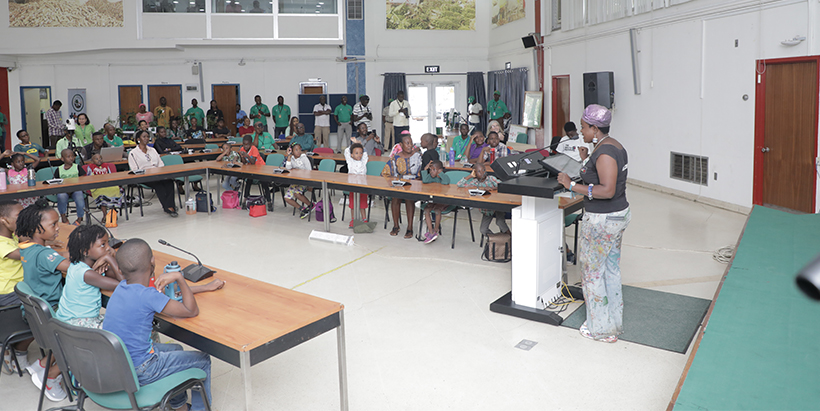
The Waste Museum Founder Jumoke Olowookere speaking on how to turn waste into wealth.

The event took off with awareness raising at the IITA gate. Colorful models modeling fashion attire made from waste made impressionable sights to everyone arriving at the campus. Placard-raising staff members displayed environmental conservation messages to inspire the green initiative in people. Seminars during the week challenged everyone to consider the impact of their daily choices on environmental protection and sanity. The Head of IITA Facilities Management Services, Waheed Quader, enjoined everyone to explore alternative energy sources that reduce power consumption. His insightful presentation highlighted IITA’s current energy consumption and why everyone should think and go green.

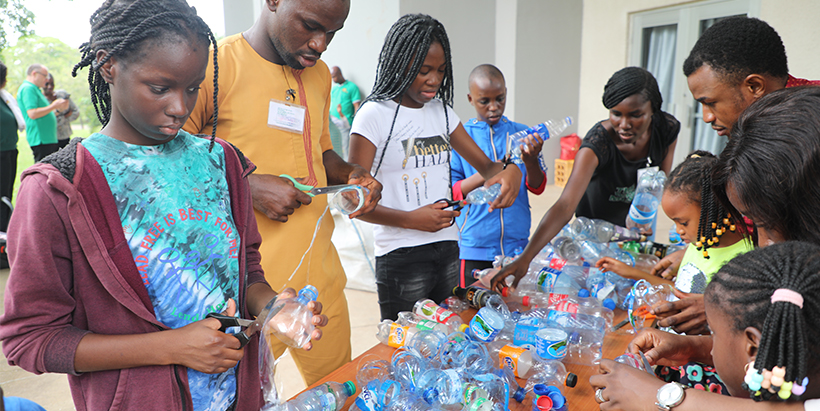
An Ibadan Waste Museum team member, teaching the children how to turn waste bottles into fashionable wear.

IITA Agricultural Economist and Circular economy expert Feleke Shiferaw said the World Economic Forum (2021) estimates that more than 100 billion tons of resources enter the global economy every year (metals, minerals, fossil fuels, and biomass). He proposed the development of new value chains that fit biological materials into the industrial value chain to minimize the volume of raw materials and energy used per economic activity. I-House Food and Beverage Manager Funmi Joe-Oka vividly depicted the effect of food waste on the hungry and less privileged, urging drastic measures to curb food waste and repurpose leftovers to save food.

Waste Museum Founder Jumoke Olowookere, whose mission is to create a sustainable world without waste, engaged school children from IITA International School and Forest Center’s School Conservation Clubs (SCC) in waste-to-wealth creation activities. Cartons, nylon, paper, tins, fabric, and other waste collected in selected portions of the IITA campus in 2 to 3 weeks, were reused by the school children to create beautiful artwork, jute bags, fashion wreaths, carnival attire, and wreath medals, among others.

A campus-wide carnival procession featuring colorful displays from participants.

To wrap up the week’s activities, IITA school children preached the conservation message through captivating songs to save Mother Earth. Afterward, participants participated in a campus-wide carnival procession, displaying colorful art pieces, fashion wreaths, and other wares created from waste amid music and dancing. The week inaugurated 12 IITA Green Ambassadors, who have contributed immensely to keeping our earth greener for healthy living. Winners of the daily quiz also received pleasant rewards for their efforts.

The first #GreenIITAWeek recorded participation from green lovers. The organizers anticipate increased engagement from the IITA community in subsequent celebrations, with more ingenious ways to get all hands on deck to keep our earth cleaner, greener, and livelier.

Contributed by Folake Oduntan and Victoria Adabale

Ghana is on the path to overcoming issues related to aflatoxin contamination in food and feed—maize, groundnut, sorghum, and derived products—by launching a landmark National Policy for Aflatoxin Control in Food and Feed. The Aflatoxin Policy, launched in Accra on 12 October, provides a coordinated approach among institutions and stakeholders to control aflatoxin in foods and feeds to reduce foodborne diseases. A successful implementation would also increase the income of farmers and agricultural stakeholders and promote food security and food safety in keeping with Goal 2 of the Sustainable Development Goals (SDGs)—Achieve Zero Hunger by 2030.

The Minister for Environment, Science, Technology and Innovation, Dr Kwaku Afriyie (front row, sixth from right), with other public and private sector stakeholders showcasing the National Aflatoxin Policy document at the launch event in Accra.

Ghana’s Minister for Environment, Science, Technology and Innovation (MESTI), Dr Kwaku Afriyie, lauded the effort of the Science and Technology Policy Research Institute of Ghana’s Council for Scientific and Industrial Research (CSIR-STEPRI) for their leading role in developing the policy. Afriyie emphasized that aflatoxin contamination in crops has serious implications for food security, health, trade, and livelihoods. He noted how aflatoxin might be linked to increased liver cancer cases in Ghana (21% of all recorded cancer cases in Ghana).

Afriyie elaborated on how aflatoxins pose a barrier to trade and market development due to the rejection of contaminated products by local and international buyers. In the early 2000s, the European Union (EU) was the main destination for Ghana’s groundnut and maize products; however, only 10% of the exported peanut butter met the stringent EU standards in 2019. The Minister, therefore, acknowledged that the policy aligns with the Government’s Coordinated Programme of Economic and Social Development Policies (2017-2024), which recognizes challenges in agriculture, nutrition, and health and makes provisions for addressing them. When implemented, he said, it would boost the success of the government’s flagship programs, including Planting for Food and Jobs, Planting for Exports and Rural Development, Rearing for Food and Jobs, and One District One Factory.

In his speech, the Minister of Food and Agriculture (MoFA), Dr Owusu Afriyie Akoto, also recognized the immense adverse effects of aflatoxin contamination. He indicated that MoFA, through the Plant Protection and Regulatory Services Directorate (PPRSD), has developed codes of practice for preventing, reducing, and eliminating aflatoxin contamination in maize and groundnut in the country.

Long-time IITA collaborator and Chairman of the National Steering Committee for Aflatoxin Control, Professor Richard T. Awuah, appealed to the Government of Ghana through MoFA to adopt Aflasafe GH01 and Aflasafe GH02. These aflatoxin biocontrol products were developed specifically for Ghana through painstaking research by IITA, in collaboration with the Kwame Nkrumah University of Science and Technology (KNUST) and the US Department of Agriculture-Agricultural Research Service (USDA-ARS). He said studies have shown that, apart from its high effectiveness in maize and groundnut, farmers who used Aflasafe to cultivate sorghum in the Northern Region produced aflatoxin-safe sorghum.

“This is probably the most important way we can minimize aflatoxin contamination of our feed and food in Ghana. We have tried drying, early planting, early harvesting, and proper storage. These are good, but they don’t amount to much. It is the Aflasafe, which is going to do the trick,” Prof. Awuah said. He added: “If the Government helps make Aflasafe available to farmers, it will help a lot in mitigating aflatoxin contamination of our foods.” Aflasafe distribution rights in Ghana have been licensed to CalliGhana, a UPL subsidiary.

A significant aspect of the policy is that CSIR-STEPRI used the Prioritizing Investments for Market Access (P-IMA) framework in collaboration with AGRA and the support of the Standards and Trade Development Facility (STDF) to harness the power of strong public‒private dialogue, economic data, and evidence for prioritizing investments related to aflatoxin control. Further, various activities identified were ranked into five main investment options in the Aflatoxin Policy’s implementation plan to bring the policy’s vision to life:

  1. Consolidating institutional capacity to ensure successful implementation of the policy
  2. Increasing public awareness, advocacy, communication, and demand for aflatoxin-safe food and feed
  3. Strengthening research and technology transfer on aflatoxin
  4. Enhancing surveillance systems for the detection of aflatoxin-related diseases in humans, livestock, and fish
  5. Strengthening the capacity of value chain actors in pre- and post-harvest aflatoxin management for market access.

The goal for implementing activities under these investment options is to strengthen consumer protection while increasing market access for domestic and international trade in aflatoxin-safe food products for increased income of value chain actors. MoFA, MESTI, the Ministry of Health (MoH), and the Ministry of Trade and Industry (MoTI) have been tasked to lead the implementation of activities within their respective mandates.

Contributed by Daniel Agbetiameh

A delegation from the United Kingdom Foreign Commonwealth and Development Office (FCDO) recently paid a four-day visit to IITA headquarters in Ibadan to review the existing partnership between the two organizations.

IITA Deputy Director General, Partnerships for Delivery, Dr Kenton Dashiell and IITA Management team members in a meeting with the FCDO team.

The FCDO Food and Agriculture Advisor Nicholas Baynham and Deputy Program Manager Naanchin Muhammad were received by IITA Deputy Director General, Partnerships for Delivery (DDG-P4D), Kenton Dashiell and other members of the Institute’s Management team.

In his opening remarks, Baynham said the visit was to learn and experience the research side of the MoUs that have been signed, such as the recently signed one with HarvestPlus.

FCDO Food and Agriculture Advisor Nicholas Baynham and Deputy Program Manager Naanchin Muhammad visiting the ILRI Livestock farm.

He stated that the visit is part of the team’s plans to have better oversight of what the UK does in Nigeria, “to know about what we are funding and contributing to while exploring what we can do more,” he said.

In his welcome remarks, Dashiell encouraged them to ask questions to get all the information they need during their tour of IITA’s facilities. He also gave an overview of IITA research activities in West Africa.

IITA Biomarker and Anthropometry Lead for the National Food Consumption and Micronutrient Survey (NFCMS), Mercy Lungaho, gave insights from the National Nutrition Survey report. “IITA is working with partners to ensure that agriculture works for nutrition,” she said.

She also highlighted the need to increase efforts to help people make informed, healthy choices and improve nutrition metrics.

FCDO team visiting a rice trial site with AfricaRice Country Representative Dr Francis Nwilene.

Baynham commended the IITA Nutrition team’s contribution to the national survey and stated that it is an excellent approach to addressing food insecurity.

Deputy Director General, Corporate Services (DDG-CS), Hilde Koper, also gave the visitors an overview of IITA’s Corporate Service activities in Nigeria and Africa. There was also an overview of IITA’s financial management and project administration.

The FCDO team visited various facilities at the IITA headquarters, including the Genetic Resources Center, Nutrition Laboratory, Cassava Unit, HarvestPlus, the IITA-Youth in Agribusiness Office, and Business Incubation Center (BIP), showcasing Aflasafe, Nodumax, and GoSeed.

“The extent of IITA’s work is much bigger than I had previously thought, and it is impressive. It is also good to look at the different ways of integrating research; for example, the integration of the genebank, biosciences, and the field activities are all very interesting,” said an excited Baynham.

The FCDO team said they would explore suitable ways to strengthen the mechanism for communication between both organizations, especially within Nigeria. This will provide more opportunities to collaborate and engage in the future.

Contributed by Timilehin Osunde