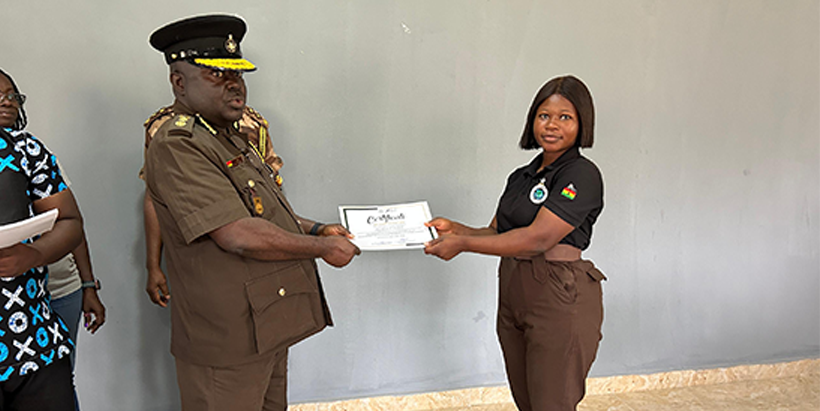
The Director of Prisons Service In-Charge of Agric, Kweku Ababio Ali presenting the certificate to one of the trainees.
The Black Soldier Fly production unit, established in Kofisah, hosted a training session on the Black Soldier Fly (BSF) technology for over 15 officers of the Ghana Prisons Service (GP) from 15 to 18 July 2025.
One of the project’s objectives is to build capacities and BSF technology know-how of youth agripreneurs and other stakeholders, and
The Ghana Prisons’ agricultural agenda is to reduce the feed cost for their poultry and pig farms.
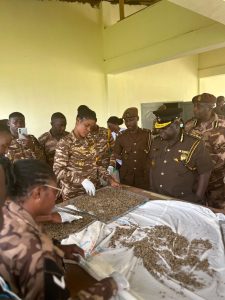
Participants processing the larvae.
On day one, participants were introduced to BSF and its benefits during the theoretical session of the training. The facilitators emphasized the necessary areas to focus on like housing, farm management, and mass production of the BSF.
Dr Selorm Kofi Ofori, an Entomologist from BNARI, highlighted other areas such as the life cycle of the fly and its uniqueness, the biology of the eggs and the larvae, and how the BSF fits into a circular economy. These laid the ground for the practical session, where participants reared and fed the larvae.
In the practical session, participants were guided through setting up traps for wild eggs, egg incubation, and the transfer of the neonate larvae. The training also highlighted the harvesting and processing of the larvae and the process of degutting them.
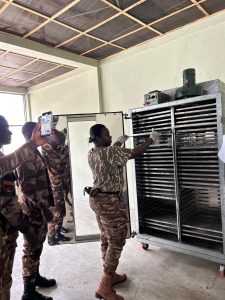
One of the participants placing the larvae into the oven.
Participants were taught how to use seed germination to test the maturity of the frass after composting, this was led by Joshua Sintim, Chief Technologist and Soil Scientist at BNARI.
Participants were awarded a certificate of completion after the three-day training on BSF technology. The Director of Prisons Service in charge of agriculture, Kweku Ababio Ali, was present at the certificate presentation. He expressed gratitude to the IITA and BNARI team for their support.
Contributed by Francisca Ocloo and Amuetey Nagetey0
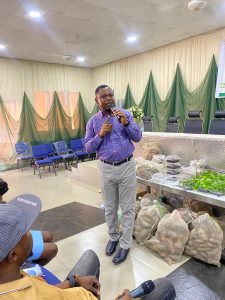
Dr Olugboyega Pelemo with the yam farmers during the training in Ondo state.
Nigeria and the rest of Africa is facing mounting food security challenges, like a lot of the staple crops, yam, a crop feeding millions across West Africa is experiencing declining yields due to poor seed quality, limited access to improved varieties, and inadequate farming techniques. As climate change and population growth intensify pressure on food systems, smallholder farmers urgently need innovative solutions to boost productivity and ensure sustainable livelihoods.
Recognizing this critical need, IITA–CGIAR, in partnership with the Ondo State Government, trained yam farmers in the state on improved seed techniques and innovative practices for yam sett multiplication and tuber production directly addressing access to quality yam seeds and low productivity.
The two-day training, held in Akure, is part of IITA’s ongoing efforts to equip farmers with the knowledge and skills to boost production, and strengthen seed systems through cutting-edge technologies and practical solutions.
Facilitated by Dr Olugboyega Pelemo, Manager Field/Seed System, IITA-Yam Breeding Program, the program introduced participants to modern techniques such as the use of mini-setts to produce high-quality seed yam, which in turn generates larger and more marketable tubers. The training also covered best practices for planting, storage, harvesting, and sustainable soil management, including the benefits of crop rotation.
Dr Olugboyega Pelemo during the training of farmers in Ondo state.
Dr Pelemo presented certified seed yams to participants, highlighting higher yield potential and disease resistance, and innovations that can increase farmer incomes by up to 40% while reducing crop losses. The practical sessions enabled farmers to gain hands-on experience, while discussions addressed community concerns such as seed access and storage infrastructure. He also encouraged the use of cooperative structures for better access to inputs and continued training.
As part of the program, 25 farmer cooperatives benefitted from the seed yam for onward distribution to their members, ensuring that the knowledge gained is matched with practical resources to implement it. A communication platform was also established for ongoing knowledge sharing among participants.
In his remarks, Dr Pelemo reaffirmed IITA’s commitment to working closely with the Ondo State Government and other partners to deliver innovative agricultural solutions. “With the right knowledge and support, farmers can achieve better harvests and improved livelihoods, contributing directly to food security and economic growth,” he said.
Contributed by Queen Olutominiyi
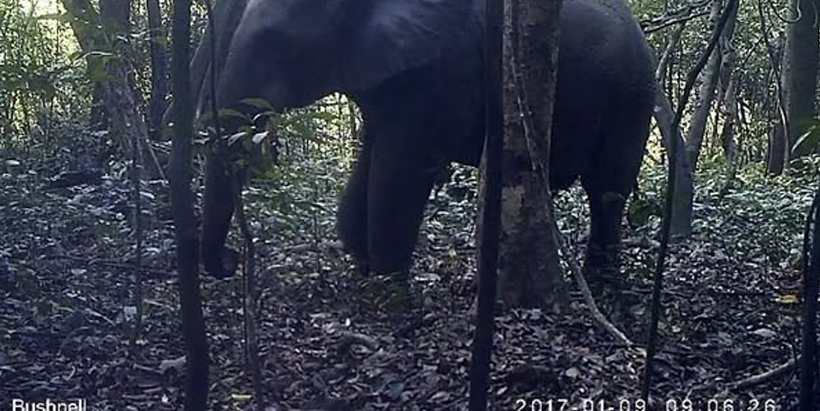
The Omo Forest Reserve, an important biodiversity hotspot in Southwest Nigeria, is home to endangered forest elephants and diverse plants and animals. Thanks to dedicated conservation efforts, there have been no recorded cases of elephant poaching in the Reserve for over ten years.
Earlier this season, during activities related to World Ranger Day, Wild Africa, one of IITA-CGIAR’s partners, organized a reporting trip in collaboration with the Nigerian Conservation Foundation (NCF). The purpose was to highlight ongoing efforts to protect wildlife and address human-elephant conflicts.
At Wild Africa, educating the media, who in turn inform and inspire the public, is central to our mission, said Festus Iyorah, the Nigeria representative at Wild Africa and organizer of the trip.
“These reporting trips give journalists firsthand exposure to the realities facing our wildlife and wild spaces, helping them connect with both the challenges and the people on the frontlines, such as the rangers.
“Omo Forest’s story is one of both hope and ongoing struggle. That is why continued collaboration with the media is vital in championing its protection, especially safeguarding its iconic forest elephants.”
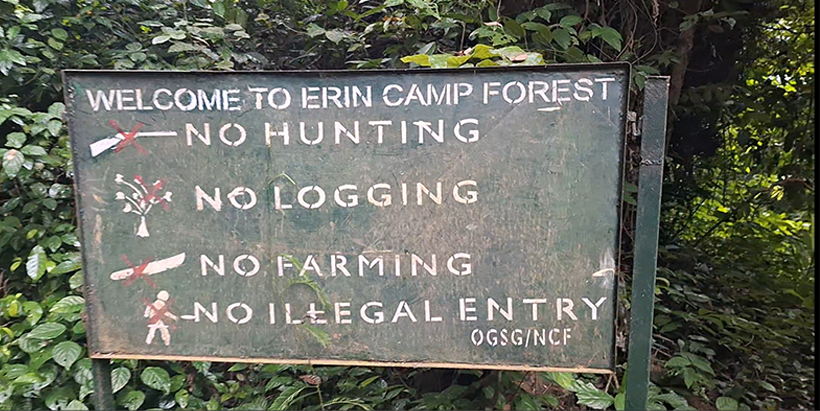
Ranger Emmanuel Olabode led climate change and environmental journalists on a visit to River Omo, Erin Camp Forest, and the surrounding core conservation areas where elephants roam.
“Encroachment is one of the problems we face,” Olabode said. “Logging and farming have reduced animal habitats, forcing elephants to migrate. Still, they are resilient animals that carry ancestral memories of their paths and tend to return to safer grounds like Itase, where human disturbance is minimal.”
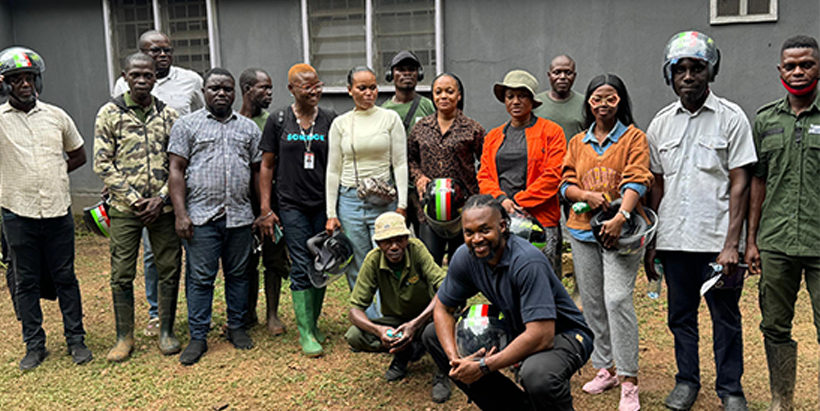
The conservation program, supported by partners including NCF and the Wild Planet Trust, combines wildlife monitoring, ranger patrols, and community education. Over 12 rangers, some former hunters, now protect the forest and run environmental awareness programs in local schools.
Stakeholders acknowledged the challenges, while farmers and loggers expressed concerns over land disputes and livelihoods. The community chiefs urged the government to establish clear boundaries for sustainable land use. According to Odunayo Odujobi, a licensed logger:
“The government generates significant revenue from forestry, but if concessions continue without balance, thousands of jobs could be lost.”
Ibigbami Olusanjo Oladele, Divisional Forest Program Officer at the Forestry Research Institute of Nigeria (FRIN), in Area J4 of the Omo Forest Plantation Projects, emphasized the importance of partnership. “Animals know no boundaries; to them, it is one forest. We must work together to protect it,” a representative stated.
Around 55,000 hectares have been proposed for conservation, though approval is still pending. Meanwhile, rangers focus on safeguarding the core habitat around Erin Camp and the UNESCO-designated strict nature reserve.
IITA’s focus on sustainable land use and forest conservation aligns with these initiatives, ensuring that agricultural development does not come at the expense of biodiversity. Protecting the Omo Forest elephants is more than saving a species; it is about maintaining ecological balance and creating a future where communities and wildlife can thrive together.
Contributed by Dajie Odok
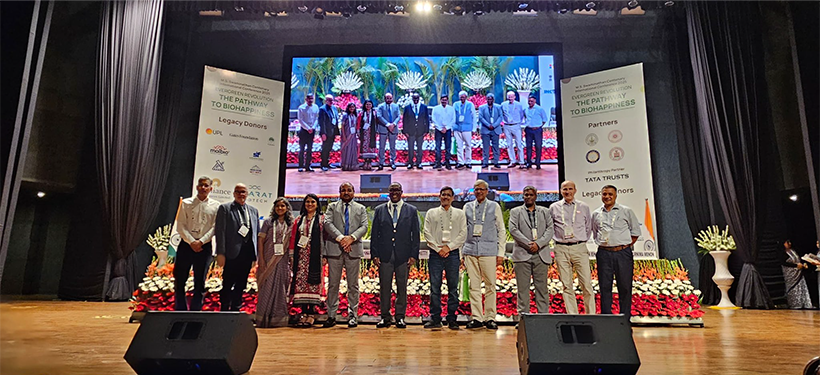
To mark the 100th birth anniversary of the late Professor M. S. Swaminathan — a pioneer of the Green Revolution and an enduring advocate for agricultural transformation — global leaders in food systems and farming convened in India for the Evergreen Revolution 2.0 plenary. The International Conference on Evergreen Revolution – The Pathway to Biohappiness, hosted by the M. S. Swaminathan Research Foundation (MSSRF), explored bold visions for sustainable, inclusive, and resilient agri-food systems.
(m) IITA Director General, Dr Simeon Ehui with other panelists at the Evergreen Revolution 2.0 plenary in India
IITA Director General and CGIAR Regional Director for Continental Africa, Dr Simeon Ehui, joined distinguished panelists to discuss transformative agricultural approaches prioritizing farmer well-being, environmental sustainability, and food security. The event, opened by India’s Prime Minister Narendra Modi, underscored the importance of global cooperation in achieving these goals.
“The Evergreen Revolution 2.0 is about restoring health, diversity in our diets, and bringing dignity to our farmers,” Dr Ehui emphasized during his address.
Throughout the two-day engagement, Dr Ehui, leading a delegation, advanced IITA’s partnerships with leading Indian institutions, reinforcing the importance of South–South collaboration in agricultural research and innovation.
At the headquarters of the Indian Council of Agricultural Research (ICAR), Dr Ehui met with Dr Mangi Lal Jat, Secretary of the Department of Agricultural Research and Education (DARE) and Director General of ICAR, alongside senior officials. Discussions identified priority areas for collaboration — from soil health management and climate-smart crops to technology exchange and capacity building.
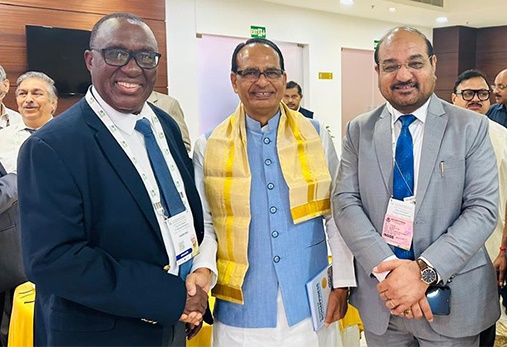
(l-r) IITA Director General, Dr Simeon Ehui; India’s Minister of Agriculture, Shri Shivraj Singh Chouhan; and the Director General of ICAR, Dr Mangi Lal Jat
The IITA delegation also met with Shri Shivraj Singh Chouhan, India’s Minister of Agriculture, and P. S. Gangadhar, Joint Secretary for Economic Diplomacy at the Ministry of External Affairs, to explore opportunities for strengthening agricultural R&D cooperation between India and Africa.
These strategic engagements reaffirm IITA’s commitment to building robust partnerships that advance sustainable agriculture and food security across continents. By combining India’s innovation capacity with Africa’s vast agricultural potential, the partnership aims to accelerate the development and scaling of solutions that address global challenges in food systems.
IITA expresses gratitude to MSSRF for the invitation and warm hospitality and looks forward to turning these discussions into impactful joint initiatives that benefit farmers and communities across the Global South.
Contributed by ‘Timilehin Osunde
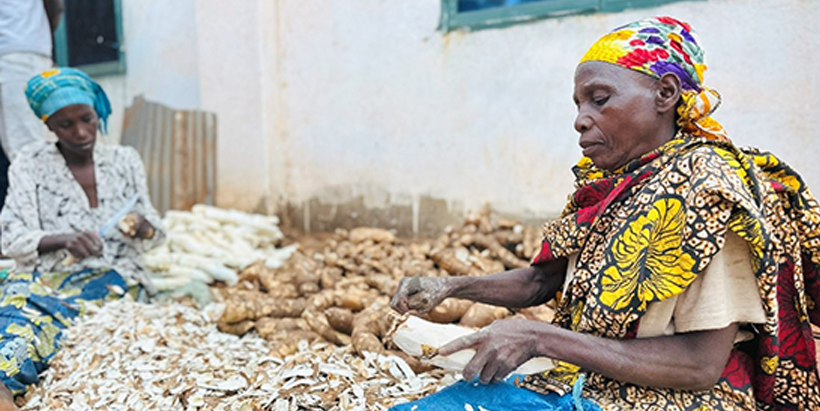
Women peeling the cassava roots in Kamonyi District, Nyamiyaga Sector
Rwanda’s livestock farmers are grappling with rising feed costs, particularly maize-based ingredients, which now sell for around 400-600 Rwf (USD 0.28-0.41) per kilogram. In contrast, High-Quality Cassava Peel (HQCP) mash, produced from processed cassava peels, costs only 200-250 Rwf (USD 0.14-0.17) per kilogram, yet delivers the same nutritional value as maize in feed formulation.
To address gaps in livestock feed production in Rwanda, IITA–CGIAR has been promoting High Quality Cassava Peels (HQCP) technology as a cost-effective and sustainable feed ingredient through ongoing efforts to scale innovation in sub-Saharan Africa.
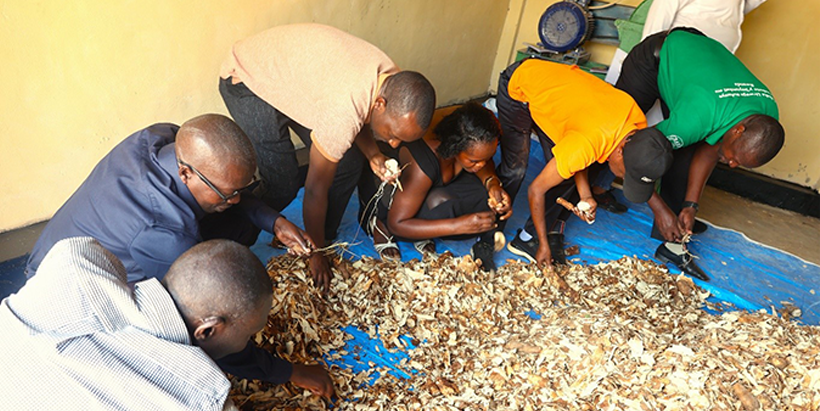
Trained entrepreneurs sorting cassava peels before grinding.
“Producing animal feed from cassava peels will cut the amount of cereals previously imported for mixing with other feeds. This will increase income for farmers and livestock keepers, especially since imported feed is expensive, and often in short supply,” said Jules Mutabazi, researcher at the Rwanda Agriculture and Animal Resources Development Board (RAB).
Following successful piloting, IITA-CGIAR is scaling HQCP production among cassava and animal feed entrepreneurs to expand access to affordable feed for cattle, goats, pigs, and poultry, while creating new agribusiness opportunities.
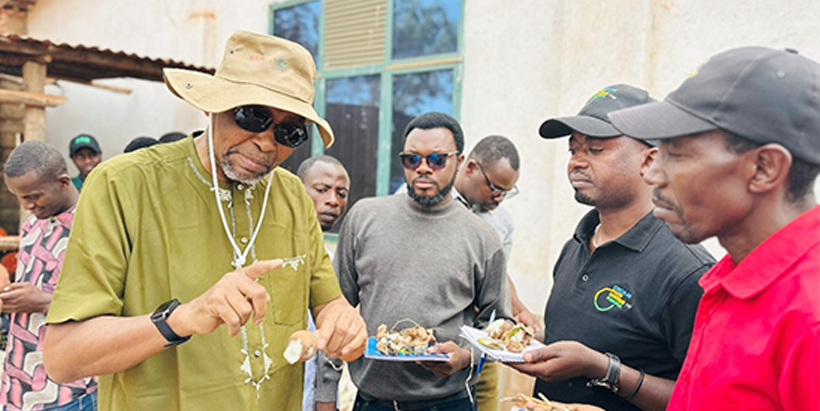
From 5 to 6 August 2025, IITA, through its Gwiza-Muhinzi project (funded by the European Union) and RUNRES, hosted a two-day, hands-on training in Rwanda entitled “Advanced practical training on High-Quality Cassava Peel processing into animal feed” for 35 cassava and animal feed entrepreneurs. The sessions, led by International Livestock Research Institute (ILRI) Scientist, Dr Iheanacho Okike, covered the full production process: sorting of wet peels, grating/milling of wet peels, dewatering, pulverizing, sun drying, milling of dried mash, and storing, so participants can replicate the process in their enterprises.
Dr Okike Iheanacho explaining the cassava peels sorting to livestock/cassava entrepreneurs
“Wasting cassava peels is like throwing money away. By processing those peels into HQCP feed, we create value from waste, address the rising cost of livestock feed, and reduce environmental impact. This is a win-win for farmers, processors, and the planet,” said Dr Okike.
For Jean Claude Munyaneza Kabayiza, a cassava seed entrepreneur and CEO of Holly Agriculture Company in Eastern Province, the training strengthened his resolve to start a cassava peel processing unit.
“I already had this project in mind, but it gave me even further clarity after this training. I may not start with a large factory, but I can begin with a small or medium-scale unit that processes cassava while ensuring no residue is wasted,” he said.
Participants also noted the direct cost savings HQCP offers;
“This cassava peel flour is helping us reduce the cost of animal feed. It is cheaper than the maize feed we normally buy, and it still has the high quality and nutrients our livestock need,” said Noella Umutoni, animal feed entrepreneur from Bugesera District.
By turning agricultural waste into a valuable resource, HQCP technology offers a practical solution to feed affordability, challenges, and availability, supporting Rwanda’s livestock industry and broader food security goals.
Contributed by Ritha Bumwe
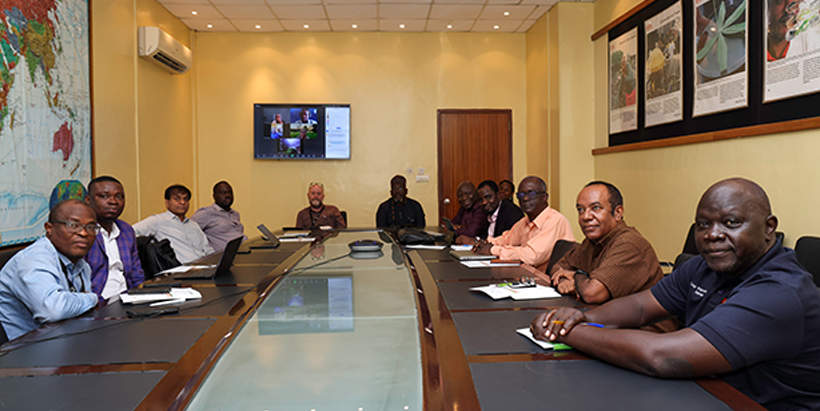
IITA scientists and GCA delegates during the preparatory workshop
As part of the mission dedicated to championing climate-resilient agri-food systems and ensuring food security for millions of farm families in sub-Saharan Africa, IITA–CGIAR is partnering with the Global Center on Adaptation (GCA) to provide technical assistance for phase two of the Special Agro-Industrial Processing Zones (SAPZ) project in Anambra, Ekiti, and Niger states in Nigeria.
A two-day preparatory workshop was held from 11 to 12 August at IITA Headquarters, Ibadan, to kick-start this collaboration. The session brought together GCA and IITA scientists to the project’s implementation strategies in-depth. The GCA Global Program Lead, Oluyede Ajayi, and Food Security Specialist, Oluwabunmi Ajilore, attended in person, while stakeholders from the three target states joined virtually.
In his welcome address, the IITA Director for West Africa, Michael Abberton, emphasized that climate resilience and plant health remain central to IITA’s research agenda. He added that the Institute is delighted to engage in discussions that will shape agricultural transformation in the participating states.
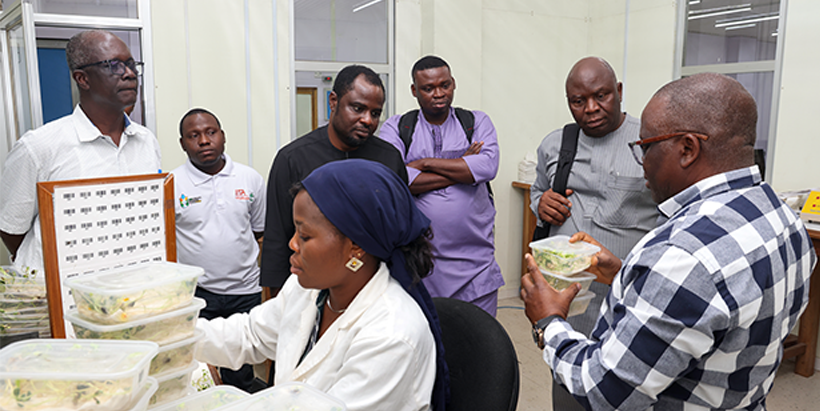
GCA delegates on a tour of the gene bank
Delivering the opening remarks, Deputy Director General, Partnerships for Delivery, Tahirou Abdoulaye, described the SAPZ project as a strategic intervention for advancing agricultural change in Nigeria. He reaffirmed IITA’s commitment to the partnership, noting that “collaboration in this project provides an opportunity for change” and improved livelihoods across Africa.
The second phase of the SAPZ project focuses on three key components – Digital soil health and facility mapping, digitalization of seed supply and distribution systems, and capacity building for climate-resilient foundation seed production.
IITA scientists showcased a range of climate-adaptive solutions and technical innovations tailored to the needs of Anambra, Ekiti, and Niger States. Presentations highlighted IITA’s digital tools, seed quality assurance systems, and laboratory services. Notably, Lava Kumar, Head of IITA’s Virology and Germplasm Health Unit, discussed digital solutions for seed quality management.
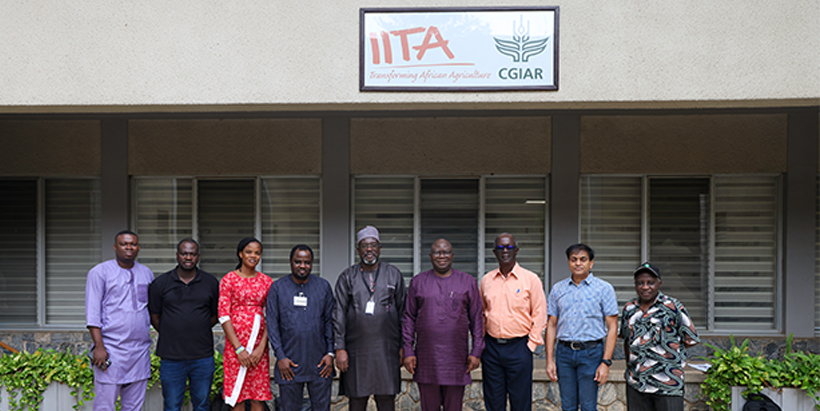
GCA delegates and the IITA management team
Simultaneously, the IITA Analytics Services Laboratory Manager, Joseph Uponi, detailed the laboratory support available to strengthen agricultural value chains. Representatives from IITA’s Project Development and Administration Unit (PDAU) and the Finance Directorate also outlined their roles in supporting the project’s success.
Following the workshop, GCA delegates toured several of IITA’s research facilities, including the Virology Laboratory, Gene Bank, Nodumax, Semi-Autotropic Hydroponics facility, and the Aflasafe production plant. The visit offered firsthand insight into IITA’s research capacity and potential impact on agricultural transformation.
The workshop concluded with a strategic meeting between the GCA team and IITA management to agree on next steps, reaffirming both organizations’ shared commitment to fostering climate resilience, agricultural productivity, and improved livelihoods in Nigeria.
Contributed by Ochuwa Favour Daramola
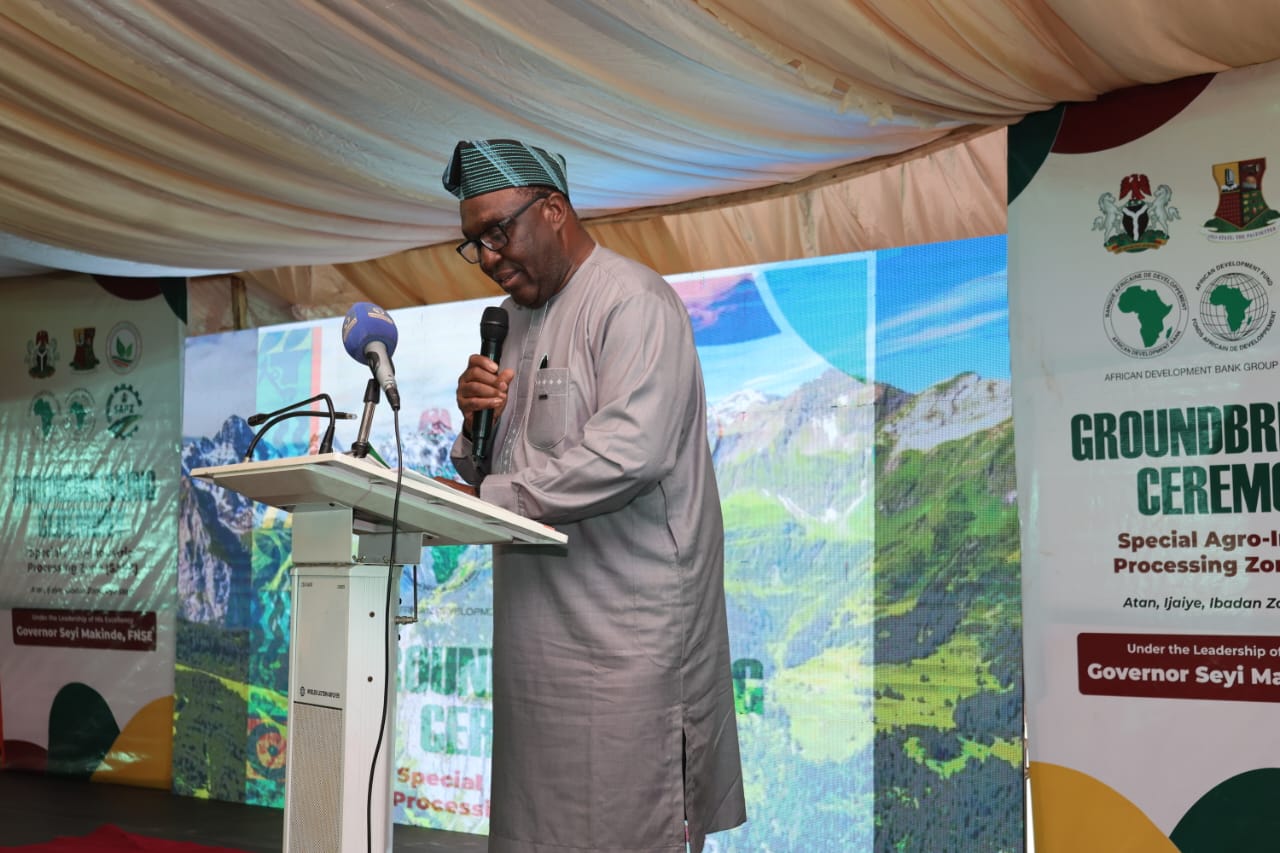
Dr Simeon Ehui giving his remarks at the groundbreaking ceremony of the Oyo State Agribusiness Industrial Hub – the first Special Agro-Industrial Processing Zone (SAPZ) in Southwest Nigeria.
In a bold move to accelerate agricultural transformation in Nigeria, IITA Director General and CGIAR Regional Director for Africa, Dr Simeon Ehui, joined the Oyo State Governor, Engineer Seyi Makinde, Honorable Minister of Agriculture and Food Security, Senator Abubakar Kyari – representing Vice President Senator Kashim Shettima, and the President of the African Development Bank (AfDB) Group, Dr Akinwumi Adesina, and other dignitaries at the groundbreaking ceremony of the Oyo State Agribusiness Industrial Hub – the first Special Agro-Industrial Processing Zone (SAPZ) in Southwest Nigeria.
Held at Atan-Ijaiye, the event brought together prominent dignitaries, underscoring a shared national and regional commitment to leveraging agribusiness for food security, job creation, and sustainable economic growth.
IITA Director General Dr Simeon Ehui with the Minister of Agriculture and Food Security, Senator Abba Kyari at the groundbreaking event.
The SAPZ program, spearheaded by the AfDB, aims to catalyze agricultural industrialization by developing agro-based hubs in rural areas. These zones are strategically designed to harness local agricultural strengths, close value chain gaps, and boost processing and value addition.
Governor Makinde described the hub as a game-changer for Oyo State and the nation. “These hubs are not standalone structures,” he emphasized. “They are deliberately designed as interconnected anchors of our agribusiness ecosystem. They bring producers closer to processors, and link farms to markets.”
Dr Ehui commended the initiative, noting its potential to catalyze inclusive growth. “This hub will unlock new opportunities for youth and women farmers, agripreneurs, and rural communities. It’s a model for engaging the private sector and fostering meaningful employment,” he said.
Dr Adesina highlighted the SAPZ program’s overarching goals: “Our objective is clear—to reduce post-harvest losses, improve logistics and infrastructure, connect production with processing and markets, transform rural economies, and, most importantly, create jobs.”
Recognizing the hub’s importance to agricultural development, Senator Kyari said, ‘This initiative isn’t just an infrastructure project, but an indication that Nigeria can transform agriculture.’
Also speaking at the event, AfDB’s Director General for Nigeria, Dr Abdul Kamara, provided context to the SAPZ vision. “SAPZs are purpose-built to dismantle the bottlenecks in agro-industrial processing. They represent a vital initiative capable of unlocking Nigeria’s full agricultural potential,” he said.
The SAPZ will be located on a 300-hectare Ijaiye site in Oyo State, part of a larger 3,000-hectare development. The hub will host diverse facilities, including a wholesale agrifood market, crop and livestock production zones, and state-of-the-art processing infrastructure.
IITA’s involvement in the SAPZ groundbreaking ceremony highlights the institute’s commitment to strategic partnerships that foster food security, economic resilience, and inclusive agricultural growth across Africa.
Contributed by ‘Timilehin Osunde
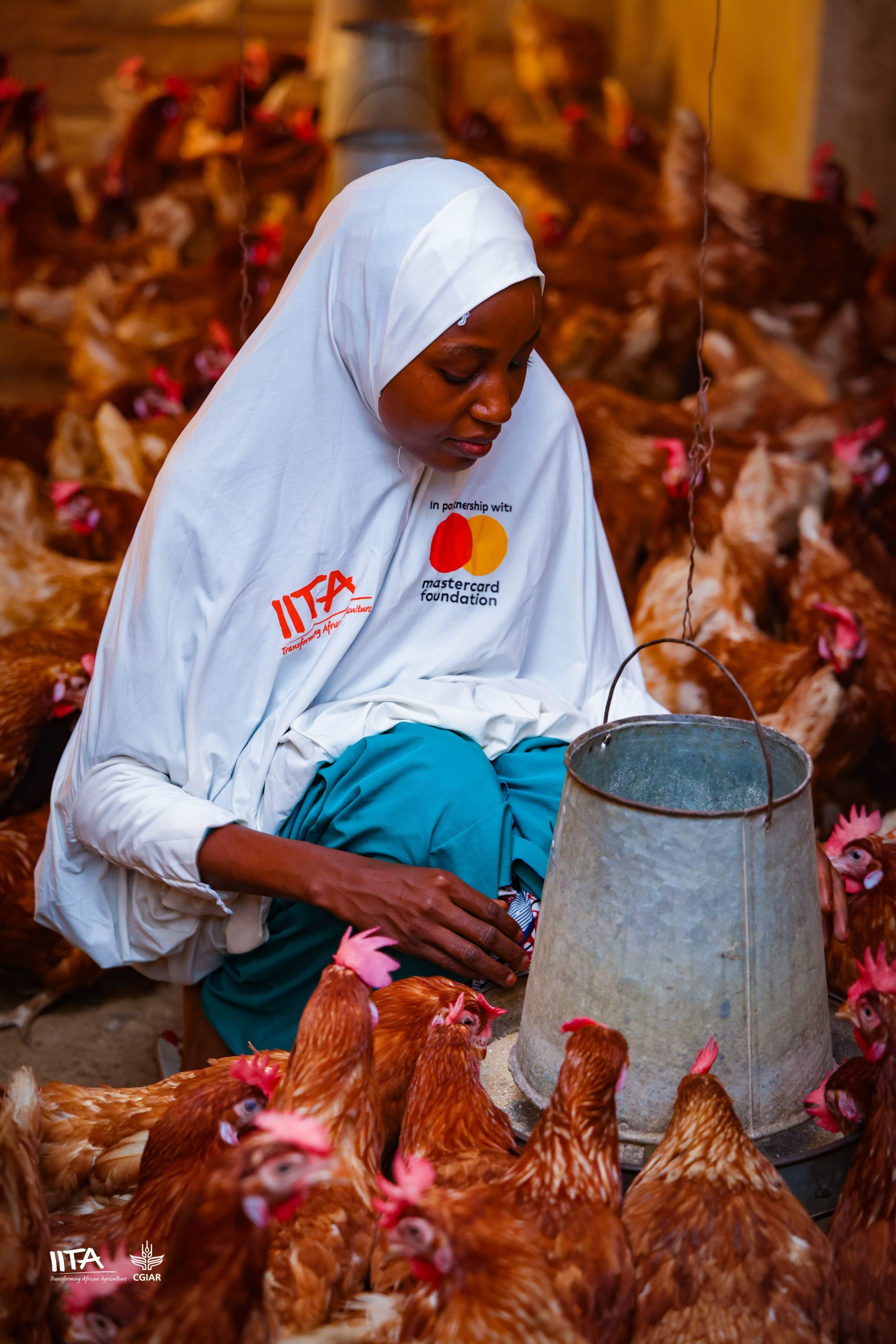
Rukayya Muhammad tending to layer birds in one of her poultry pens.
Mariam Abass and Rukayya Muhammad were subsistence farmers in northern Nigeria, producing just enough food to feed their families, until they came across an agribusiness training program that changed their lives.
This program has equipped them with the knowledge and skills to start and grow their businesses, significantly increasing their productivity and putting them on a sustained profitability path. For instance, one of the women disclosed that her net profit before the training was around a miserly N30,000, but that on applying the knowledge gained, her net income increased to a whopping N500,000, which she described as profound and life-changing. “The training was invaluable, it taught us how to manage our business, connect with buyers, and join groups that expand our knowledge and help us grow,” Rukayya, who lives in Kano State, stated.
Women farmers, particularly in the region, traditionally face low productivity and financial dependence on male family members. Culture and childcare responsibilities have historically hindered their participation in agricultural training, where they could access modern skills, mentorship, and resources to improve their agricultural practices.
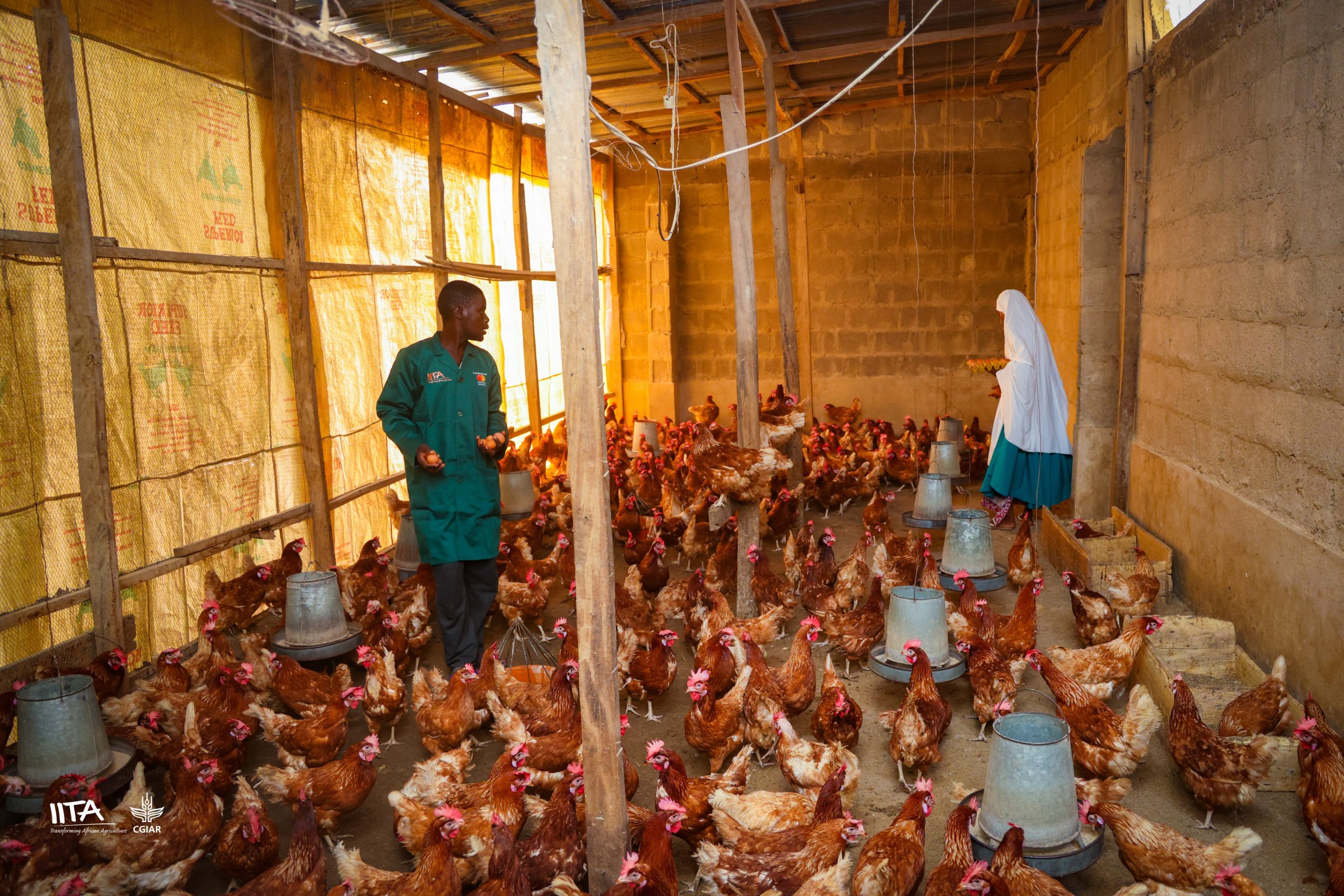
Rukayya and her husband collecting eggs from her poultry farm.
Given their peculiar situation, the IYA first conducted community assessments to identify the constraints and specific needs of women in the region, particularly those interested in agribusiness training. This eventually led to an agribusiness training program that targeted 70 per cent of women’s participation.
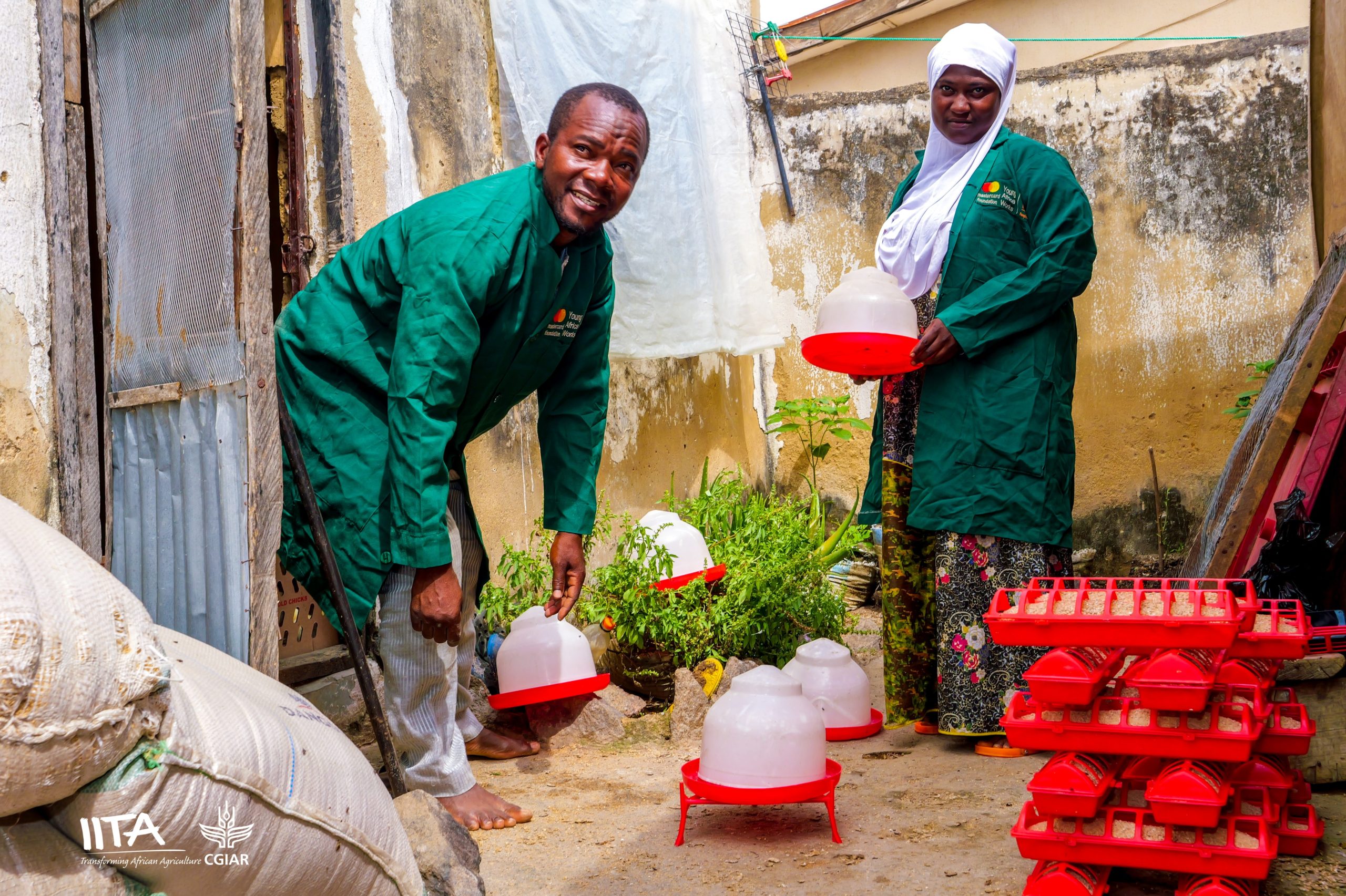
Mariam and her husband, Nasir, preparing feed for their chickens.
The training covered climate-smart farming techniques such as crop rotation, drip irrigation, improved livestock housing, feed optimization, vaccination, efficient waste management, renewable energy integration, and finance skills such as budgeting and record-keeping.
Mariam, who lives in Zaria, Kaduna State, noted that she had seen significant changes in her farm since participating in the training. “With the help of IITA, I now have vast knowledge in the poultry business and marketing,” she stated. “I don’t sell my birds locally anymore. I have markets in Kaduna and Kano, which have increased my income and improved my business insight.”
“Before we started the training, any time we stocked birds, we recorded losses and lost our capital because we didn’t know much about the business. Miraculously, IITA came into our lives, and that was where our journey to success started.”
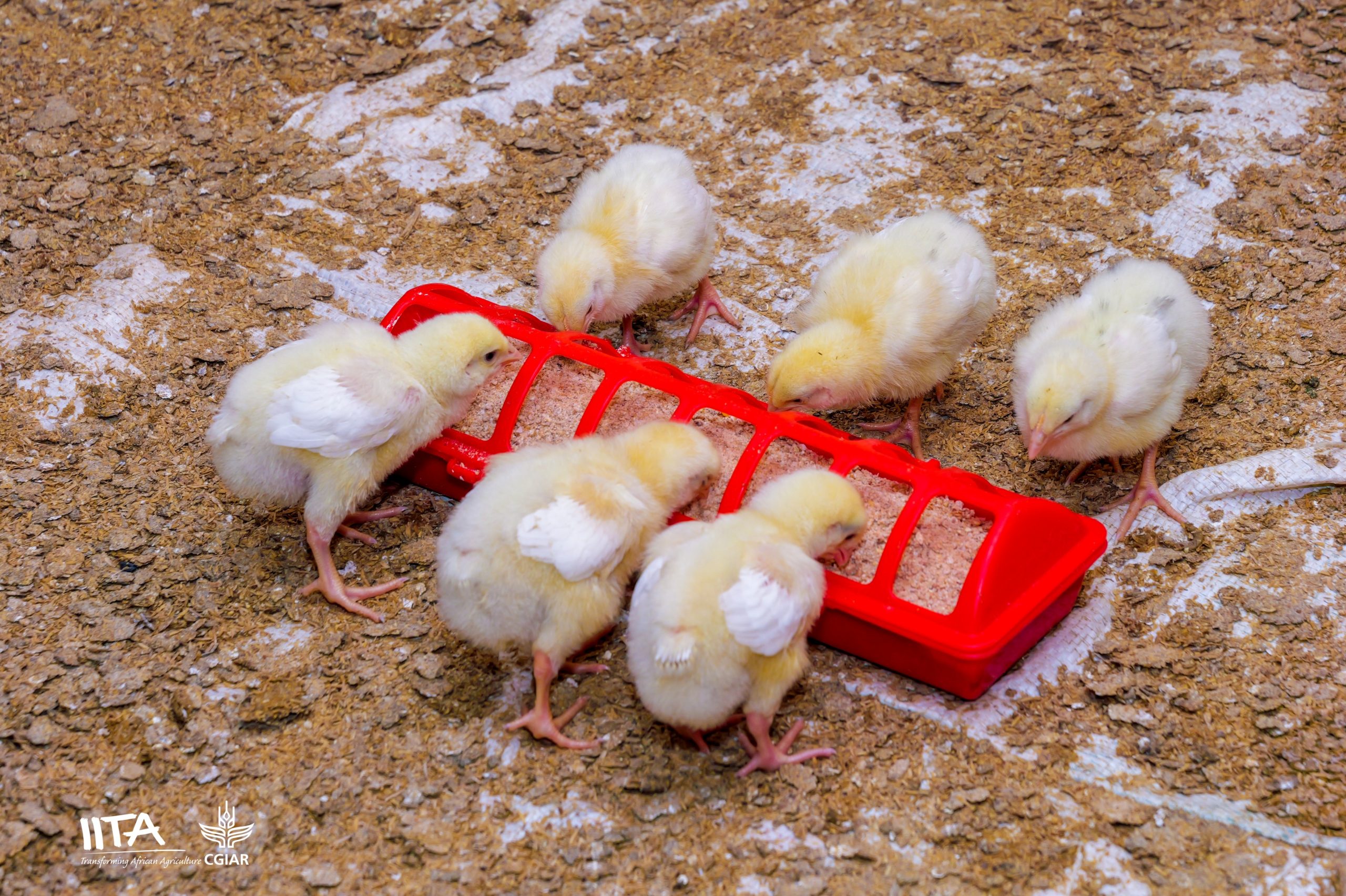
Chicks feeding in Mariam and Nasir’s brooding pen.
IYA provides childcare services and allows recess between training sessions to ensure nursing mothers are not distracted or excluded from the training. Additionally, the program allows couples to participate, eliminating hesitant spouses’ concerns and fostering family support. According to Mariam, the latter was why she could confidently participate in the training, describing the initiative as commendable.
Findings indicated that the training has enabled these women to evolve from subsistence farming into successful agribusinesses, boosting their income and enabling them to be part of the agricultural value chain. “Our business significantly improved after the IITA training,” Nasir Abubakar, Mariam’s husband, said with gratitude.
He added, “We gained marketing skills, which have helped us attract better customers. After our last sales, we deducted our expenses and made a profit of about ₦500,000, whereas before the training, our profit was less than ₦30,000.”
Solomon Adebayo, Monitoring and Evaluation Manager at IITA, emphasized the need for women’s empowerment, saying, “Rural women, who make up about 43 percent of the world’s agricultural workforce, face significant discrimination in land ownership, livestock ownership, equal pay, participation in decision-making roles, and access to credit.”
The women farmers participating in the program say the training has significantly improved their ability to manage businesses effectively. Relying on what she learned at the training, Rukayya has established reliable connections with more buyers and sells locally to supermarkets and MaiShayi vendors (tea sellers). A new buyer from the neighboring Niger Republic recently purchased an entire batch of her broiler chickens.
The training has also taught her how to keep her poultry healthy by cleaning the environment regularly, adjusting their feeding schedules, using clean water, and giving them the right medication. She said these changes had made her chickens healthier and increased profits. “We had 600 chickens in the past, but now we have 800. We added broilers to our poultry to gain more profit and expand our business,” she added.
With their expanded poultry business and increased income, Rukayya says her family’s living conditions are improving. They are moving to complete their building and provide quality education for the children.
Allowing spouses to participate in the training has been crucial in assisting the women’s businesses in thriving. Mariam and Rukayya say their husbands are involved in the businesses, providing logistical support, helping to market the products, and sharing responsibilities in the day-to-day running of the farm, which increases productivity.
“This intervention by IITA has changed our lives,” Nasir remarked. “We have paid our daughters’ school fees for the whole school year, and we have bought foodstuffs for the month, unlike before when we struggled to buy food daily.”
Through the collective efforts of IYA and its partners, women farmers are improving their livelihoods and reshaping their roles within their communities.
Contributed by Jesutofunmi Robinson
Professor Lateef Oladimeji Sanni
Over the years, Professor Sanni has served in various leadership roles at IITA, significantly contributing to the advancement of agriculture in Africa. Today, he continues to lend his expertise to the institute in various capacities.
This honorary doctorate not only acknowledges Professor Sanni’s remarkable achievements but also embodies the collaborative spirit that underpins the shared mission of building sustainable food systems.
For Professor Sanni, this accolade represents more than a personal milestone—it stands as a testament to the power of international collaboration, capacity building, and innovation in food science and technology.
Describing the moment he received the news, he said, “I never imagined something like this—it’s rare to receive such grace.”
Born into an agricultural family in Nigeria, where his mother supported the household by selling yams and beans, Professor Sanni was inspired to pursue agricultural sciences by an uncle. This early encouragement set him on a path that has defined his life and career. His passion for food science deepened through his university education and was further shaped by his formative experience in various research institutes including IITA.
Today, Professor Sanni, an internationally acclaimed researcher continues to serve as the project lead for the IITA BASICS-II project, and Executive Director of the Nigerian Stored Products Research Institute (NSPRI). He is also a former Deputy Vice-Chancellor of the Federal University of Agriculture, Abeokuta (FUNAAB).
Beyond his research, he is deeply committed to mentorship, having guided numerous early-career scientists who have themselves risen to become vice chancellors and senior researchers.
Looking back on his career, Professor Sanni takes the greatest pride in the people he has mentored, the quality of his research, and the extensive global network he has helped to build. For him, mentorship is not just an additional task but a legacy.
“This recognition motivates me to remain productive, continue serving humanity, and nurture the next generation,” he said.