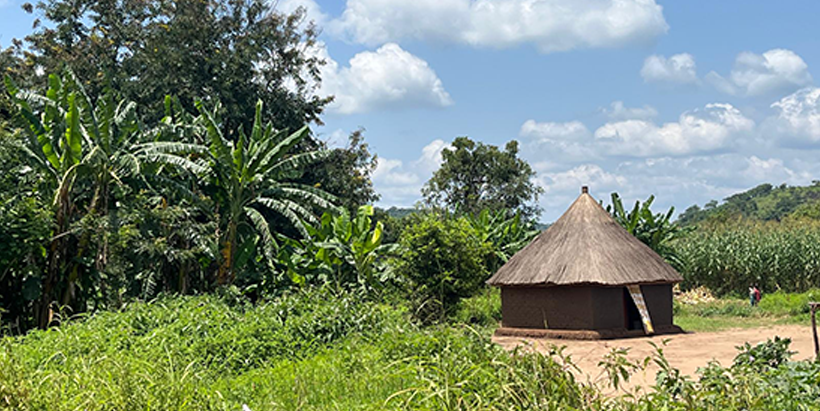
In a country where a good percentage of the population are farmers, there is extreme poverty, which, according to a World Bank report, affects over two-thirds of the population. In South Sudan, the heavy reliance on food importation is not a tale, but a pressing national crisis.
Despite 95% of the population relying on agriculture, over 78% live in poverty. As one of the world’s most climate-vulnerable countries, South Sudan is affected by erratic rains, drought, and conflict, leaving 54% of people, especially women and children, in a state of food insecurity. The key to breaking this cycle lies in the speedy growth of the agricultural sector and using it as the primary tool to achieve lasting food security.
IITA–CGIAR, in collaboration with the government of South Sudan through its Ministry of Agriculture and Food Security (MAFS) and Food and Agriculture Organization (FAO), is exploring ways to embed CGIAR technologies and innovative solutions into existing country programs such as the Climate Resilient Agri-Food Systems Transformation (CRAFT-1). This will help build pathways for transforming the country’s agricultural sector and strengthen MAFS’ agricultural research capacity for sustainable agricultural development, thereby boosting the country’s economic growth.
The initiative is an outcome of the recent mission conducted from 3 to 10 September by IITA scientists under the umbrella of the Technologies for African Agricultural Transformation (TAAT), a flagship program of the African Development Bank‘s Feed Africa Strategy. It aims to double crop, livestock, and fish productivity by providing over 40 million African smallholder farmers with proven technologies. Since its inception in 2018, TAAT has supported the Feed Africa Initiative by providing the necessary, productivity-enhancing, and food-processing technologies. The program has also been responsible for implementing inclusion strategies within the bank’s financing of large-scale regional and national agriculture investment projects, driving agricultural transformation across the continent. The IITA mission included field visits to identify crops’ challenges and gaps in the basic principles of good agronomic practices, post-harvest management, and crop disease management.
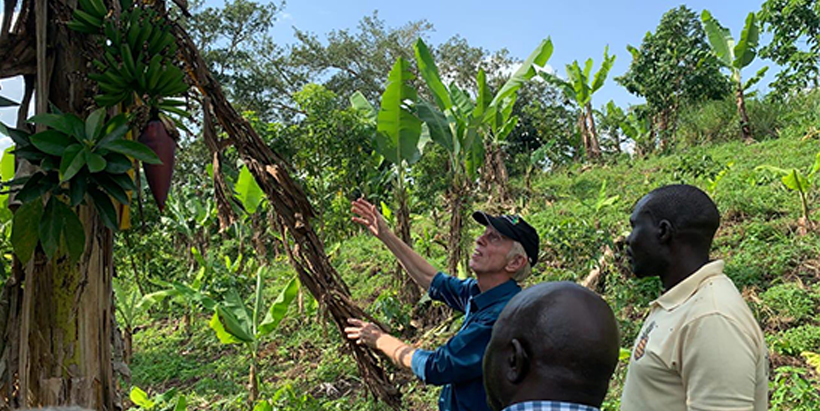
The team identified the opportunity to strengthen crop systems, particularly bananas, cassava, and maize. Currently, food is imported from neighboring countries, especially bananas, maize, and non-indexed disease- and pest-infected planting material. IITA is well-positioned to support South Sudan, given its long-standing expertise in agronomy, plant health, and improvement of these three crops. IITA’s track record includes experienced intervention, particularly in its banana and cassava breeding programs and sites in Uganda, as well as in Tanzania and Nigeria for maize, where training and support can be provided. Notably, MAFS can explore partnering with IITA to establish a robust testing program for bananas, cassava, and maize, control pests and diseases, increase production of bananas, maize, and cassava, and target import markets to become self-sufficient in the future.
“A maize farm near Magwi town was grown without fertilizers or chemical control for pests and diseases, and the yields were as high as 3 tons per hectare. This shows a good soil fertility potential when integrated with other agronomic practices,” narrated Dr Silvestro Meseka, Maize Breeder at IITA.
In response to the country’s request for agricultural development, the African Development Bank (AfDB), the European Union, and other development partners have expressed their satisfaction with the preliminary findings of this mission and are keen on opportunities that create synergies, optimize resources, and maximize impact. This collaboration presents a transformative opportunity for the agricultural sector in South Sudan. “It is exciting to be back in South Sudan and support the country’s agricultural agenda, especially to eradicate the disease in bananas and provide superior varieties,” said Dr Rony Swennen, Banana Breeder at IITA.
By integrating advanced research, capacity building, and supporting smallholder farmers, IITA and its partners aim to create sustainable, resilient, and self-sufficient agricultural development in the country. The collaboration and unwavering support of FAO-South Sudan are the cornerstone of a successful IITA deployment alongside MAFS.
Contributed by Gloriana Ndibalema, Rachel Zozo, Rony Swennen, Silvestro Meseka, and Barbra Muzata