The CGIAR Excellence in Agronomy (EiA) initiative, working to synchronize partner organizations’ efforts for promoting agronomic technologies in Africa, hosted a side event on 6 June, during the 8th Africa Agribusiness and Science Week organized by Forum for Agricultural Research in Africa (FARA). The event aimed to establish a strong foundation to drive the design, implementation, and adoption of agronomic technologies in Africa, and to strengthen existing frameworks and connections.
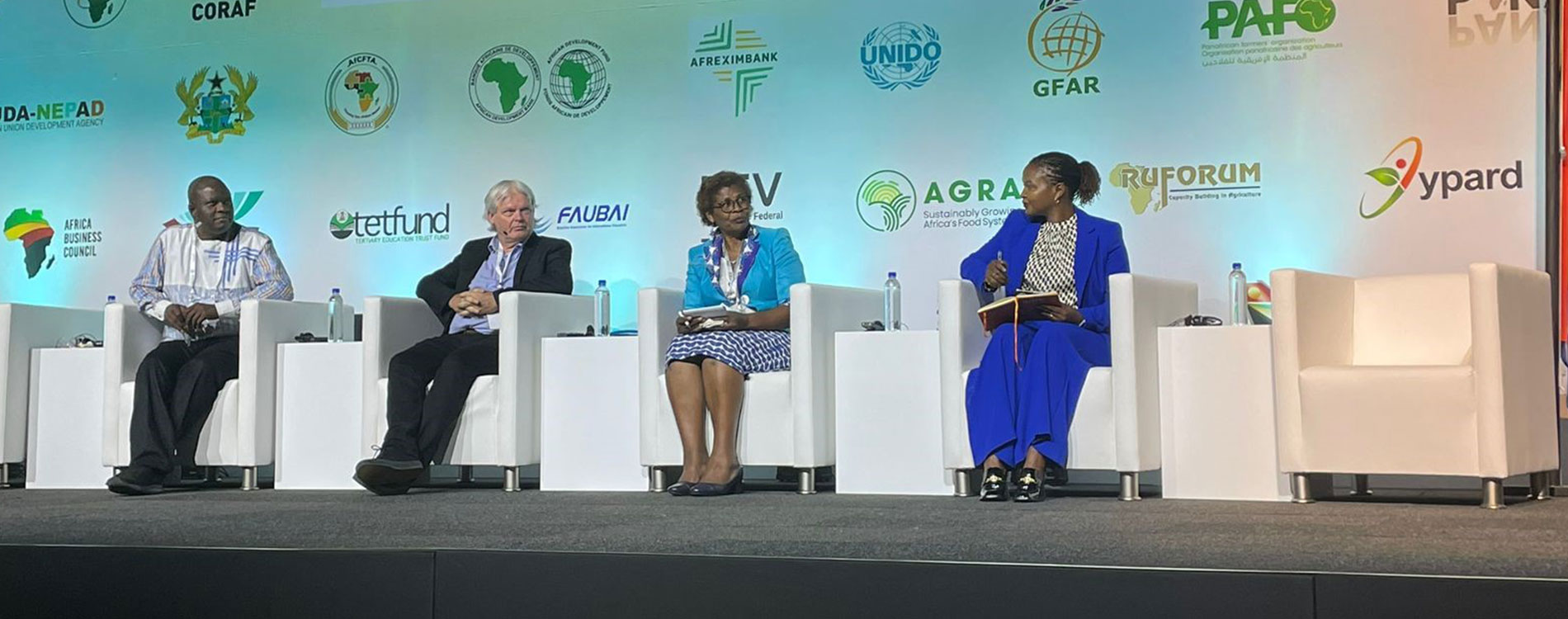
Cross section of panelists during the EiA side event.

The Initiative Lead and Interim Director General of IITA, Bernard Vanlauwe said, “Today, I’m really happy to be here leading the Excellence in Agronomy because I’m convinced we are now doing the right type of agronomy, using the right tools, and we have the right partnerships in place to deliver consumer results.”

This initiative is committed to fostering climate change adaptations through advancement in soil health, yield, water-use efficiency, and nutrient-use efficiency, using the Agronomic Gain Delivery action plan.

The side event was designed to spark discussions around answering this pertinent question – ‘After more than 50 years of huge investments in agricultural research, why is it that a lot of the solutions developed by scientists and experts are not getting to farmers?’

Lulseged Desta, Director for Multifunctional Landscape at Alliance for Bioversity and CIAT, presented the Digital Green Use Case, an existing agronomic solution designed to improve Africa’s yield through advisory services to farmers.

According to Desta, it comprises a digital tool that proposes fertilizer quantity, use, and application that are context and location specific. The Digital Green tool provides information on onset of rain, best planting time, how much fertilizer input to apply, and when it should be applied. The team has recorded success as farmers’ testify of increased yield and more profit due to application of their location-specific fertilizer advisory service.

“The Ministry of Agriculture in Ethiopia has adopted the Digital Green advisory service to scale to more farmers through the Ministry’s extension agents”, said Desta.

Vanlauwe commended all the partners working with the EiA initiative – FARA, Centre for Coordination of Agricultural Research and Development for Southern Africa (CCARDESA), West and Central African Council for Agricultural Research and Development (CORAF), African Forum for Agricultural Advisory Services (AFAAS), Association for Strengthening Agricultural Research in Eastern and Central Africa (ASARECA), and Southern African Development Community (SADC).

The session allowed the panelists to field questions from the audience; this provided an opportunity for experience sharing during the discussions.

In conclusion, participants established that the ideal toolkit to adequately deliver climate-sensitive advisory service to help smallholder farmers become resource efficient should include reliable information, right partnerships, assemble incentives that are useful to farmers, focused delivery with clear results that farmers can respond and relate to.

Contributed by: Folake Oduntan

Varietal identification is a precursor to scaling improved cassava seed to smallholder farmers through the extension system. Six extension officers (one female and five male) and three lead farmers (two male, one female) from Benue State’s three senatorial districts recently received training in varietal identification under the IITA-led Zero Hunger project in May 2023.

Zero Hunger team with the EAs trained on varietal identification.

The training was conducted by a team of experts from IITA, University of Ibadan and the IFAD-funded Value Chain Development Program.

The training covered a range of topics, including the importance of varietal identification, names of each variety, the different methods of varietal identification, and benefits of varietal identification.

 Sample of leaves to identify a variety.
Sample of leaves to identify a variety.

The extension officers were enthusiastic about the training and expressed a strong commitment to deploy the new skills to help farmers increase access to improved seed and increase their yields.

“I am very grateful for the opportunity to participate in this training. I learned a lot about varietal identification, and I am confident that I can now differentiate between local and improved varieties and give tailor-made advice to farmers on which variety to plant depending on location and which is good for seed or root”, one of the extension officers said.

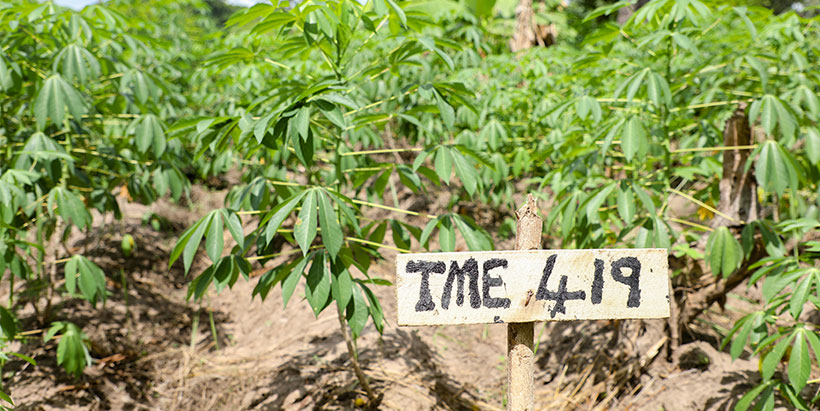
TME 419 on the varietal field.

The training was a success, and the extension officers are better equipped to help farmers identify and select the right varieties of crops for their farms. This will help farmers to improve their yields and productivity, which will ultimately contribute to achieving zero hunger.

The training of the extension officers is a step in the right direction, and this will help to ensure that farmers have access to the right information and resources they need to make informed decisions about their crops said, Mr Ekoja, representative of the Value Chain Development Program.

Contributed by The ZeroHunger Team

The IITA Forest Center is renowned for utilizing forest resources for conservation, research, education, and advocacy, part of its activities include conducting regular bird surveys to understand the population dynamics, dispersal probability, morphology, ecology, and breeding biology of birds in the IITA Forest Reserve, the environs, and out-station where reforestation projects are carried out.

Rare White-faced Whistling duck in a flock of normal-colored Whistling ducks.

During a recent survey carried out on the grounds of the Ibadan campus of IITA’s headquarters, Forest Center Field Supervisor Ademola Ajayi sighted among a flock of ducks, one with unusual feather coloration.

“We were driving down the John Craig Dam when I spotted a duck with unusual plumage among a flock of 150 White-faced Whistling Ducks, Dendrocygna viduata”, he said.

On closer inspection, he discovered it was an adult White-faced whistling duck based on its size, shape, head, and neck color.

The white feathers covered about 90% of the bird’s body, with only black spots around its tail and hind-neck, and brown spots around its back, indicative of progressive loss of melanin-producing cells due to aging.

Progressive greying is a common color distinction of aging birds from young ones. However, progressive greying is uncommon among ducks. Ajayi’s observation was the first of its kind for the species. He documented this rare find and presented it for publication in the latest edition of the ABC Bulletin. His findings have since been published for documentation and as a resource for future research efforts.

Bird monitoring and ornithological activities are a major part of the IITA Forest Center’s conservation activities. The Forest Center continues to contribute significantly to biodiversity conservation efforts through research, implementation, and strategic collaboration to sustain biodiversity and protect the forest with support and funding from donor organizations.

The A.G. Leventis Foundation, one of the donors is providing funding support to the IITA Forest Center’s Bird Monitoring Projects.

Contributed by: Folake Oduntan
Over the years, breeders have faced the challenge of either undervaluing or overvaluing breeding programs during cost estimation. This has resulted in efficiencies within the programs as resources are allocated inaccurately due to lack of awareness regarding appropriate costing methods.

 Breeding program teams in breakout sessions on using the UQ costing tool to cost their breeding programs
Breeding program teams in breakout sessions on using the UQ costing tool to cost their breeding programs

2691 final.docx Following a five-week online training on Cost Breeding, the IITA held a five-day in-person workshop to provide practical training to breeders on accurate costing of their breeding programs for optimal resource allocation. The workshop brought together participants from various units, including the IITA Finance Unit, six IITA breeding programs – cassava, maize, soybean, banana/plantain, yam & cowpea – and AfricaRice.

This initiative aims to enable breeding programs to track and manage their costs for improved efficiency while also establishing a link between cost management and the genetic gains the breeders are targeting.

The training is an initiative of the Genetic Innovation and Modern Breeding Project led by Senior Director for Plant Breeding and Pre-breeding within the One CGIAR, John Derera.

The meeting was organized by IITA’s Grain Crops Product Manager Dean Muungani, Yam Molecular Breeder Paterne Agre, and Cassava Project Administrative Officer Richard Ofei.

The IITA Director of West Africa Hub and Director for Crop Improvement, Michael Abberton, officially opened the workshop and highlighted the importance of the topic at hand. He acknowledged the timing of the training, given the challenges the breeders face in effectively managing their costs due to improper allocation of resources. He advised participants to maximize the workshop for the improvement of their programs.

Participants from the various breeding programs with their trainer and the organizers.

Breeding Optimization Specialist for CGIAR Excellence in Breeding, Lennin Musundire, who facilitated the training, held practical sessions with the participants on the use of the University of Queensland (UQ) costing tool for the cost breeding pipelines. He highlighted that in addition to accurately managing their costs, the training would assist breeders in writing funding proposals based on well-informed insights. This would avoid undervaluing or overvaluing their programs in terms of cost.

During the workshop, participants had various breakout sessions organized according to crop teams. These sessions provided practical exercises on the full costing of their programs, covering all stages from germplasm development to product registration.

Sharing their feedback, the participants expressed appreciation for the training’s valuable contribution to enhancing their breeding work. Although some participants suggested that additional time was required for practical exercises on how to master the use of the costing tool, others felt confident in utilizing the tool on their own.

One of the participants, Christabel Nachilima, a Soybean Research Associate from Zambia, shared her insights during the workshop. Having worked with the Soybean Breeding Program for the past 7 years, she observed that most of their activities lacked proper cost evaluation. “This training has helped us understand how to cost and place value on all our activities. It has been an amazing experience for me,” she said.

Another participant, Moruff Karem a Chartered Accountant with the IITA Finance Unit, emphasized the significance of the training from his perspective as a service provider to scientists. He noted that the training would help him offer well-informed and precise advice to scientists, particularly in the area of budgeting and resource allocation.

Musundire explained how the impact of the training would be measured, highlighting specific expectations. He said each participant is expected to acquire the proficiency to effectively utilize the UQ costing tool after the training.

In addition, he mentioned that participants should be capable to produce a comprehensive report on the accurate costing of their programs. Furthermore, he expressed the expectation that the participants would be equipped to train their partners, enabling them to make informed decisions regarding breeding program costing.

Speaking about future projections of the training, Muungani shared the plans of the organizing team to evaluate the level of acceptance of the costing tool among breeders. If the adoption rate falls below expectations, the team would assess the possible reasons behind it and determine appropriate measures for resolution. “In future, we will continue to assess the need for further training, and conduct additional workshops accordingly,” he said.

Contributed by: Daramola, Ochuwa Favour

To facilitate agricultural solutions to overcome malnutrition, IITACGIAR, through funding from Global Alliance for Improved Nutrition (GAIN), is implementing the “Strengthening Nutrition in Priority Staples (SNIPS)” project.

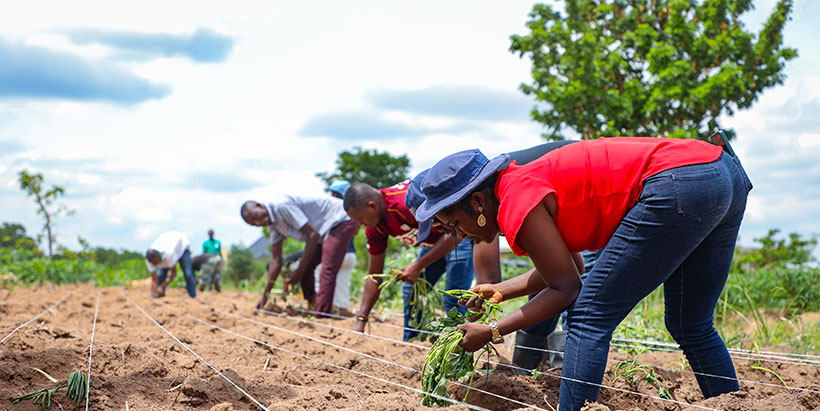
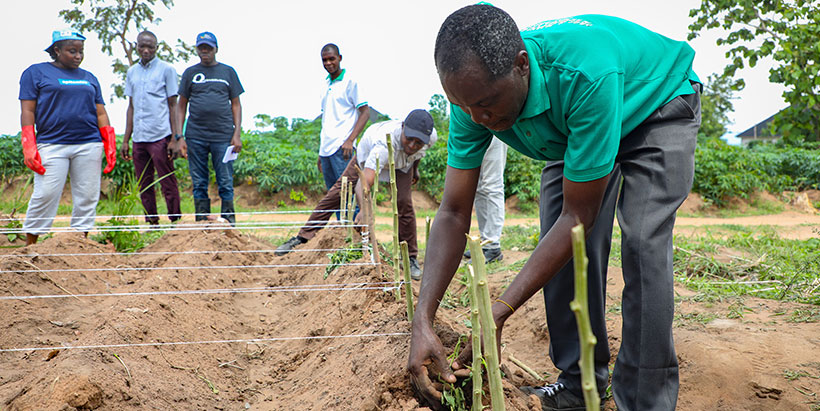
Extension officers in Benue State during the field training.

The 4-year project (2022-2026) will contribute to increased production and consumption of orange-fleshed sweet potato (OFSP) among smallholder farmers, thus improving food and nutrition security and livelihoods for women and children, significantly improving diet diversity in Benue and Oyo states. The project also will build strong demand and capacity among stakeholders from the government to the private sector and farmer associations to fully utilize OFSP and vine multiplication for improved nutrition and livelihood in the two selected Nigerian states. Through the case of OFSP, the project will demonstrate how a bio-fortified crop can be profitably produced, marketed, and used in nutrition programming in both states.

Facilitator demonstrating how to setup the OFSP farm.

In collaboration with GAIN and selected state Agriculture Development Programs (ADPs), the project will empower at least 560 Farmers in Benue and Oyo states to access, farm, and market OFSP for improved livelihood. At the same time, their households and community generally will be aware of OFSP nutrition and economic benefits for adoption and consumption, with strong consideration for youth and women. This will entail capacity-building activities, setting up demonstration plots to train farmers on Good Agronomic Practices (GAP), and training 40 selected farmers on vine multiplication.

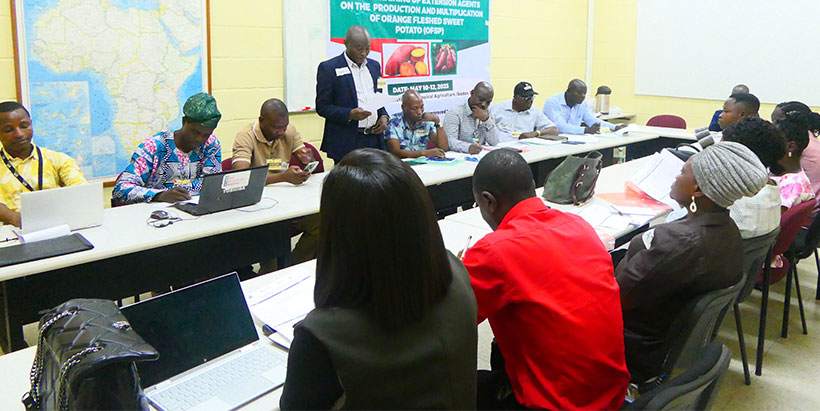
Participants during the training in Oyo.

Extension officers from ADP will lead the training. In response, 17 extension officers—nine in Benue, eight in Oyo—have been trained as trainers in both states in May 2023. These trainers—53% male and 47% female—will step down the training to selected farmers.

Project Lead Debo Akande, also Chief Executive Officer of the IITA Business Incubation Platform (BIP), stated that the project would work from production to processing and marketing in collaboration with other organizations through GAIN. He added that the project would focus on eight Local Government Areas (LGAs) in Oyo (Afijio, Ido, Iseyin, and Oyo West) and Benue (Gboko, Gwer East, Makurdi, and Otukpo).

Contributed by Oyewale Abioye

In a bid to promote technological advancements in the agricultural sector and improve rice harvesting techniques, a capacity development program was conducted for local fabricators on the design and fabrication of modern rice threshers. The program aimed to equip participants with the skills and knowledge to build efficient and cost-effective rice threshers for increased productivity and reduced labor in rice farming. Organized by AfricaRice under the Zero Hunger project in Ebonyi State, the training workshop—held in May 2023—attracted 26 welders and fabricators drawn from six local government areas of Ebonyi State (Abakaliki, Ezza North, Ikwo, Ohaozra, Ohaukwu, and Onicha) and four staff and representatives of project partners namely,  IFAD-VCDP, Ministry of Agriculture and Natural Resources, Ebonyi State University (EBSU) and Strategic Seeds Nig, Ltd. The workshop featured expert instructors and practical sessions, including hands-on demonstrations to facilitate a comprehensive learning experience.

Trainees learning about the machine’s parts.

The participants were introduced to the importance of mechanized rice threshing and its potential benefits for local farmers. They learned about the challenges traditional threshing methods face, such as manual labor, time-consuming processes, and grain damage. The trainers highlighted the significance of modernizing rice threshing techniques to enhance efficiency, reduce post-harvest losses, and increase overall profitability for farmers.

Throughout the training, fabricators were exposed to various cutting-edge technologies and design concepts in rice threshers. Experts shared blueprints and schematics, emphasizing the importance of precision engineering and durability. They discussed the role of different components, such as feeders, drums, sieves, and fans, providing insights into their functionalities and optimal configurations.

Two trainees practicing during the training.

The training concluded with a comprehensive discussion on quality control, troubleshooting, and maintenance practices for rice threshers. Fabricators learned the importance of regular inspections, lubrication, and cleaning to ensure the longevity and optimal performance of the machines. The trainers also emphasized the significance of providing reliable after-sales support to farmers, enhancing the overall credibility of the fabricated threshers.

Rice Breeder and Seed System Specialist Abraham Shaibu and Zero Hunger Project Monitoring Evaluation and Learning Manager Oyewale Abioye commended the efforts of the fabricators, encouraging them to apply their newly acquired knowledge to develop affordable, locally manufactured rice threshers. Shaibu highlighted the potential for job creation, economic growth, and improved food security that could be achieved by empowering local communities with advanced agricultural machinery.

Fabricators were enthusiastic about implementing the skills and contributing to the local agricultural landscape. As these fabricators embark on their journeys, their efforts promise to revolutionize rice threshing methods, propelling the local farming community towards a more sustainable and prosperous future.

Contributed by Oyewale Abioye

During a 3-day inaugural meeting organized recently by the CGIAR Market Intelligence Initiative Work Package 2 (WP2) in collaboration with the Accelerated Breeding Initiative (TRANSFORM), partners from the West Africa Yam Breeding Network, and experts across various disciplines from Benin, Cote d’Ivoire, Ghana, and Nigeria met at IITA Headquarters to discuss segmenting yam markets in specific African countries and developing target product profiles for identified market segments.

 Participants of the Inaugural Yam Breeding Network meeting.
Participants of the Inaugural Yam Breeding Network meeting.

Yam is a significant staple crop in Africa, particularly in West Africa, where it holds great cultural value and is a major income source. Therefore, the IITA-CGIAR breeding efforts focus on enhancing genetic gains by better understanding yam markets and the demand for yams and yam products.

During the meeting, IITA West Africa Hub Director Michael Abberton emphasized the importance of genetic innovation and highlighted various initiatives centered on breeding and genetic gains within the One CGIAR. He mentioned that IITA had aligned its breeding programs and research structure with CGIAR’s.

Abberton also emphasized the strategic role of market intelligence in IITA and One CGIAR’s breeding programs while advising participants to make the most of their time at the meeting.

John Derera, Senior Director of Breeding and Pre-Breeding (One CGIAR), provided an overview of the CGIAR Initiative on Accelerated Breeding. He discussed the major goals of Accelerated Breeding under One CGIAR, strategies for implementing breeding programs, and the alignment of six major crops to end hunger.

Derera mentioned that Accelerated Breeding is one of the five work packages under the One CGIAR initiative—Refocus, Reorganize, Transform, Discover, and Accelerate. He further explained that one of these work packages focuses on identifying markets where breeders can effectively utilize available resources.

Outlining the desired outcomes that Accelerated Breeding aims to achieve by 2024, including improving genetic gains and strengthening capabilities, He also emphasized the need to enhance leadership and data collection within the breeding programs.

Inaugural Yam Breeding Network meeting participants during one of the discussion sessions.

Vish Banda, Product Manager for Roots, Tubers, and Bananas and IITA Focal Point for the Market Intelligence Initiative, emphasized the significance of market intelligence and explained how segmenting yam markets and understanding market segments contribute to the yam breeding efforts under the One CGIAR.

Banda stressed the importance of establishing functional transdisciplinary teams at partner organizations for each crop to review market segments and Target Product Profiles annually, incorporating newly available information.

He added that market segmentation and intelligence bring focus to breeding programs, resulting in better outcomes. Understanding the specific activities related to yam cultivation in different countries enables the breeding team to determine the value they can offer and address the needs of farmers, particularly regarding new varieties.


Dr Bish Das, the Leader for the ABI-TRANSFORM work package, provided background information on WP3 – Transform, which focuses on modernizing and establishing a collaborative CGIAR-NARES breeding network. Das described Transform WP as a step-by-step process that brings breeders together as a network and establishes a framework for the network’s functioning, benefiting the region.

The workshop also addressed topics such as the plant breeding costing tool, stages for breeding setup, and Target Product Profiles for specific market segments. Additionally, it included discussion sessions with the IITA Plant Health, Seed Systems (PROSSIVA), Biometrics, Templates for breeding program assessment, facilities assessment and Food and Nutrition teams.

Contributed by Anita Akinyomade and Ochuwa Favour Daramola

Nine extension agents (five male, four female), including two youths, have been trained by IITACGIAR as part of its efforts to strengthen the capacity of extension agents in knowledge and technology transfer in orange-fleshed sweet potato (OFSP) vines and root multiplication in Oyo State. The three-day intensive training was held from 10 to 12 May under the Strengthening Nutrition in Priority Staples (SNiPS) project funded by the Global Alliance for Improved Nutrition (GAIN). The training was held at the IITA Ibadan campus, and practical demonstrations on one of the project farmer’s farms in Ido Local Government Area (LGA).

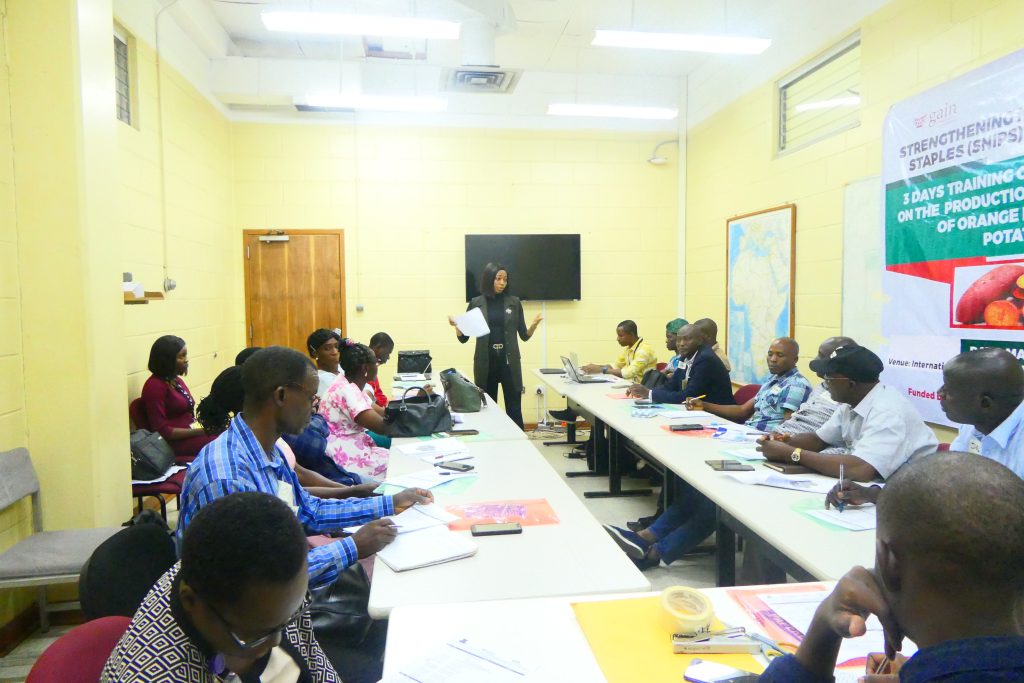
Gift Peter facilitating a classroom session.

The SNiPS initiative aims to increase the production and consumption of OFSP among smallholder farmers. Its main goals are to reduce malnutrition and improve farmers’ livelihoods.

While declaring the training open, the Director-General of the Oyo State Agribusiness Development Agency (OYSADA), Director and Program Lead IITA Mechanisation, Adebowale Akande, commended GAIN for ensuring that the SNiPS initiative covered nutrition as well as business, processing, and marketing.

“I am particularly glad that SNiPS has not been limited to nutrition alone,” he said. “It is engaging youth, women, and the private sector and covering business, processing, and marketing. This is highly commendable, and I hail the sponsors for this.”

Akande, also the Chief Executive Officer of the IITA Business Incubation Platform (BIP), charged the extension agents to help change the negative mindsets of farmers they would be encountering and be ready for more work as there are many agricultural innovations to be scaled out.

GAIN Biofortification Project Lead Faden Lachang, represented by Rasaq Moruff,  the Director of Agricultural Extension Services, Ministry of Agriculture and Rural Development, Oyo State, in his address, disclosed that the project is focusing on maize, rice, cassava, and orange-fleshed sweet potatoes in four pilot states—Benue, Kaduna, Nasarawa, and Oyo. Razaq, also the Desk Officer of GAIN in the state, stressed the need to monitor the farmers receiving the orange-fleshed sweet potato to avoid diversion of the planting materials or fields not being established.

The training program consisted of class sessions, practical experience on the field, and regular feedback and evaluation.

Training Facilitator Dr Bunmi Olasanmi used class and field demonstrations to showcase specific techniques in the rapid multiplication of quality vines with specified requirements in the production of sweet potato storage root using five varieties of the crop—King J, Mothers Delight, Igbariam local, Igbariam improved and SPV White.

While addressing the participants’ concerns about conveying the superiority of the improved varieties over the traditional varieties to farmers, Olasanmi explained that OFSP is naturally biofortified with beta-carotene, and its consumption has been reported to improve vitamin A and is rich in carbohydrates.

At the end of the training, the Extension Agents were given the criteria for selecting farmers for step-down training in each LGA of the state. The LGAs are Ido, Afijio, Oyo West and Iseyin. After the selection, a farmer-led demonstration plot will be set up in each LGA to train farmers and identify vine producers.

Youth engagement in agriculture has increased in priority on the development agenda, as there is a growing concern worldwide that young people have become disenchanted with the agricultural sector. Because of this, O.O.K group, a leading agricultural producer in Nigeria, in collaboration with the IITACGIAR, organized its second annual symposium on redirecting youths and women to opportunities in the agribusiness industry.

Group Managing Director of Niji Group, Kolawole Adeniji, highlighting the strategic role of small- and medium-scale businesses.

The event, attended by the chief executive officers of many agricultural companies in western Nigeria, drew participants from registered youth clubs in the metropolis. The lead convener, Omolara Svenson, highlighted O.O.K’s conscious effort to redirect youth to agriculture and the firm belief that agriculture is not just a means to feed a nation but a catalyst for economic growth, poverty alleviation, and sustainable development.

“We are focused on creating awareness among the youth and women about the vast opportunities within the agricultural sector. We actively engage in symposiums such as this to dispel the myths surrounding agriculture,” Svenson said.

The attendants participating in a Q&A session.

“By showcasing success stories of young entrepreneurs and women who have excelled in this field, we aim to inspire and ignite a passion for agriculture among the next generation,” she added.

Another key player in the industry, the Group Managing Director of Niji Group, Kolawole Adeniji, talked extensively about the power of small business holders. He encouraged youths to start small and be solution providers. He stressed that problems are part of growth, and youths must realize that nobody would give a free template; however, determination and consistency will help them become successful.

One of the speakers, Olarenwaju Elizabeth Nwankwo, identified the opportunities in export, creating jobs and opportunities for youths along the agriculture value chain amongst other issues.

The event featured documentaries, educational segments, innovative technologies providing practical insights into modern farming practices, and interactive sessions allowing the youth and women to ask questions, seek guidance, and receive expert advice from experienced professionals.

Contributed by Anu Oyeleye