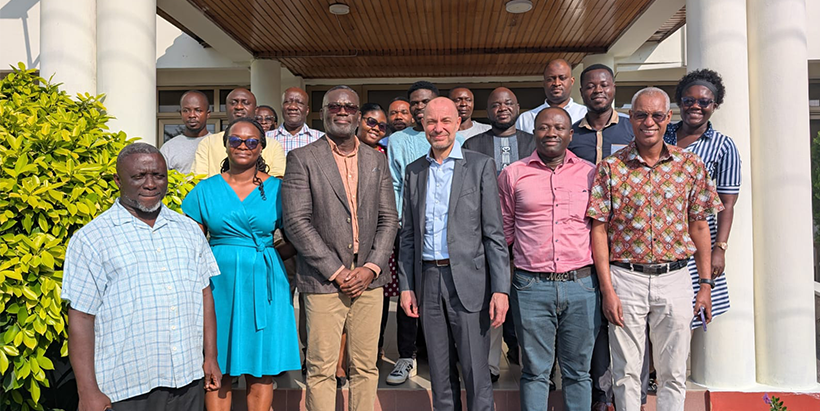

As part of its commitment to accountability, performance excellence, and impact-driven research, IITA–CGIAR routinely convenes contract review seminars through which heads of units and project leaders assess progress, demonstrate achievements, and align outcomes with institutional priorities.
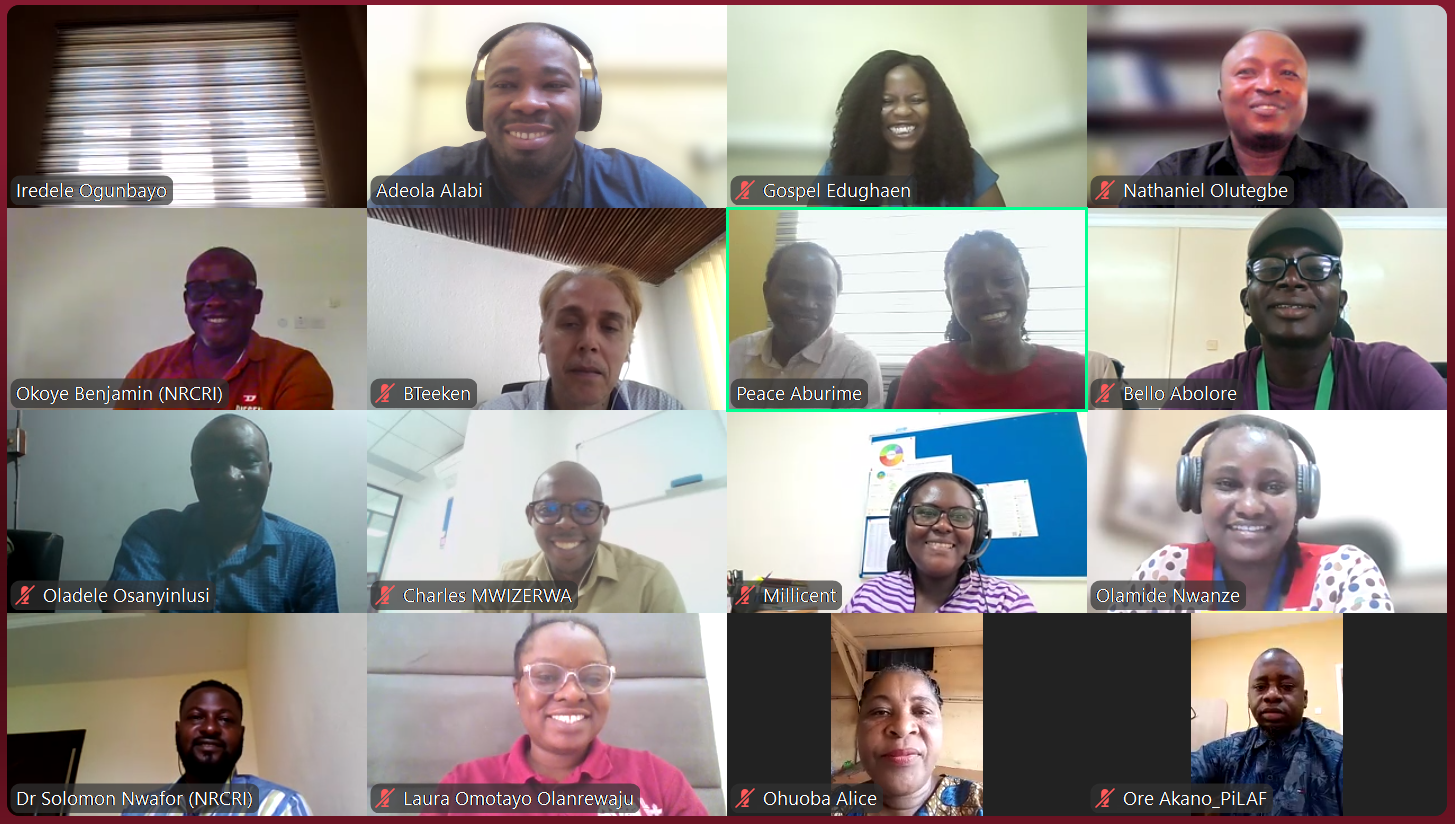
Within this framework, IITA-CGIAR hosted a contract review presentation on 28 January, themed “Innovations to Accelerate Genetic Gain in Banana and Plantain Breeding,” delivered by IITA Postdoctoral Fellow and Plantain Breeder, Moses Nyine. The session, moderated by IITA Banana Crop Lead, Rony Swennen, brought together researchers and stakeholders dedicated to advancing crop improvement across Africa.
Nyine is leading efforts to integrate conventional breeding with modern genomics and quantitative genetics tools to accelerate the development of improved plantain varieties that meet both farmer and consumer needs. His research also advances understanding of banana floral biology to enhance seed set and hybrid recovery, which are longstanding constraints in plantain breeding.
Reflecting on his professional trajectory, Nyine highlighted how his transition from banana research to wheat breeding in the United States broadened his scientific perspective. At the Wheat Genetic Resource Center, Kansas State University, he established innovative breeding pipelines integrating genotyping and phenotyping to track beneficial traits from wild relatives into elite wheat cultivars, particularly those associated with climate resilience and grain quality.
“Introgression populations are like a black box; you must open them through genotyping and phenotyping to understand where beneficial traits are and how they perform,” he noted.
This experience, he explained, reinforced his commitment to deploying advanced breeding technologies within African crop improvement systems.
Upon returning to Africa, Nyine prioritized building a future-oriented plantain breeding program that combines robust conventional methods with cutting-edge innovations. His research encompasses reproductive biology, introgression and mapping of domestication genes, and in-depth analysis of the banana genome, ensuring the preservation of essential quality traits while improving productivity. He further contextualized current progress within historical breeding trends, referencing the “breeding bubble” that has influenced plantain improvement since the late 1980s and noting the need for renewed scientific momentum.
Highlighting key accomplishments, Nyine reported the introduction of enhanced genetic diversity into plantain breeding pipelines, the development of standard operating procedures for tracking pollen tube growth, the establishment of new pollination blocks, and the refinement of crossing schemes. His team also strengthened agronomic practices, including irrigation, mulching, fertilizer management, and the application of pollen germination media alongside the full digitalization of the breeding workflow.
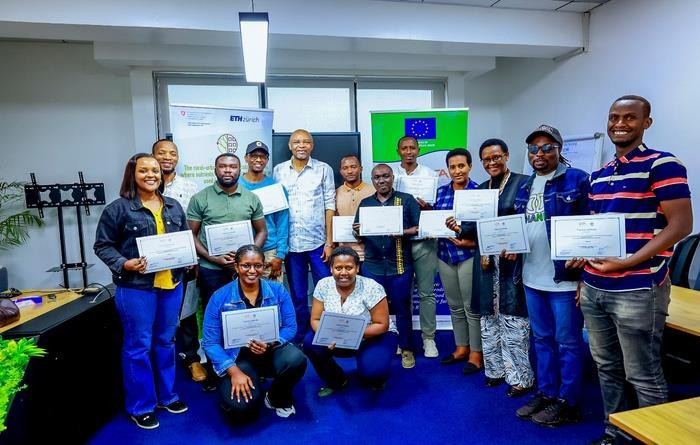
In capacity development, Nyine actively engaged IITA staff, researchers from the National Horticultural Research Institute (NIHORT), Nigeria and the Crop Research Institute (CRI), Ghana, RadioIITA plantain farmers’ outreach, and supervision of postgraduate students between 2024 and 2025. These efforts promoted interdisciplinary collaboration, hands-on learning, and sustained knowledge exchange across the breeding ecosystem.
He also highlighted strategic investments in infrastructure, including a pathology screenhouse with a dedicated sample processing facility, upgraded irrigation systems, and expanded drip irrigation networks. In resource mobilization, Nyine contributed to several grant proposals that successfully secured approximately USD 11 million between 2024 and 2025, out of which about USD 6 million was targeted for banana-focused projects.
Looking ahead, Nyine outlined strategic priorities centered on strengthening pre-breeding and parental pool improvement, advancing reproductive biology research to enhance hybrid recovery, and leveraging modern tools such as genomic selection and gene editing to further accelerate genetic gains.
He concluded by expressing appreciation to IITA’s management for sustained leadership support and to the plantain breeding team for their dedication and collaboration. He shared a commitment to transforming banana and plantain production systems across Africa.
Contributed by Ochuwa Favour Daramola