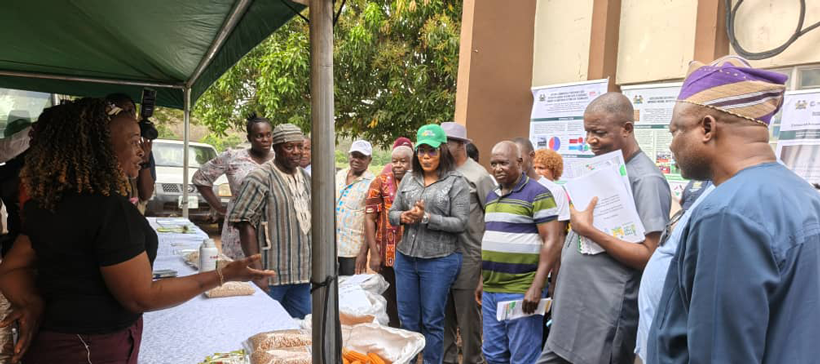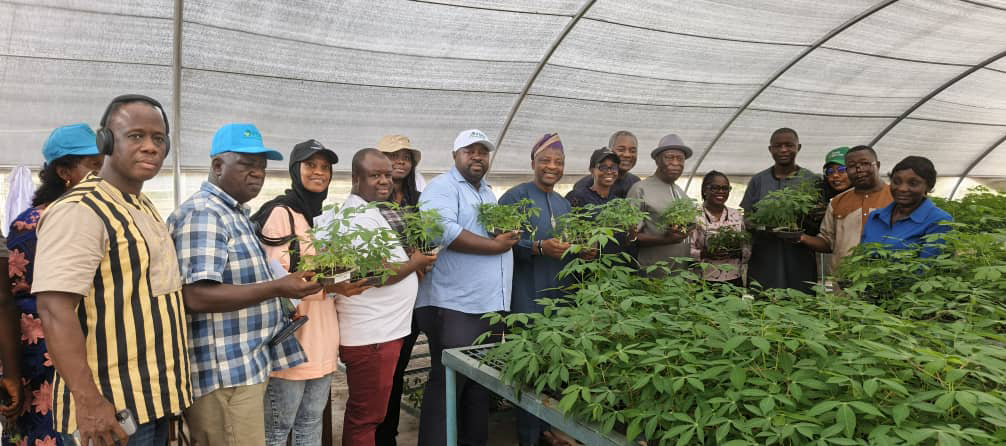
Vegetatively propagated crops (VPCs) such as cassava, yam, banana, and plantain are central to food security, livelihoods, and economic growth across Africa. Yet, limited access to quality, disease-free planting material continues to constrain productivity, profitability, and value chain competitiveness for millions of farmers. Inefficient seed delivery systems and slow adoption of improved varieties remain persistent challenges.

The PROSSIVA project was designed to address these gaps by strengthening seed systems for VPCs. During its research phase, the project focused primarily on innovative research and validation of propagation technologies, marketing strategies, and institutional arrangements tailored to the unique challenges of vegetatively propagated crops. This work was designed to address long-standing constraints, such as disease accumulation, low multiplication rates, and inconsistent quality of planting material.

Through this process, the project generated strong evidence on effective and scalable propagation technologies, underpinning functional seed value chains capable of delivering healthy, high-quality planting material to millions of farmers. These achievements demonstrated that effective solutions exist and can deliver results when aligned with market demand, institutional support, and farmer needs.

With strong evidence in place, the project is now intentionally shifting its focus toward scaling. The next phase of PROSSIVA is therefore centered on moving proven technologies from pilot settings into broader use, thereby ensuring they reach farmers, seed enterprises, and markets sustainably.

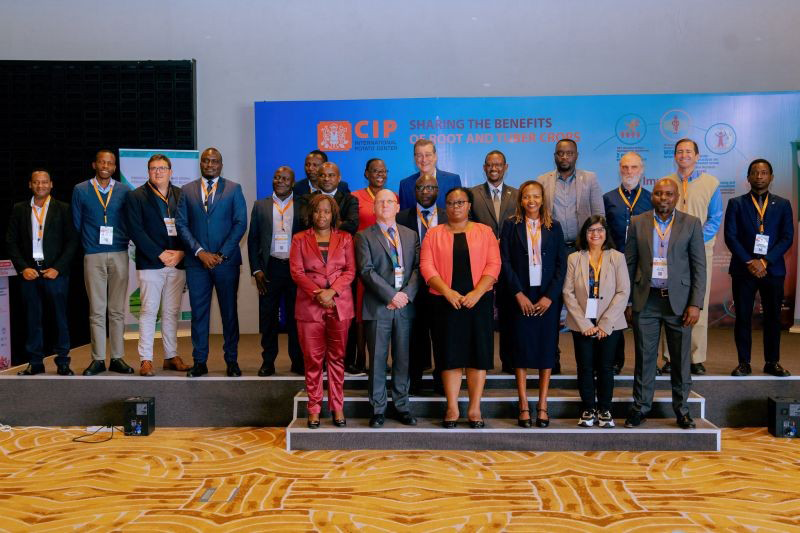
This deliberate transition is being formally launched at the 2026 PROSSIVA Annual Review and Planning Meeting, where partners are aligning on a coordinated roadmap to scale impact across focus countries.

Over the next two years, PROSSIVA will concentrate on two flagship scaling efforts:

  • Scaling yam seed innovations to strengthen food security in Nigeria and Ghana.
  • Scaling improved cassava seed innovations to support industrial growth in Nigeria, while continuing targeted scaling of improved cassava varieties in Tanzania through established seed entrepreneur networks.

In addition, the project will selectively advance the scaling of improved banana varieties through decentralized macropropagation enterprise pilots in Uganda, Tanzania, Nigeria, and Ghana. These efforts are designed to strengthen commercially viable seed value chains capable of delivering high-quality planting material at scale.

To support this focus, PROSSIVA has refined its scope to concentrate resources where the potential for impact is greatest. This includes prioritizing specific crops, countries, and high-potential regions, as well as strengthening partnerships that align with comparative advantage and the scaling agenda. This strategic focus enables deeper engagement, stronger coordination, and more efficient delivery of tangible results.

As PROSSIVA transitions, it aims to create vibrant seed value chains that deliver measurable reach to millions of smallholder farmers and lay the foundation for continued scaling beyond the project’s timeframe.

From research to reach, PROSSIVA’s next chapter is about scale, sustainability, and impact.

Contributed by Isaac Ajayi

IITA and UI representatives discussing ways to strengthening collaboration between the two institutions.

On 6 February, the Vice Chancellor of the University of Ibadan (UI), Professor Kayode Oyebode Adebowale, led a delegation to IITA’s Headquarters for a strategic engagement to strengthen collaboration between the two institutions. The visit built on their long-standing relationship and focused on exploring structured partnerships that could enhance research delivery, capacity development, and development impact.

Welcoming the delegation, IITA Director General, Dr Simeon Ehui, described the partnership between IITA and UI as both historic and special. He noted that IITA-CGIAR is privileged to work closely with Nigerian universities and training institutions, emphasizing that the timing of the visit was particularly significant.

The IITA team with the UI delegation.

According to him, stronger coordination in research and development is critical to addressing major challenges such as food insecurity and youth unemployment, which continue to affect Nigeria and the wider African continent.

Dr Ehui stressed the importance of aligning academic research with development delivery, noting that effective partnerships between universities and research institutes are essential for translating scientific innovations into practical solutions for farmers and communities. “IITA is proud to be part of the ecosystem that promotes research and delivery,” he said.

The Deputy Director General, Partnerships for Delivery, Tahirou Abdoulaye, provided an overview of IITA’s value propositions and strategic focus. He explained that IITA operates within a network of 30 CGIAR centers and is committed to developing solutions that improve efficiency across agricultural value chains. He highlighted Nutrition and Health, alongside Climate Adaptation, as two major thematic areas guiding IITA’s research and development agenda.

In his remarks, Professor Adebowale expressed pride that nearly 75 percent of the participants at the meeting were alumni of the University of Ibadan, reflecting the strong institutional linkages between UI and IITA. He commended IITA for its far-reaching impact across Africa and noted that the presence of more institutions with similar mandates would significantly deepen grassroots engagement and accelerate agricultural transformation.

To further strengthen collaboration, the Vice Chancellor proposed three strategic pillars: integrating research and postgraduate training; institutional capacity-building; and infrastructure sharing, and the commercialization of research outputs with a strong focus on community impact. He emphasized that structured partnerships in these areas would create mutual benefits and enhance the relevance of academic research to societal needs. “UI is ready, willing, and eager to be IITA’s dynamic partner. Let us write the next chapter together for agricultural transformation,” he added.

Responding to the proposals, Dr Ehui welcomed the suggested pillars and underscored the need to formalize and deepen collaboration between both institutions. He also proposed extending the partnership to include collaboration between the Communication Offices of UI and IITA to improve visibility and showcase joint research achievements and development outcomes.

The visit concluded with a shared commitment to advancing a more coordinated and impactful partnership that leverages the strengths of both institutions to drive agricultural innovation and sustainable development in Africa.

Contributed by Ochuwa Favour Daramola

The World Bank team during a tour of the value addition exhibition with the SLARI and IITA teams.

A World Bank implementation support mission to Sierra Leone has expressed delight with the progress and results of the Food Systems Resilience Programme (FSRP)—implemented by IITACGIAR, in partnership with the Sierra Leone Agricultural Research Institute (SLARI)—describing it as a standout example of results-driven investment, leading to growing national relevance and a significant milestone in the nation’s agricultural transformation.

The World Bank team, led by Dr Tunji Oredipe, delivered the commendation on 17 January during a high-level engagement at the Njala Agricultural Research Centre (NARC) Conference Hall, following comprehensive technical presentations on the project’s three components and research updates from six SLARI scientists supported through FSRP-funded competitive grants. The meeting was part of a two-day mission to all IITA-SLARI project sites to review two years of implementation, assess on-the-ground results, and confirm alignment with national priorities.

The World Bank team with the FSRP team in the SAH screen house
The World Bank team with the FSRP team in the SAH screen house.

The FSRP project directly supports Pillar 2 of the Government of Sierra Leone’s Feed Salone Strategy, which focuses on strengthening food systems, boosting productivity, and improving food security.

Speaking at the close of the technical sessions, Dr Oredipe praised the quality of implementation and encouraged the IITA/SLARI team to sustain its momentum. He emphasized the strategic importance of maximizing the facilities and infrastructure established under the project to drive long-term impact. “This project is about changing agricultural activities in Sierra Leone,” he said. I want to see the future of agriculture being driven from the facilities provided by the project in the agricultural space.”

FSRP Programme Manager Dr Keprifi Lakoh described the mission’s feedback as a clear validation of the IITA-SLARI collaboration, noting that the project is already generating tangible results and success stories that strengthen the Ministry of Agriculture and Food Security’s (MAFS) delivery of the Feed Salone strategy. Dr Lakoh reaffirmed the World Bank’s commitment to supporting the project’s successful implementation.

IITA-Sierra Leone Country Representative and SLARI Council Chairman, Dr Alfred Dixon, said the progress achieved reflects SLARI’s renewed capacity and growing relevance. He noted that strategic partnerships and targeted investments are enabling the institute to reclaim its position as a driver of high-quality agricultural research and innovation in Sierra Leone.

FSRP-IITA Co-Project Lead, Professor Lateef Sanni, commended the dedication of the implementation team, stressing that their collective efforts are delivering the level of impact expected by the donor. He stressed collaboration and teamwork as essential ingredients for sustaining institutional and individual success.

Acting Director General of SLARI, Dr Abdul Conteh, described the project as an intentional and strategic partnership, referring to it as “Phase Two of the WAAPP experience.” He highlighted the project’s inclusive implementation model, which actively involves SLARI scientists in planning, execution, and learning—strengthening ownership, capacity development, and sustainability.

The Ministry of Finance Representative, Samuel Yankuba, also expressed satisfaction with the project’s transparency, coordination, and visible impact within a relatively short period.

The mission concluded with a guided tour of all FSRP facilities and project sites, during which the World Bank team observed firsthand the innovations and infrastructure positioning the IITA–SLARI FSRP as a cornerstone of Sierra Leone’s food systems transformation.

Contributed by Moses Sahr Fayiah


Partners pose with the State Minister of Agriculture, the Director General of RAB, the Director General of CIP, and a representative of the Gates Foundation during the launch of the BioCap Project.

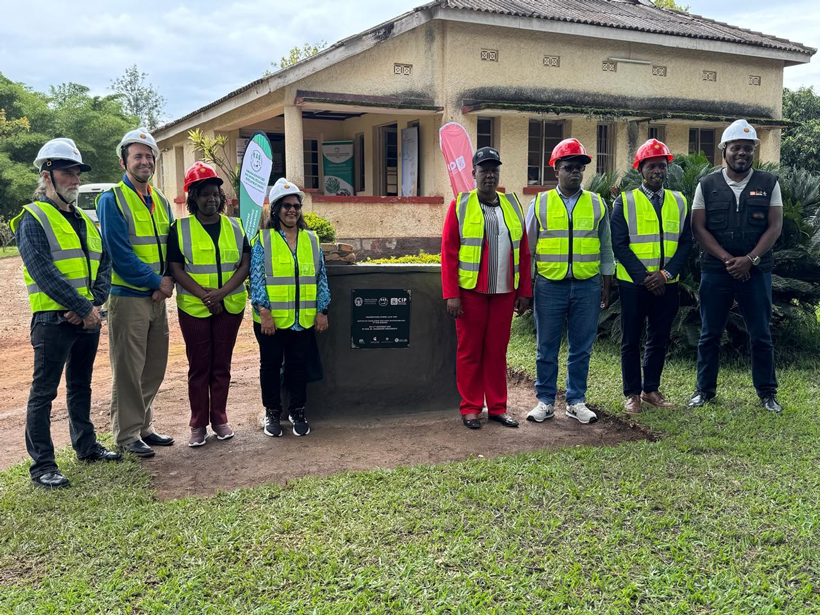
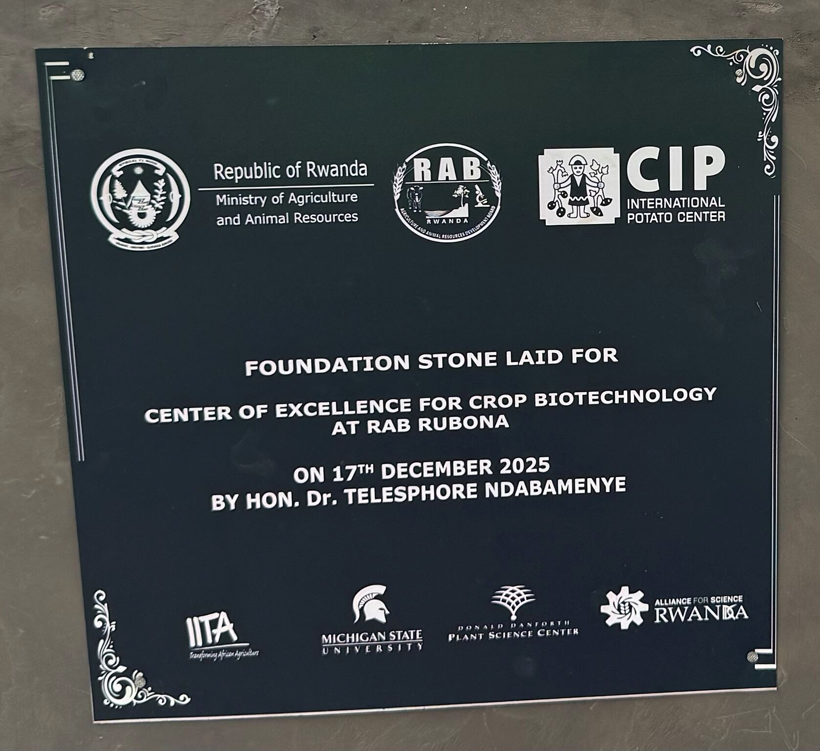
IITACGIAR joined national and international partners in Rwanda for the official launch of the Rwanda Biotechnology Capacity Building (BioCap) Project and the ceremonial laying of the foundation stone for a Centre of Excellence for Crop Biotechnology. The initiative, led by the International Potato Center (CIP) and the Rwanda Agriculture and Animal Resources Development Board (RAB), funded by the Gates Foundation, aims to strengthen Rwanda’s capacity to develop, regulate, and deploy improved crop varieties that address key production constraints.

As a core technical partner, IITA brings extensive experience in genetic transformation, genome editing, biosafety stewardship, and capacity building to support the project’s objectives. The BioCap Project is designed to position Rwanda as a regional hub for advanced agricultural biotechnology, with a strong focus on locally led innovation and responsible use of modern breeding tools.

Rwanda launches BioCap project with IITA as key biotechnology partner
Dr Leena Tripathi (IITA) with partners at RAB during the foundation stone-laying ceremony for the Centre of Excellence for Crop Biotechnology.

Within BioCap, IITA will lead the banana gene-editing component, drawing on its longstanding expertise in banana research, biotechnology, and capacity development across Africa. IITA will collaborate with partners, including RAB, CIP, Donald Danforth Plant Science Center, Michigan State University, and the Alliance for Science Rwanda. Together, these efforts will support the safe and climate-smart application of biotechnology, complementing Rwanda’s climate adaptation strategy by empowering scientists, strengthening regulatory systems, and translating research into tangible benefits for smallholder farmers.
The Centre of Excellence will provide state-of-the-art infrastructure and training platforms for Rwandan scientists, enabling research on priority crops critical to national food security. Initial research efforts will focus on potato, cassava, and banana, targeting major diseases such as late blight, cassava brown streak disease, and banana bacterial wilt, which continue to cause significant yield losses for farmers.

Speaking at the event, Dr Leena Tripathi, Eastern Africa Hub Director and Director of Genetic Innovations at IITA, highlighted the importance of long-term partnerships in building sustainable national capacity:

Foundation stone at the construction site of the Centre of Excellence for Crop Biotechnology.

“The BioCap Project reflects a shared commitment to empowering national institutions with the skills, infrastructure, and stewardship systems needed to responsibly develop and deliver improved crop varieties. IITA is proud to contribute its expertise in biotechnology to support Rwanda’s vision for food and nutrition security.”

Beyond infrastructure development, the BioCap Project emphasizes human capacity development, regulatory strengthening, and stewardship, ensuring that innovations move efficiently and safely from the laboratory to farmers’ fields. IITA’s involvement builds on its longstanding collaboration with African national agricultural research systems and its mandate to support science-driven agricultural transformation across the continent.

Contributed by Rose Harriet Okech

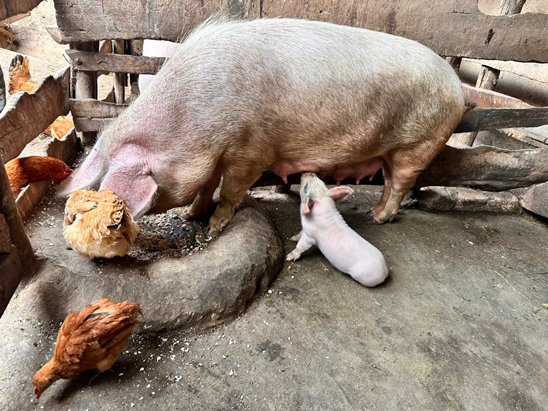
Livestock (pigs and chickens) feeding on high-quality cassava peel (HQCP) mash in Nyamiyaga, Kamonyi District, Southern Province.

In an effort to alleviate the burden faced by livestock entrepreneurs in Rwanda, IITACGIAR has introduced the FeedCalculator app—a digital tool designed to improve animal feed formulation while addressing the growing challenges of feed affordability, availability, and accessibility.

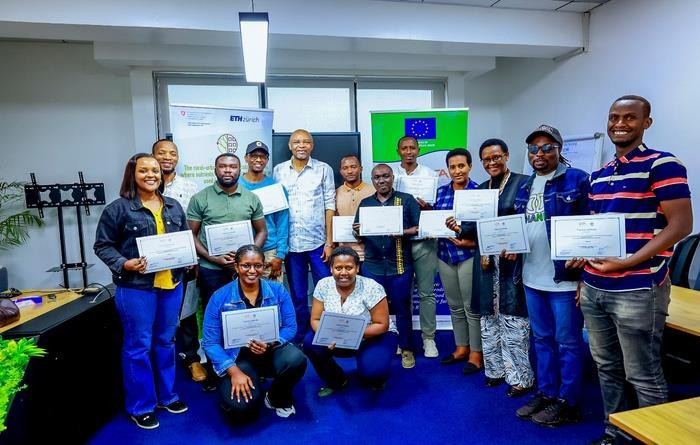
In November 2025, Dr Okike Iheanacho, an IITA-CGIAR consultant, conducted a comprehensive three-day training for animal feed and livestock entrepreneurs. The training introduced participants to the FeedCalculator, a digital solution that enables effective feed formulation using cost-effective and locally available ingredients.

The FeedCalculator is designed to help small-scale livestock farmers optimize feed mixes by considering several critical factors. First, it identifies the nutritional requirements of specific animals. It then analyses available ingredients and their nutritional composition before determining the most efficient combination to meet animal needs. This app can formulate feed recipes for broilers, layers, pigs, catfish and tilapia. The tool also takes into account cost and availability, enabling farmers to produce affordable, nutritionally balanced feed. As a result, the free FeedCalculator generates the least-cost and high-quality feed recipes based on locally available ingredients.

Dr Okike Iheanacho and trainees holding their certificates after the FeedCalculator training.

A key focus of the training was the use of locally available resources, particularly cassava peels, as a major feed ingredient. Dr Iheanacho trained animal feed producers and livestock owners on the use of high-quality cassava peels (HQCP) in feed formulation as an important source of carbohydrates. Often discarded as waste, cassava peels are a cost-effective and sustainable resource that promotes both affordability and resource efficiency in livestock production.

For participants, the tool-FeedCalculator represents a shift from traditional, experience-based feed formulation to a more precise, data-driven approach that improves efficiency, feed quality, and business performance. Participants shared how the training is already influencing their practices and plans.

“I sell animal feed and work as a pig farmer. In addition, I produce animal feed using high-quality cassava peels (HQCP). Thanks to this training, from now onwards, we will use the FeedCalculator to better understand our clients’ needs and provide properly formulated rations that improve livestock growth and performance, ultimately benefiting farmers,” said Mutoni Noella, Manager of Livestock Solution Company Ltd.

Similarly, Mahoro Olivier from Cooperative Ruhango Young Innovators (CORYI), an animal feed production company, highlighted the impact of the training. “We used to formulate animal feed in a traditional way with limited skills. After being trained on the FeedCalculator, I can now automatically produce nutritious feed. It makes calculating rations much easier for us as livestock farmers,” he said.

However, participants also identified areas for improvement. Mahoro noted that some commonly used local ingredients are not yet included in the app. He suggested that developers engage directly with farmers in the field to collect data on locally used ingredients, thereby enhancing the tool’s relevance and effectiveness.

This initiative marks a significant step forward for Rwanda’s livestock sector. By equipping farmers and feed producers with practical digital tools and knowledge, IITA is supporting more efficient, affordable, and sustainable animal feed production, contributing to improved livelihoods and a more resilient agricultural future.

Contributed by Ritha Bumwe

IITA Forest Center welcomes the community to the first Tree Heritage Park Open Day
IITA Forest Center Patron, Dr David Ladipo, with IITA Forest Center Field Supervisors telling the story of the Tree Heritage Park.

IITA Forest Center hosted its inaugural Tree Heritage Park (THP) Open Day recently, bringing together students, researchers, conservationists, and nature lovers for a day dedicated to celebrating Nigeria’s native tree species and strengthening public commitment to environmental stewardship.

The Open Day supports the Center’s continuous mandate to conserve Nigeria’s threatened tree species and upholds the ArbNet Level II accreditation the Park received in January 2022—Nigeria’s first internationally accredited arboretum, the 11th in Africa, and the 500th worldwide.

Located within the 350-hectare IITA Forest Reserve, the five-hectare THP, fondly called the “Noah’s Ark,” hosts more than 100 indigenous species. These include culturally important and endangered trees such as Iroko (Milicia excelsa), African Baobab (Adansonia digitata), African Locust Bean (Parkia biglobosa), and Araba (Ceiba pentandra), where the shy, yellow-billed kite often nests. Many other species in the park were recalled from landscapes affected by urban expansion, illegal logging, storms, and the growing pressures of climate change.

IITA Forest Center Patron, Dr David Ladipo, with IITA Forest Center Field Supervisors telling the story of the Tree Heritage Park.
Students, researchers, and conservationists in different training sessions during the guided tour at the Tree Heritage Park.

Dr David Ladipo, IITA Forest Center patron, who has contributed to conservation work in the Reserve since the 1990s, introduced the participants to the Park’s evolution through a documentary and a presentation. He emphasized the THP’s significance, noting, “This living gene bank is more than a collection of trees; it is a rescue mission. Many of these species would have disappeared without the decades of deliberate conservation efforts here.”

Following the classroom session, participants embarked on a guided tour of the Park. Led by IITA Forest Center staff, the tour highlighted the ecological, cultural, and scientific value of the species conserved in this living genebank, as well as the foundational work of conservation champions such as Phil Hall, Prof Shiwuwa Manu, Dr David Ladipo, Dr John Peacock, Deni Bown, and, more recently, Dr Adewale Awoyemi, the IITA Forest Center Manager.

Speaking on behalf of the Forest Center Manager, Ademola Ajayi underscored the urgency of protecting Nigeria’s native biodiversity. “Our trees are linked to our food. Our food is linked to our health. Many native trees support the growth of indigenous vegetables, fruits, and leaves,” he said. “Destroying our natural forests affects our economy, our food systems, our health, and our cultural heritage. What began as the conversion of an old arboretum into a Tree Heritage Park has now grown into a rallying point for conservation, tourism, and adventure in Ibadan—creating new opportunities for awareness and income generation.”

Professor of Pediatric Hematology and Guest Speaker, Prof. Adekunle Adekile, a passionate naturalist and photographer, encouraged participants to take personal responsibility for environmental protection. “This Park shows how passion-backed science can transform conservation. When communities, students, and experts come together, we create a future where nature and people thrive together,” he said, adding that greater public awareness is vital to addressing myths and deepening appreciation for biodiversity.

Younger participants shared enthusiasm. Adesina Abdul Rahman from Amao College said, “I enjoyed the tour around the THP. I now understand the value of trees and how to plant them. With this knowledge, I plan to become an advocate for conservation among my schoolmates.”

Aderonke Oyewumi from Ibadan International School added, “Today I learnt that every small effort makes a difference. We can protect our environment by joining conservation clubs, recycling plastics, and planting more trees.”

The event also emphasized the Forest Center’s broader impact, including raising seedlings for the restoration of nearly 1,000 hectares of degraded landscapes in Olokemeji, supporting reforestation projects across Nigeria, and nurturing more than 63 Schools Conservation Clubs that groom young environmental stewards.

As visitors departed, many expressed renewed optimism for the future of Nigeria’s forests. The IITA Forest Center remains committed to documenting endangered species, collecting seeds and wildlings, and producing training resources to guide ecological restoration nationwide ensuring that Africa’s native trees continue to stand as symbols of identity, resilience, and pride.

Contributed by Folake Oduntan

 The Ivorian delegates, led by the President of the Association of International Civil Servants of Cote d'Ivoire, Madame Ursule Tape, commending IITA DG, Dr Simeon Ehui and IITA staff for their professionalism and warm reception.
The Ivorian delegates, led by the President of the Association of International Civil Servants of Cote d’Ivoire, Madame Ursule Tape, commending IITA DG, Dr Simeon Ehui and IITA staff for their professionalism and warm reception.

Delegates from the Association of International Civil Servants of Côte d’Ivoire paid a study visit to IITA–CGIAR on 15 December, marking a significant step toward deepening collaboration in agricultural development, youth empowerment, and technology-driven solutions across West Africa.

The delegation was warmly received by Dr Simeon Ehui, Director General of IITA and CGIAR Regional Director for Continental Africa, who welcomed the team and encouraged them to fully explore IITA’s wide-ranging research, innovations, and partnerships aimed at transforming African agriculture. The visit provided an opportunity for the delegates to familiarize themselves with IITA’s mandate, crops, institutional structure, and scalable technologies that could complement existing agricultural systems in Côte d’Ivoire.

During an interactive session, Abdoulaye Tahirou, Acting Deputy Director General, Partnerships for Delivery, presented an overview of IITA’s organizational structure and its 2024–2030 Strategy, highlighting the Institute’s focus on impact at scale, partnerships, and sustainable food systems. He also shared insights into IITA’s work with young people through the IITA Youth in Agribusiness (IYA) program, which equips youth with agribusiness skills, market-ready technologies, and pathways to profitable enterprises.

Ivorian civil servants explore agricultural innovations to strengthen development partnerships
The Ivorian delegation and IITA team following boardroom discussions and interactive engagements on IITA’s innovations, systems, and technologies.

The delegates were introduced to IITA’s innovations and digital tools, including the Seed Tracker, which enhances transparency and efficiency in seed systems, as well as ongoing solutions in banana research and other mandate crops critical to food security and livelihoods in Africa. These discussions sparked strong interest from the delegation, particularly around opportunities for joint partnerships in youth training, leveraging the reach and proven successes of the IYA model.

A guided tour of IITA’s facilities further enriched the visit. At the Cassava Semi-Autotrophic Screenhouse, the delegation learned about IITA’s rapidly growing community-based seed systems for cassava, designed to ensure the availability of high-quality planting materials for farmers. The team also visited the Cassava Processing Unit, where they gained insights into IITA’s innovations in cassava processing, utilization, and mechanization—key areas for value addition and agribusiness development.

The tour continued to the vegetable screenhouses managed by IITA Youth in Agribusiness, where the delegates explored practical, market-oriented agribusiness models that generate quick returns for young entrepreneurs. Overall, the tour showcased innovative, scalable investment options with strong potential for adoption in Côte d’Ivoire.

Expressing her appreciation, Ursule Tape, President of the Association of International Civil Servants of Côte d’Ivoire, commended IITA for the warm reception and the professionalism of the staff engaged throughout the visit. She noted that the experience offered valuable lessons and practical ideas that could support agricultural transformation initiatives back home.

In his closing remarks, Dr Ehui encouraged the delegation to take advantage of the full range of opportunities available during their visit, including an engagement with IITA’s Sage Ambassador and former President of the Federal Republic of Nigeria, Chief Olusegun Obasanjo, as they continue to explore pathways for impactful collaboration.


Contributed by Folake Oduntan


Related Stories:


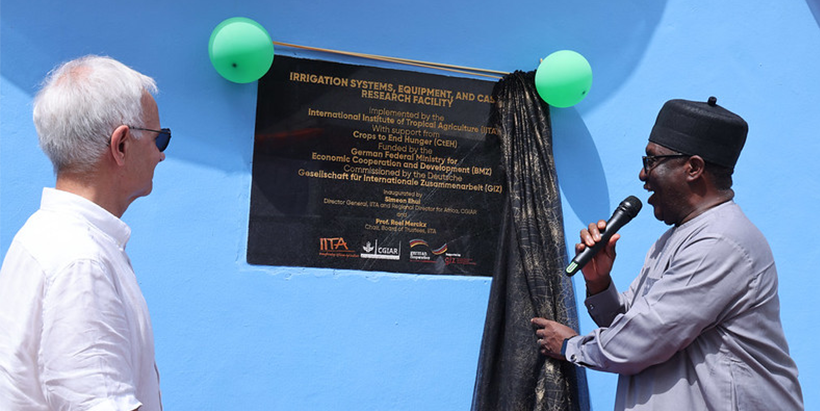
Board Chair Roel Merckx and IITA DG Simeon Ehui unveiling the newly commissioned irrigation systems, equipment, and enhanced cassava research facility.

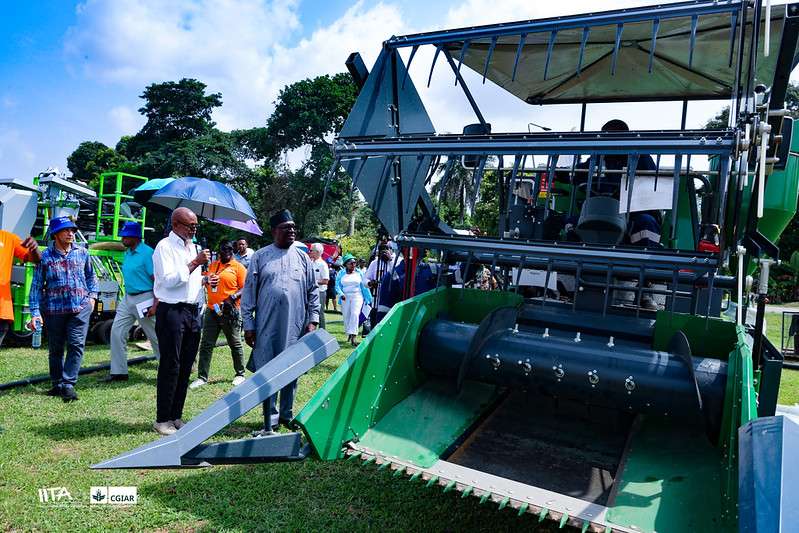
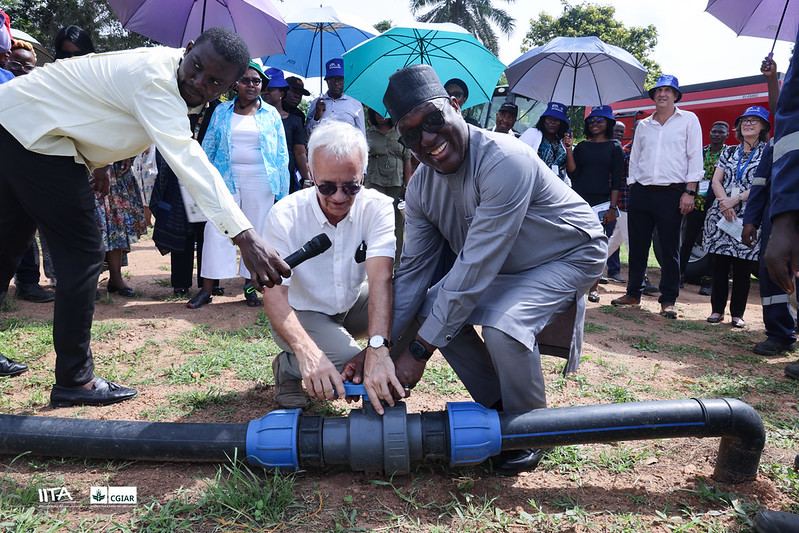
IITA–CGIAR commissioned newly installed advanced irrigation systems and state-of-the-art mechanized farm equipment at the Research Farm Unit on 4 December. The commissioning, with members of the IITA Board of Trustees present, reaffirmed IITA’s commitment to scaling climate-smart research through modern mechanization for the continent. The investment—funded by the German Federal Ministry for Economic Cooperation and Development (BMZ) and implemented by GIZ through the Crops to End Hunger (CtEH) initiative—represents one of the most significant upgrades to IITA’s research infrastructure in recent years.

The commissioning ceremony drew IITA leadership, scientists, farm managers, technical teams, and development partners who expressed pride in a project that strengthens IITA’s ability to deliver cutting-edge, climate-smart agricultural solutions for Africa. IITA Director General and CGIAR Regional Director for Continental Africa, Dr Simeon Ehui described the moment as “a proud step forward for our Institute,” noting that the infrastructure positions IITA to accelerate innovation and deliver improved varieties to farmers across the continent. He acknowledged the unwavering support of BMZ, GIZ, CtEH, and partners who “continue to stand with IITA in transforming African agriculture.”

Alick Mulenga, Head of IITA Farm Management and Breeding Operations leading Dr Simeon Ehui and invited guests on a guided tour and demonstration of the irrigation facility and newly acquired farm machinery.

The newly installed irrigation system expands the Institute’s irrigable land with an additional 70 hectares, enabling year-round experimentation and eliminating seasonal limitations that previously slowed breeding progress. The system features a modern filtration unit, lateral irrigation infrastructure, and mechanized solutions that enhance efficiency in field operations.

Hapson Mushoriwa, Head of IITA Breeding Programs, emphasized that these investments arrive at a critical time. “Africa faces depleted soils, a rapidly growing population, and the escalating challenges of climate change,” he said. “With this irrigation system, we can collect high-quality phenotype data, scale up seed multiplication, run large-scale trials, and shorten breeding cycles. This is how we accelerate genetic gains and modernize our breeding programs to meet today’s challenges.”

Head of IITA Farm Management and Breeding Operations, Alick Mulenga, highlighted that beyond irrigation, the project includes major upgrades to research infrastructure long overdue for renewal. “Infrastructure in project proposals is often the first to be rejected,” he noted. “But this investment changes that story. It allows us to run more efficient, reliable, and safer field operations.”

Representing GIZ, Dr Sarah Schmidt, Advisor Fund International Agricultural Research (FIA) GIZ reaffirmed the commitment of the German government to agricultural transformation in Africa, describing CtEH’s support to IITA as one of the largest single investments the initiative has made. “This reflects our strong commitment to productive, sustainable agriculture and the future of African agrifood systems,” she said. “These facilities will accelerate breeding, respond to climate challenges, and create economic opportunities across value chains. Looking forward to the improved varieties that will be developed for farmers in East, West, and Central Africa.”

Dr Simeon Ehui and Board Chair Prof. Roel Merckx testing the newly installed irrigation system.

IITA Deputy Director General, Research for Development (R4D), Dr Bernard Vanlauwe, with deep appreciation to GIZ underscored the importance of responsible resource use. “Collecting reliable data is one of our key mandates—these facilities give us the tools to do it better, faster, and more consistently,” he said. “Let’s keep using funding right to deliver improved varieties into the hands of farmers.”

IITA Board Chair, Professor Roel Merckx, commended the Institute’s dedication to improving its working environment. “You cannot have a high-performing institute without staff being proud of their facilities,” he noted, thanking GIZ for supporting infrastructure development—an area many funders hesitate to finance.

The ceremony ended with a guided field tour and demonstrations, during which some of the scientists expressed optimism about the facility’s potential to strengthen breeding efficiency, improve data quality, and reinforce IITA’s leadership in agricultural innovation.

“Together with our partners,” Dr Ehui said, “we are building a resilient, food-secure Africa—one innovation at a time.”

Contributed by Folake Oduntan