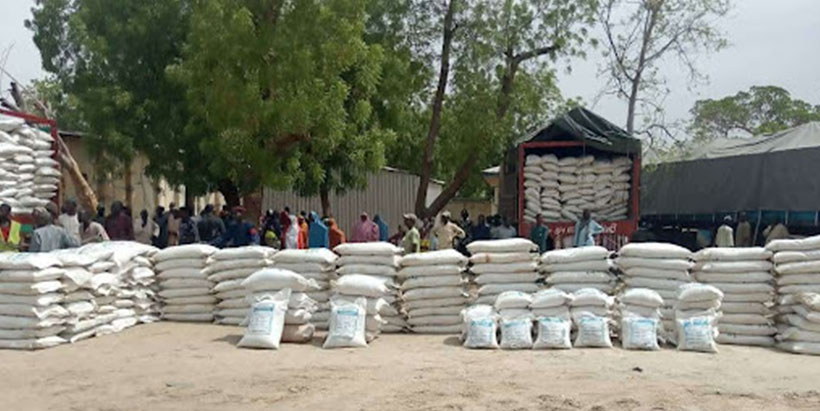
In a collaborative effort to boost agricultural productivity and support sustainable farming practices, the Nigeria Integrated Agriculture Activity (NIAA) donated 17 tons of certified seeds to the Borno State Government recently. The Activity is a five-and-half-year program being implemented by the IITA-CGIAR and its partner, the International Crops Research Institute for the Semi-Arid Tropics (ICRISAT) as part of the United States Agency for International Development (USAID)’s contribution to the economic recovery in Northeast Nigeria, in the wake of the devastation caused by insurgency in the region.
The 17 tons of certified seeds donation on display at Maiduguri, Borno State.The certified seeds donated by the Activity, including rice, soybean, and maize varieties, were recovered from the Community-Based Seed Entrepreneurs (CBSEs) after the successful 2023 wet season seed production. Initially loaned to the CBSEs as foundation seeds, the seeds were meticulously cultivated and harvested, bolstering the effectiveness of the community-based seed production model. The donation aims to support Internally Displaced Persons (IDPs) and vulnerable populations in Borno State, ensuring they have access to high-quality seeds for the upcoming planting seasons.
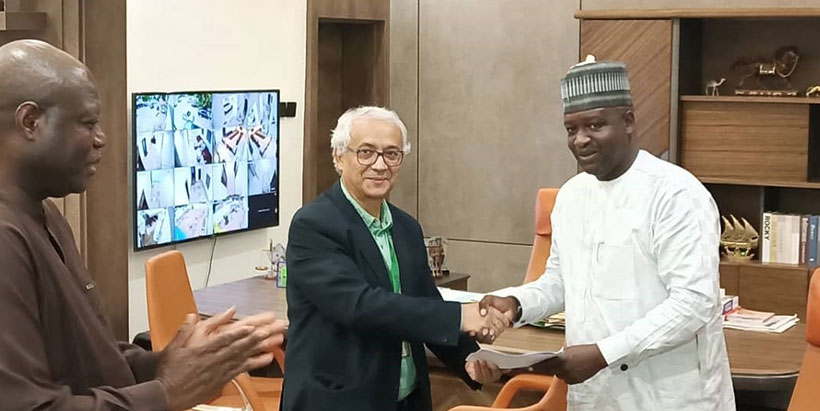
Following the seed donation, a Memorandum of Understanding (MoU) was signed between IITA and the Borno State Government. This MoU is a step forward in collaborative efforts to further strengthen agricultural development in the region. The signing ceremony was attended by key officials, including NIAA Chief of Party, Prakash Kant Silwal, and the Deputy Chief of Party, Kayode Faleti. The Deputy Governor of Borno State, His Excellency Hon. Umar Usman Kadafur, received the donation on behalf of the state government.
The MoU outlined a comprehensive framework for cooperation, focusing on several critical areas such as the establishment of the Agriculture Technology and Business Incubation Centre, and scaling up the CBSE Model to enhance agricultural productivity and sustainability in the Northeast.
The Deputy Governor, Borno State, His Excellency Hon. Umar Usman Kadafur (middle), meeting with the NIAA team after the donation. Also in attendance are the Secretary to Borno State Government, Alhaji Bukar Tijani (second right) and the Permanent Secretary, Borno State Ministry of Agriculture and Natural Resources, Alhaji Bulama (first right).The agreement will help in strengthening the extension services, thereby providing effective support to farmers in Borno state.
During the event, Philemon Fada, a member of the Kam-Lau Community-Based Seed Entrepreneurs, highlighted the profound impact of NIAA’s initiatives on their agricultural practices.
“In just one year, we have seen significant growth and development,” he said. “The introduction of modern farming techniques and high-quality seeds has revolutionized our approach to agriculture. We are grateful to USAID and IITA for their support and look forward to continued collaboration.”
The Borno State Government has assured commitment to mobilizing the resources needed to fully achieve the objectives outlined in the MoU. They are working closely with FAO and other donors to develop a comprehensive framework for cooperation, ensuring that the necessary support and partnerships are in place.
The Deputy Governor, Borno State, His Excellency Hon. Umar Usman Kadafur (Right) during the signing of the Memorandum of Understanding (MoU) in Maiduguri, Borno State.As part of this collaboration, other key areas will be improving market systems, enhancing youth and women’s engagement in agri-entrepreneurship, and diversifying livelihoods to strengthen community resilience. The initiative also aims to build a robust monitoring and evaluation system to track progress and ensure that the targeted outcomes and results are achieved. By leveraging modern techniques, high-quality seeds, and community-based models, the collaboration has the promise of a lasting impact on the livelihoods of farmers in Borno State.
As the Activity draws to a close in Northeast Nigeria, this commitment is a sustainability measure in ensuring that the farming community continues to enjoy offerings of the five-and-half-year engagement that has now culminated in the Seed System Development for Northeast Nigeria, a model that has a potential for nationwide scaling and benefits.
Contributed by Olorunfemi Adedeji
The IITA-CGIAR Cassava Breeding Program held the first stakeholder engagement meeting across research institutions in West and Central Africa in Kumasi, Ghana, on 10 – 13 June. The meeting, held in collaboration with CSIR-CRI and designed to develop stronger CGIAR-NARES networks for crop improvement, had cassava value chain actors, including farmers, input suppliers, extension workers, transporters, and marketers across Ghana present.
Participants of the West and Central Africa stakeholder engagement.
The meeting engaged these stakeholders in defining the market segments, market share, and target production environment and identifying high-priority traits and threshold values that stakeholders would like to see in improved varieties. In his opening remarks, the Director of CRI Kumasi, Prof. M.B. Mochiah, underscored the importance of cassava in Ghana. He further affirmed his continuous support for CRI’s long-standing collaboration with IITA Cassava Breeding.
Accelerated Breeding Initiative (ABI) Transform Focal Person in West and Central Africa, Vishnuvardhan Banda, introduced the participants to the concepts of product design in aggregating demands for specific products, choosing the most suited geography for production, and identifying preferred traits that drive consumer’s preference. Participants shared their perspectives in groups and made submissions about the market segments, target production environments, and traits that should be included in the new variety design.
Facilitators of the West and Central Africa stakeholder engagement.
Researchers and experts from IITA and CRI Kumasi further refined the market segment and product profile documents. Furthermore, a breeding assessment of CRI Kumasi was done to determine the current state of its cassava breeding program. The facilitators, including IITA Head of the Cassava Breeding Unit Elizabeth Parkes, IITA Cassava Breeder Ismail Rabbi, Data Specialist Ekanem, and CRI Kumasi Cassava Breeder Ruth Prempeh, thanked all participants for their collaboration, commitment, and dedication to fulfilling the meeting’s objectives.
The IITA Cassava Breeding Program will continue to hold meetings like this across research institutions in West and Central Africa. The vision is to create the West and Central Africa Cassava Breeding Network by 2025. IITA will focus on developing improved cassava varieties that address the market needs defined in each country’s target product profile. These meetings will include farmers, seed producers, transporters, processors, marketers, and consumers at the initial planning stages to define and characterize new varieties to be developed. This will ensure effective collaboration during the evaluation, registration, release, and monitoring of the adoption rate of new varieties as IITA strives to transform Africa’s agriculture.
Contributed by the IITA Cassava Breeding Team
In Burundi, a new project is rapidly transforming the agricultural sector, bringing many farmers hope, prosperity, and improved food security. The Great Lakes Accelerated Innovation Delivery Initiative Rapid Delivery Hub (AID-I GLR) Project—locally dubbed Kugwiza Project (which means ‘to increase’ in Kirundi)—through its partnership with the International Potato Center (CIP) and local and international scaling organizations, including World Vision, Welthungerhilfe (WHH), One Acre Fund, CoopEden, and Cooperative Haguruka, is at the forefront of this transformation. AID-I GLR is strengthening the orange-fleshed sweet potato (OFSP) value chain and changing lives.
Burundi’s agricultural sector has long been a cornerstone of its economy. However, challenges such as inadequate access to quality planting materials and modern farming techniques have hindered progress.
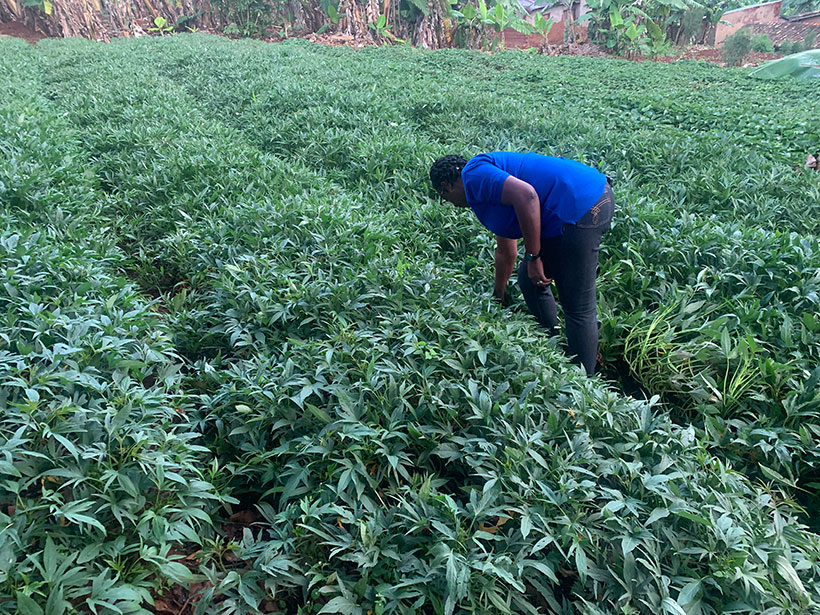
Within a relatively short time, the Kugwiza Project has undertaken extensive capacity-building activities to ensure the availability of clean OFSP vines across Burundi. Collaborating with the Institut des Sciences Agronomique du Burundi (ISABU), CIP has trained laboratory technicians in producing early-generation seeds and their distribution to seed multipliers for further multiplication. This initiative is crucial for establishing a robust and sustainable seed system.
More than 80 private seed multipliers have been engaged to produce high-quality certified seeds in large quantities, ensuring that farmers can access superior planting materials. Ten mini-screen houses with ten vine multipliers have been established to support this effort, marking a significant milestone in Burundi’s agricultural development.
A seed multiplier from Vumbi Commune in Kirundo Province, Monique Rwasa, attests: “Through training by the Kugwiza Project, I have learned seed multiplication techniques and certification processes. Based on the knowledge I gained, I now explore better market opportunities through connections with potential buyers I met during various project workshops.”
Before the project, Monique faced significant challenges in sourcing pre-basic seeds, often traveling far to ISABU’s research stations. Establishing a mini screen house in her plot has revolutionized her operations.
“With the support of the Kugwiza Project, I can now produce early-generation seeds myself, which has economically improved my farming enterprise,” Monique elaborates.
Monique highlights the advantages of the new vine rapid multiplication technique introduced by CIP, which uses 20cm x 10cm plant spacing. This technique allows seeds that would typically be multiplied on one hectare to be planted and multiplied on about 1,000 sqm of land, significantly reducing labor, input, and land use. As a result, Monique has expanded her farm from 0.5 hectares to 7 hectares. With the additional income from the project, she has purchased 5 hectares of land, built a family house, repaid loans, and funded her children’s university education.
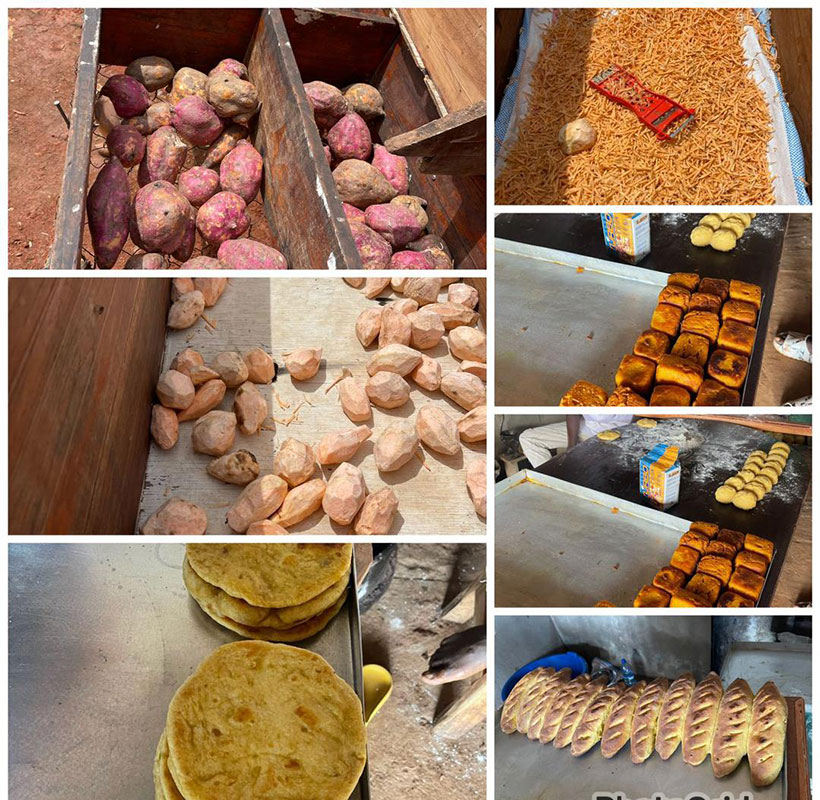
However, peculiar challenges remain in finding a sustainable market for all produced vines and conserving OFSP storage roots after vine cutting. Therefore, the Kugwiza Project has initiated interventions downstream on the value chain to pull vines’ demand. The project introduced OFSP puree to the bakery innovation package. This innovation helps bakeries reduce costs while enhancing their products. Five of the 12 entrepreneurs trained in bakery innovation have already incorporated OFSP puree into their products, with positive results.
“OFSP-based production is very profitable,” attests Vianney Munyemana, a bakery owner and one of the early adopters mentioned above. “Currently, wheat flour is quite expensive: a 25-kilo sack of wheat flour now costs between 105,000 and 110,000 francs [USD 37 and 39]. In comparison, we buy OFSP at 800 or 1,000 francs [USD 0.28 or 0.35] per kilo. Therefore, a 100-kilo bag costs approximately 100,000 francs [USD 35], equivalent to almost four bags of wheat flour. The difference is substantial. Using OFSP puree has significantly reduced production costs and improved the quality of our products. We can now offer healthier options to our customers while increasing our profits.”
Hear more from Vianney and his OFSP puree bakery experience in this video:
Contributed by Bertin Nduwayo, Ritha Bumwe, and Jean Claude Nshimiyimana
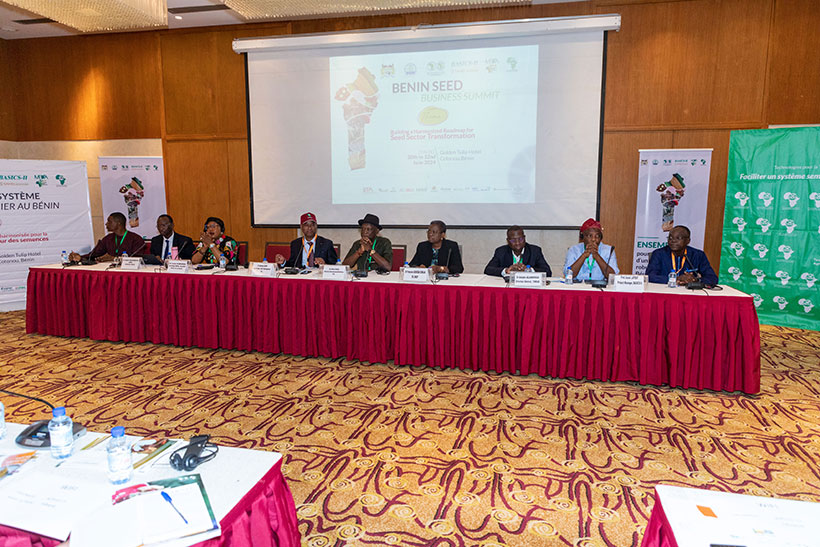
Cross section of the key note speakers during the seed summit.
Stakeholders from the Republic of Benin and across Africa are organizing a summit to draw a seed roadmap for the West African countries.
The consortium includes the Government of Benin, the African Development Bank (AfDB) funded Technologies for African Agricultural Transformation (TAAT), the IITA Building an Economically Sustainable Integrated Cassava Seed System, Phase 2 (BASICS-II) project, the Sasakawa Africa Association (SAA) in Nigeria, the Sahel Consulting and Mennonite Economic Development Associates (MEDA).
The three-day Seed Business Summit, with the theme “Building a harmonized roadmap for seed sector transformation,” is being organized in collaboration with the Beninese Ministry of Agriculture, Livestock and Fisheries (MAEP), the Beninese National Institute for Agricultural Research (INRAB), and other stakeholders.
The summit will be held from 20 to 22 June in Cotonou, the Beninese capital. The forum aims to catalyze an agricultural revolution in Benin by establishing an economically sustainable seed system for priority crops like rice, cassava, maize, soybean, livestock, fish, sorghum, and millet.
According to the Head of TAAT Clearinghouse, Solomon Gizaw, “This summit is a direct response to the need to hold a more comprehensive audience consultation to identify major challenges, develop solutions, and advocate for more investments in Benin’s agriculture.”
“This seed summit will bring together policymakers, international financial institutions and policymakers, scientists, the private sector, and farmer organizations to a roundtable discussion to broker investments for Beninese agricultural transformation with quality inputs, particularly seed as a primary entry point,” Gizaw added.
The BASICS-II Project Manager, Lateef Sanni, explained, “The seed summit will produce outcomes that will form the basis of future investment in Benin’s seed system. It will produce recommendations to help forge a roadmap to feed into the country’s agricultural policies and plans.”
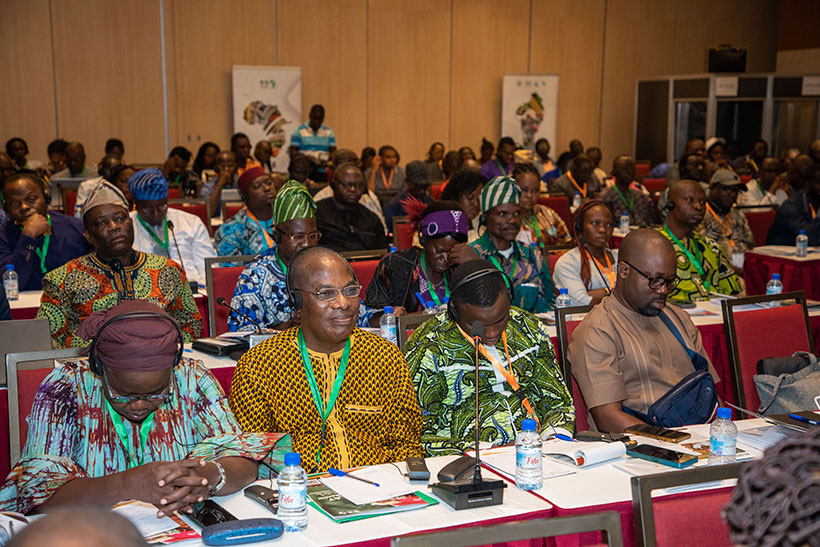
Stakeholders and participants during the seed summit in Benin.
“The summit will address factors limiting growth in Benin’s agricultural sector, including the underdeveloped seed sector characterized by poor quality seeds, a weak seed regulatory framework, a struggling research system for variety maintenance, and a feeble private sector participation in the seed system,” said Godwin Atser, the Country Director of SAA-Nigeria.
“A solid seed system will surely change the country’s agricultural landscape. In this summit, SAA, BASICS-II, TAAT, and other partners will share the models currently strengthening the seed system in Nigeria, Tanzania, DR Congo, Sierra Leone, and Liberia,” Atser added.
The Beninese Minister of Agriculture Livestock and Fisheries, Hon. Gaston Cossi Dossouhoui, will chair the summit’s opening ceremony with the support of other dignitaries and development partners.
Alongside the conveners, several national stakeholders, including farmers, seed producers, and International Development Partners (IDPs), will also participate in the summit.
These partners include the African Development Bank (AfDB), the Bill and Melinda Gates Foundation, the Food and Agriculture Organization (FAO), the World Bank, the European Union, the World Food Programme (WFP), the United States Agency for International Development (USAID), GIZ, and JICA.
AfricaRice, the African Agricultural Technology Foundation (AATF), the International Crops Research Institute for Semi-Arid Tropics (ICRISAT), the World Vegetable Center (WorldVeg), the International Livestock Research Institute (ILRI), and the WorldFish Center are other partners for this summit.
Contributed by BASICS Team.
Radio IITA joined the global community in celebrating this year’s Children’s Day event. The day was established in 1954 as Universal Children’s Day and has been celebrated on different dates in several countries since then. In Nigeria, it is marked on 27 May and observed as a public holiday for children.
Cross section of school children participating during a quiz session at the Radio IITA’s Children Day event.
The Maiden Radio IITA Annual Children’s Day program with the theme ‘Sustainable future: Youths leading the way’ provided a unique opportunity for students from invited schools to understand and appreciate the interconnectedness of climate change, smart agriculture, biodiversity, and conservation, health and nutrition, plant health, food systems, and security while inspiring them to take action for a sustainable and thriving future.
School children from various schools across Ibadan during the Radio IITA Children’s Day event.
In her opening remarks, Kathrine Lopez, Head of IITA Communication, welcomed the students and highlighted that IITA-CGIAR’s mission, over the years, continues to generate agricultural innovations to meet Africa’s most pressing challenges of hunger and malnutrition while improving livelihoods. She affirmed that the Radio IITA Annual Children’s Day program is one such platform to share Knowledge generated from IITA’s research, change the mindset of children about agriculture and environmental sustainability, and inspire them to be better leaders in the future.
Welcoming children from the schools, Dajie Odok, Radio IITA Lead, said that through the Radio IITA Annual Children’s Day program, students will learn about climate change, climate-smart agriculture, protecting nature, plant health, food safety, and nutrition to make the world a better place.
IITA Talent Management and Engagement Manager Lade Oke spoke with the children about how embracing and fostering an environment of diversity and inclusion among children is crucial for their development and building a harmonious and progressive society.
The need to eat a balanced diet (colorful plate), which is vital for children’s overall health and development, was an exciting takeaway lesson for the children after Bussie Maziya Dixon, IITA Food and Nutrition Scientist, took her turn to speak on a balanced diet.
The children learned of different ways to conserve biodiversity, such as promoting native planting, judicious use of all resources, reducing, reusing, and recycling after Ajayi Ademola from IITA Forest Center explained that taking care of Mother Nature and biodiversity is essential for the well-being of planet earth.
Food safety is everyone’s business, according to Titi Falade of IITA Plant Pathology/Mycotoxin/Aflasafe unit. During her session, the children learned about the importance of food safety as it helps avoid harmful things like aflatoxin.
Five schools from Oyo State, Nigeria—Amao International Primary School, Hill Crest Elementary School, God’s Divine Model School, Crescent Model School, and Imperial International School—participated in the Radio IITA Annual Children’s Day program which featured a debate, quiz, essay writing, poem, and riddles all centered on climate change, smart agriculture, biodiversity, nutrition, and food systems.
Contributed by ’Bamise Dada
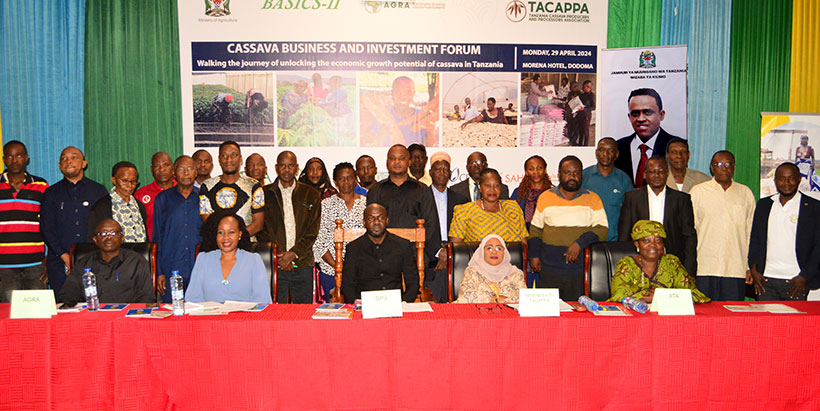
The Ministry of Agriculture of Tanzania, in collaboration with the Tanzania Cassava Producers and Processors Association (TACAPPA), IITA, and AGRA – Sustainably Growing Africa’s Food Systems, organized a cassava business and investment forum in Dodoma on 29 April. The event aimed to engage stakeholders, especially private-sector cassava producers, seed producers, researchers, and policymakers, to foster insightful discussions on promoting cassava in food systems diversification, commercialization, and trade at national, regional, and international levels.
Early-generation seed multiplication using pencil stem technology at TARI Kibaha. (Photo Credit: Salum Manzi)
Dr Hussein M. Ommar, the Deputy Permanent Secretary—representing the Minister of Agriculture, Honourable Hussein Mohamed Bashe (MP), who presided over the event as the Chief Guest of Honor—expressed gratitude to the delegates for their commitment to improving the cassava sub-sector in Tanzania. Ommar highlighted the contributions of development partners, especially the Bill & Melinda Gates Foundation and Cornell University, in supporting projects (BASICS II, Muhogo Bora, and Next-Gen) on the development of a sustainable cassava seed system in the country.
“These projects have empowered over 1,000 cassava seed entrepreneurs, most of whom are youth and women. Likewise, several good varieties resistant or tolerant to major virus diseases—CBSD and CMD—have been officially released and made available to cassava farmers. These IITA-led projects and other efforts have significantly contributed to revenue generation and align with the Agenda 2030 goals,” Ommar remarked.
On the other hand, the forum also shed light on the challenges hindering the achievement of targets outlined in the National Cassava Development Strategy (NCDS) 2020 – 2030. Dr Ommar emphasized the need to reach the target of at least 3.5 billion clean cassava cuttings from improved varieties and plant at least 30% of the total area under cassava with improved varieties by 2030.
Group photo of Cassava Seed Entrepreneurs with the Chief Guest of Honor during the Cassava Business and Investment Forum. (Photo Credit: Lembris Laizer) Regina Kapinga, Head of Advocacy and Resource Mobilization and the BASICS II Tanzania project team leader at IITA, presented on building a market-led sustainable cassava supply chain for commercialization and industrialization. This highlighted all the opportunities available which could trigger the increased market-led production of cassava by smallholder farmers. She emphasized major initiatives to address some of the challenges in cassava production, including the use of technologies like Semi-Autotrophic Hydroponics (SAH) for Early Generation Seed (EGS) production and various market avenues that cassava could provide if produced with the eye of businesses creation.
Stakeholders at the forum discussed the rapid emergence of the cassava market in recent years, including the significant export of dried cassava chips to neighboring countries, including Burundi, Rwanda, DR Congo, and South Sudan. In this case, the presence of new Chinese investors interested in cassava for industrial use was highly appreciated. Bian Qiuming from China Red Sun Group expressed interest in supporting smallholder farmers to increase productivity and meet his company’s demand for dried cassava chips which is 600,000 metric tons per year for pesticide production.
A recent study by IITA and the Tanzania Agricultural Research Institute (TARI) reveals that cassava production with healthy, clean seed has about 82% yield advantage over recycled seed, providing a compelling incentive for farmers to adopt certified seeds.
Nyasebawa, the Director of Crop Development representing the Permanent Secretary of the Ministry of Agriculture, reiterated the government’s commitment to supporting the cassava sector at the closing of the meeting. He indicated to the participants that the government is emphasizing cassava as one of the priority crops and will be funded for infrastructure development and post-harvest technologies to reduce losses and enhance competitiveness.
The forum concluded with deliberations on unlocking the markets and competitiveness of cassava, effective post-harvest management, and increased productivity to meet the huge demand by potential investors. Regular joint meetings will closely monitor these action points to ensure effective implementation.
The Cassava business and investment forum brought together over 150 delegates, including investors, policymakers, government officials, farmers, seed entrepreneurs, researchers, and development partners. It served as a platform to explore opportunities, address challenges, and take the lead for the sustainable growth of Tanzania’s cassava sector.
Contributed by Lembris Laizer and Gloriana Ndibalema
Small tends to be underrated. Yet, it can be tremendously successful. Initially skeptical, market actors have now embraced the village-based advisor (VBA)/small-pack approach in their marketing strategy.
Seed systems in the Great Lakes Region are still nascent and characterized by a broad diversity in actors, and in production and distribution models. These models span from government-led production and distribution in Burundi to a private sector-led and government-enabled approach in Rwanda, while DRC relies heavily on imports and informal systems. Small companies and cooperatives involved in seed production – albeit with limited marketing and distribution operations – are common across all three countries. Indeed, most of them sell their produce in bulk to the government, relief agencies, and non-governmental organizations. Consequently, farmers remain largely unaware of new technologies, and innovative products are not always locally available when needed.
Small packs of bean seeds designed with information on seed characteristics.
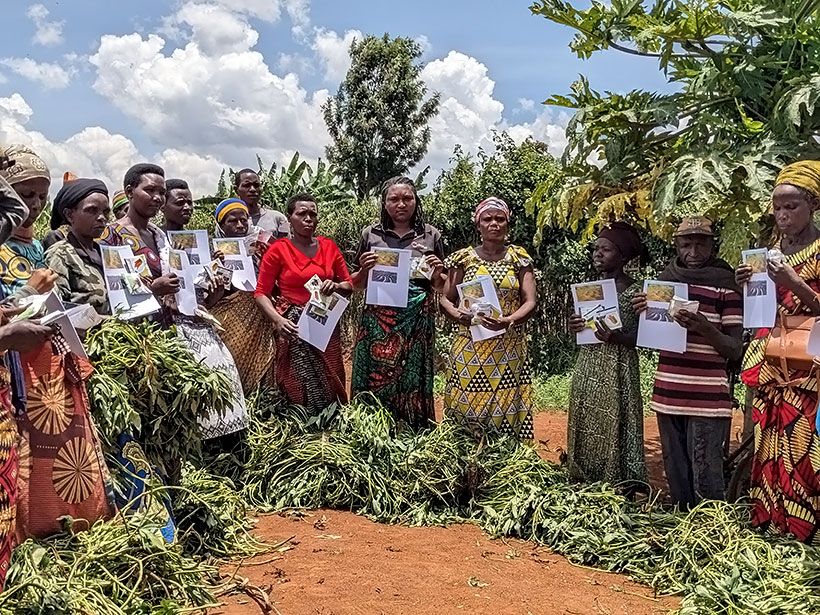
In light of this, the Great Lakes Accelerated Innovation Delivery Initiative Rapid Delivery Hub (AID-I GLR) introduced the ‘village-based advisor/small pack’ approach. In this approach, as an integral part of their promotional activities for market expansion, seed companies or producers and other selected input providers run mother demonstration plots and package inputs (e.g., seeds, veterinary products, fertilizers, and soil amendments) in small packs for broader and more proactive distribution to smallholder farmers, along with advisory information. The mother demonstration plot, managed by a village-based advisor (usually a lead farmer), serves for learning purposes, demonstrating the new technology’s benefits and the technical know-how to ensure success. The small pack is provided to farmers learning the ‘how-to’ at the mother demonstration plot, which they can then practice and test on their farms.
In Burundi, Rwanda, and the Democratic Republic of Congo (DRC), AID-I GLR trained seed companies on the small pack approach and supported them in its implementation. This was achieved by delivering certified, climate-smart, and clean seed varieties in small packs of 100 grams to farmers, accompanied by training and information kits on good agronomic practices.
In Buhiga District, Karusi Province, Burundi, after receiving small packs to test in their small plots at home, farmers are actively observing and learning about good agronomic practices at a demonstration plot for rice farming.
Initially, there was resistance to the approach from nearly all quarters – seed companies, farmers, and, in some cases, local authorities. Their main concern was that the quantity would not demonstrate substantial effectiveness in farmers’ fields. However, following a training and experience-sharing session facilitated by Seed Systems Group through Farm Input Promotions Africa (SSG/FIPS-Africa) in Nairobi, extension managers successfully conveyed the approach’s benefits to their leaders.
After just a single agriculture season of implementation, there have already been positive outcomes, leading to increased interest and adoption by market actors, farmers, and the public. The approach has also proven successful in giving farmers a firsthand experience of seed performance in their fields.
Market actors have widely embraced the small-pack approach. During the previous season (2024A), seed companies played a significant role in increasing the distribution of small packs to farmers. In Rwanda, seed companies contributed nearly half (42%) of the total number of small packs distributed. This was a direct market response: ever market-conscious, seed companies had noticed the growing demand for small packs and decided to supplement the quantities provided by AID-I GLR. For instance, I&J Harvest produced an additional 6,500 kilos of high-iron bean seeds on top of the initial 7,000 kilos provided by AID-I GLR. Similarly, KGB Seed Company supplemented the initial 6,000 kilos of hybrid maize seed with an additional 5,500 kilos.
Small packs distributed to farmers in DR Congo branded with information detailing the characteristics of the seeds.
In DRC, AgriForce seed company has also supplemented the small packs delivered to farmers. “Thanks to this integration, in the 2023B season, we produced and distributed approximately 26,000 seed packs of beans. Demand increased in the 2024A season, leading us to produce up to 30,000 small packs as part of the project,” revealed Herman Mutabataba, AgriForce CEO. He added, “We also produced an extra 16,000 small packs, totaling 46,000 small packs of high-iron beans. Furthermore, a total of 81,600 small packs and 50,000 maize seeds were distributed respectively in the 2024 A and B seasons.”
What are market actors and farmers saying about the small-pack approach?
Jacques Tuyishimire, Managing Director of Holland Green Tech, a vegetable seed company in Rwanda, emphasized the shift in their marketing strategy to integrate small packs, with encouraging feedback from farmers and an expanded market reach.
“We were accustomed to packaging vegetable seeds for larger farmers, not small packs. This project opened doors to smallholder farmers, providing a new avenue to expand our business and cater to a broader clientele with small packs,” he said. “The positive feedback from farmers during the small pack testing in phase 1 has inspired us to adapt and revise our marketing strategy. We are now actively planning to include small packs in our product line to ensure our products reach a diverse market.”
Richard Hatungimana, the CEO of Coop Eden, a farmer cooperative and seed company in Burundi, spoke of the company’s eye-opening transformative experience with the small-pack approach. He explained, “I had limited knowledge of the small pack approach when it was introduced. I thought the project brought money to buy seeds for distribution as charity to vulnerable households in communities.”
After the training, he said, “I gained a profound understanding of the small-pack technology used by the Kugwiza project, for instance the nickname for AID-I GLR in Kirundi, means ‘to increase.’ It’s not just about distribution but equipping me with innovative approaches to market my seeds to increase demand. Farmers to whom I provided small seed packs of 100 grams of improved high-iron beans appreciated the yields, harvesting between 2 and 3 kilos. Most of them returned to order more seeds due to their satisfaction. As a result, I’ve increased sales by 1.5% through the small-pack approach.
We have integrated the small-pack approach into our marketing system. Indeed, when a customer comes to buy any quantity of one or two varieties, we offer them one or two small packs of improved varieties as an opportunity to test the new varieties. This will allow them to compare yields and decide which variety to buy in the future.”
Herman Mutabataba adds, “In my opinion, this approach is effective because it allows farmers to form personal opinions on the seeds. Additionally, it enables us to reach a large number of Farmers quickly. Information spreads fast and in real time. The small-pack approach is gradually being integrated into our marketing strategy, where sales agents are the primary link between farmers and AgriForce.”
Farmers in Burera District, Rwanda, received small packs of orange-fleshed sweet potato vines, and along with flyers containing key essential information about the seeds, to test in their small plots.
How have market actors responded to farmers’ demands after witnessing the benefits of the technologies?
The adoption of improved inputs among farmers has been significantly stimulated by continuous exposure to new agricultural technologies in the two previous seasons.
The positive response from farmers is amply reflected in increased orders for seeds, leading to heightened engagement with agro-dealers as an integral part of the marketing strategy. This strategic collaboration ensures the availability of improved seeds at input shops, thereby enhancing farmers’ accessibility.
Through effective links and engagement in Rwanda, more than 30 new agro-dealers have been successfully enlisted by seed companies and input suppliers in the areas where farmers were exposed to new technologies during the last season. This collaboration has produced 59.6 tons of improved seed and 2,965 tons of lime for agro-dealers, who have delivered them to farmers for planting during the 2024A season.
Furthermore, the impact of exposing more than 300,000 individual farmers in Rwanda to improved seeds of potatoes, high-iron beans, maize, and orange-fleshed sweet potatoes (OFSPs) is evident. As a direct result of this exposure, these farmers have collectively placed orders for more than 515 tons of seeds of high-iron beans, vegetables, hybrid maize, and potatoes, as well as up to 500,000 cuttings of OFSPs and 284 tons of lime. The combined market value of all these is US$ 769,988. This reflects a substantial increase in demand and market share and convincingly demonstrates the initiative’s success and sustainability.
Farmers in the Northern Province of Rwanda received improved potato seeds and were trained in good agronomic practices at a demonstration plot.
In addition, seed and lime companies expanded their markets into new geographies. For instance, I&J seed company penetrated the seed market in four new districts in Rwanda (Nyamasheke, Kayonza, Rwamagana, and Ngororero) with high-iron beans, while MULMECO, a lime producer, started business in Rutsiro and Gicumbi Districts. As a result of the intervention, KGB Seed Company began seed production of hybrid maize in Nyamasheke.
In Burundi, Richard Hatungimana recalls, “When I started working with the Kugwiza Project during the 2023B season, I distributed 160,000 small packs of high-iron bean seeds, weighing 16,000 kilos. During the subsequent planting season (2024A), it was evident that farmers were delighted with the seeds’ performance. As a result, they independently placed orders and purchased up to 24,000 kilos of high-iron bean varieties.”
Contributed by Ritha Bumwe
In a major move to leverage its research efforts and strengthen an existing partnership of close to 40 years in Zambia, IITA–CGIAR officially launched state-of-the-art research facilities at the Southern Africa Research and Administration Hub (SARAH) in Lusaka.
Designed to create an enabling environment for increased collaboration and partnerships with government, policymakers, other CGIAR centers, and donors, the IITA-SARAH facilities will ensure better delivery of agricultural innovations to national programs in the region, improved research collaboration, faster innovation scaling, and enhanced regional policy engagements.
While IITA-CGIAR research interventions have contributed to improving food systems in Zambia, the research facilities herald the start of a significant commitment between IITA, CGIAR, and the Zambia Government to enhance agricultural productivity, food security, and livelihoods of millions in Zambia and the Southern Africa region.
During the launch of the research facilities, Zambia President His Excellency Hakainde Hichilema called for increased collaboration between government Ministries and agencies to leverage opportunities that the IITA Zambia research facilities will provide, adding that the launch is coming at a critical time in the country where efforts are being deployed to address the drought in Zambia.
“These impressive innovations will help Zambia address the challenges of hunger, malnutrition, and poverty,” he said.
IITA Director General and CGIAR Regional Director for Continental Africa, Dr Simeon Ehui, excitedly highlighted how the hub would serve as a melting pot for innovation, capacity building, and knowledge sharing in research and agriculture in Zambia.
“This partnership with the Zambian Government aligns with IITA and CGIAR’s commitment to lift millions out of hunger and poverty in Africa. We are committed to transforming the food systems’ landscape and improving the livelihoods of millions of smallholder farmers in Africa. Today, IITA-SARAH is championing the cause in the southern region,” Dr Ehui said.
The IITA-SARAH launch, which brought together key stakeholders within Zambia and other parts of Africa, signifies a major milestone in the country’s agriculture and research efforts.
Former President of Nigeria and IITA Goodwill Ambassador, Chief Olusegun Obasanjo—also present at the launch—called for increased efforts in youth engagement, as there is a need to attract more youth into agriculture. “The youth are taking up jobs in attractive fields portrayed as easy while agriculture, which is most important to humans, is being neglected. This is the only profession that puts food on the table; hence, it is imperative that youth are encouraged to embrace agriculture as a business in Africa.”
“We have to factor in youth engagement in all of these as they are the ones to carry on the legacy,” he said.
IITA Zambia Country Director and Director for the Regional Hub for Southern Africa, David Chikoye, who hosted the event, said the collaboration between IITA and the Zambia Government will strengthen agricultural research and development efforts in Zambia and across the Southern Africa region while creating an enabling environment for policy engagement and government involvement in critical decision-making in areas like seed systems, breeding efforts, and nutrition security.
The launch of IITA-SARAH and the research and delivery facilities will provide technical backstopping for addressing critical issues like food insecurity, plant health, and seed systems and support the government in achieving the agricultural transformation agenda in Zambia and the southern region in Africa.
Contributed by Timilehin Osunde
Lusaka, April 4 – The International Institute of Tropical Agriculture (IITA) announced today that it has gained full diplomatic status as an international organization working in Zambia, according to the Zambian government. This is coming on the eve of the launch of the Institute’s Southern Africa Research and Administrative Hub (SARAH) and food system research and delivery facilities in the country.
According to a statement issued in Lusaka, this timely development will strengthen partnership with the government and increase IITA-CGIAR’s contribution to the research and agricultural transformation efforts in the country.
Speaking at the Zambia office in Lusaka, IITA Director General and CGIAR Regional Director for Continental Africa, Dr. Simeon Ehui said this marks a significant step forward in strengthening agricultural research and development efforts in Zambia and across the Southern Africa region and establishing sustainable food systems.
The launch of IITA-SARAH, which would host food system research and delivery facilities in Lusaka, will produce state-of-the-art technologies geared towards addressing critical issues like food insecurity, plant health, and seed systems in Zambia.
The launch event will bring together key stakeholders from the government, research, development and agricultural sector, and donor community to commemorate this significant milestone.
The event will feature an exhibition tour of innovations from CGIAR centers based in Zambia and IITA, and a program to commission the facilities. High-level officials from IITA, CGIAR and the Zambian government will highlight the shared vision and objectives of the partnership and the research and delivery facility.
The establishment of SARAH in Zambia 38 years ago and the launch of the food system research and delivery facilities underline the commitment of both IITA and the Zambia government to enhance agricultural productivity, food security, and livelihoods of millions in Zambia and the Southern Africa region.
The partnership will leverage IITA and CGIAR’s expertise in research delivery and agriculture innovation scaling to support the Zambian Government’s efforts in promoting sustainable agricultural practices, enhancing crop productivity, and mitigating the impacts of climate change on smallholder farmers.
Speaking at the launch, Dr. Simeon Ehui remarked, “We are excited to launch the IITA regional hub in Zambia, which will serve as a melting pot for innovative research, capacity building, and knowledge sharing in research and agriculture. This partnership with the Zambian Government reflects a mutual commitment to drive food systems’ transformation and improve the lives of millions of smallholder farmers in Zambia.”
IITA-Zambia Country Director and IITA Regional Director for Southern Africa David Chikoye expressed excitement at hosting the event, which he said took lots of planning and engagement. “IITA will continue to support the Zambia government to achieve the agricultural transformation agenda, enhance food security, and promote sustainable development across the country and the region.”
For media inquiries, please contact:
IITA Southern Africa Research and Administration Hub (SARAH)