Cassava production in western Kenya is being threatened by an army of pests and diseases that could decimate harvests. This starchy crop—the second most important in Kenya’s western and coastal regions, after maize—feeds over 500 million people in sub-Saharan Africa, and the challenge from these threats could have devastating consequences for food security in the region. But, new research offers hope for both farmers and consumers.

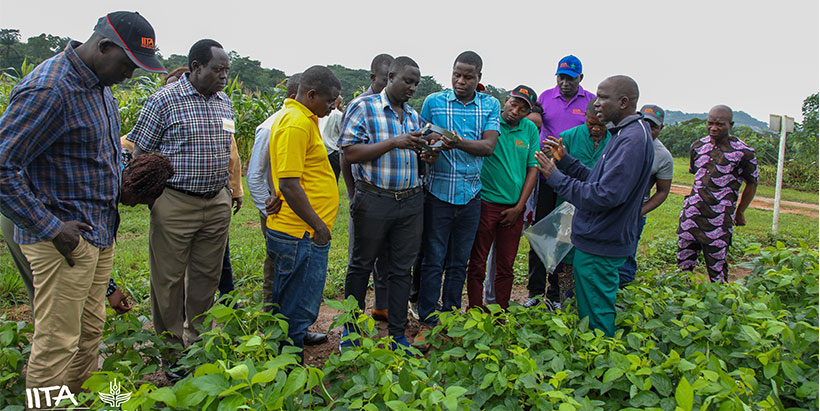
Senior KALRO researcher Vincent Woyengo in a cassava field with improved varieties—MM96.4271 and Migyera.

In a recent study titled “Occurrence and Distribution of Major Cassava Pests and Diseases in Cultivated Cassava Varieties in Western Kenya,” scientists from IITA and the Kenya Agricultural and Livestock Research Institute (KALRO) conducted field surveys across six major cassava-producing counties to understand how two devastating diseases—Cassava Mosaic Disease (CMD) and Cassava Brown Streak Disease (CBSD)—and pests like whiteflies and cassava green mites (CGM) are affecting cassava production. Their discoveries highlight both the challenges and potential solutions to these “invisible” enemies.

CMD and CBSD are spread by whiteflies—tiny insects that feed on cassava plants. CMD causes yellow, twisted leaves, stunting plant growth, while CBSD—which causes extreme yield loss—results in brown streaks inside the cassava roots, rendering them unmarketable and inedible. These diseases are a major cause of food loss in the region.

The surveys—conducted in 2022 and 2023—revealed that CMD is widespread, but thanks to improved cassava varieties, it is not as rampant as it once was. On average, CMD affected 26.4% of plants in 2022, but improved varieties, like MM96/4271, showed far lower infection rates—only 5.9%. This variety is popular among farmers and is resistant to CMD and tolerant of CBSD, helping protect cassava yields.
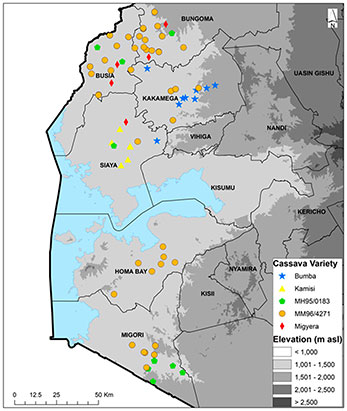
Geographic distribution of the top five cassava varieties cultivated in 2022 and 2023 in six counties of western Kenya.

One of the scientists, Senior KALRO researcher Vincent Woyengo, was pleased with the widespread adoption of KALRO-promoted improved varieties. He said, “KALRO improved varieties are tolerant to the effects of the major cassava virus diseases as well as being high yielding and adapted to environments in western Kenya. However, KALRO is keen to build on improved variety adoption by strengthening seed delivery systems, improving marketing structures, and training farmers in good agricultural practices.”

However, this multiple-front fight involves more than just disease. Whiteflies are multiplying rapidly, with 28% of surveyed fields in 2023 showing alarming infestations. CGMs are another threat, with their numbers increasing due to unpredictable weather, potentially linked to climate change. These mites feed on young cassava leaves, slowing plant growth and reducing yields.

IITA Vector Entomologist Everlyne Wosula, who led the survey team, emphasized the urgent need to re-establish routine surveillance of plant pests and diseases. She explained: “The reemergence of CGM despite previous biocontrol efforts calls for immediate research to understand the resurgence and to develop effective control measures. This is crucial, as cassava is being championed as a climate-resilient crop for food security, yet it remains vulnerable to pest outbreaks, especially under dry conditions.”
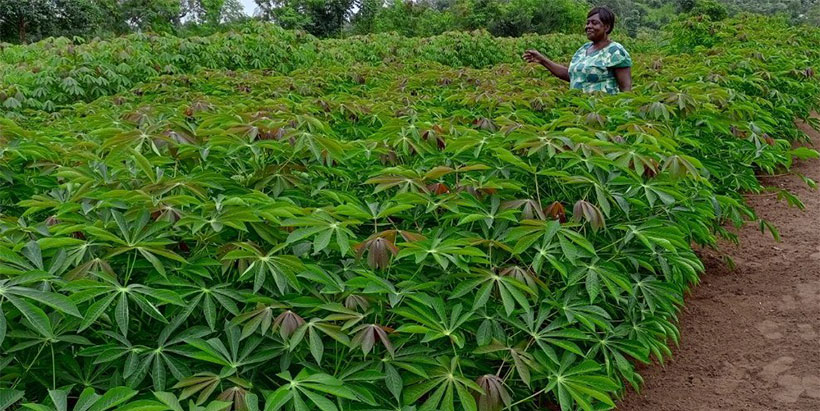
A cassava farmer showcasing the improved Migyera cassava variety.

This study highlights these ongoing threats to cassava production in western Kenya, but there is good news. The extensive adoption of improved varieties like MM96/4271 shows promise in reducing the impact of these diseases. Scientists believe they can reduce crop losses and ensure cassava’s future as a reliable food source by developing disease-resistant strains and promoting better seed systems, thereby expanding the adoption of improved varieties, developing IPM strategies, and enhancing cassava’s resilience to both pests and climate-related stressors. Combining these efforts with integrated pest management will further protect cassava against its relentless enemies.

IITA Plant Health Scientist James Legg, who provides oversight for IITA’s cassava pest and disease research in East Africa, was encouraged to see how improved varieties, jointly developed by IITA, KALRO, and Uganda’s National Agricultural Research Organisation (NARO), have been widely adopted by farmers in western Kenya. Legg noted, “Teams of researchers from IITA, KALRO, and NARO put a huge effort into introducing cassava virus-resistant varieties from Uganda to Kenya in the late 1990s. This was when an epidemic of severe CMD was spreading through western Kenya like wildfire. It is wonderful to see now that several of these varieties have been so widely adopted by Kenyan farmers and are clearly helping them to produce abundant food as well as earning extra income.”

The outcomes demonstrated by the new study have far-reaching implications for food security in Kenya and across sub-Saharan Africa, and with climate change adding pressure to African agriculture, safeguarding cassava is more important than ever.

Contributed by Uzoma Agha
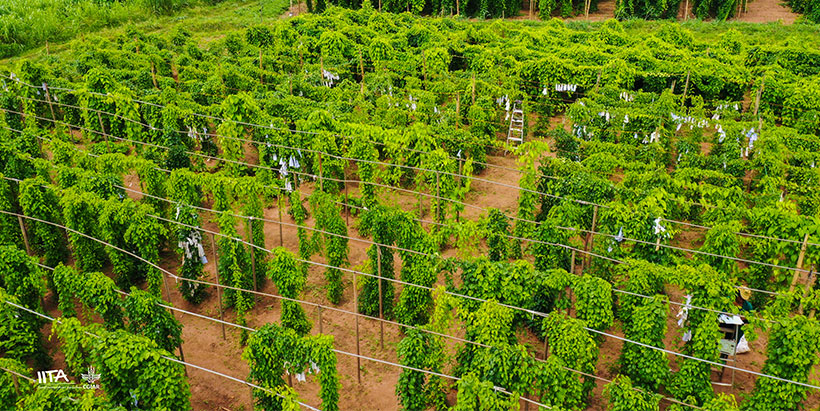
An important staple crop in many countries, optimizing yam production will help narrow the widespread nutritional deficit in Africa.

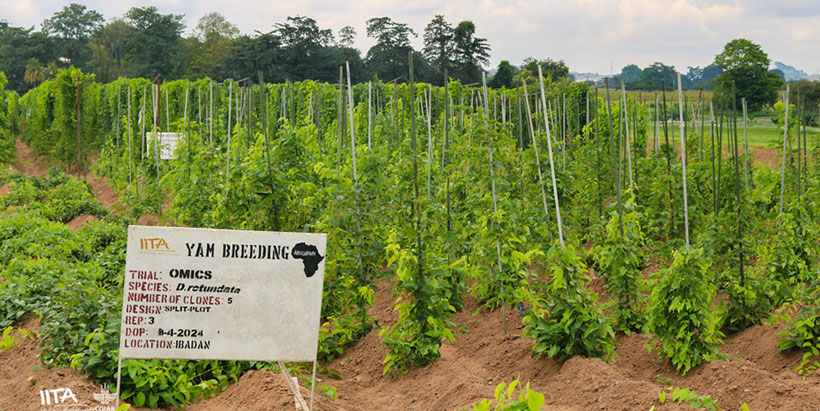
IITA and Pairwise secure $3.8M to boost yam production through gene editing Nairobi, Kenya: The International Institute of Tropical Agriculture (IITA), in partnership with Pairwise, a US-based technology company pioneering the application of gene editing in food and agriculture, is delighted to announce a grant of US$ 3,874,356 from the Bill & Melinda Gates Foundation. This grant will support the “Yam Optimized Architecture through Gene Editing (YOAGE)” project, an innovative project aimed at delivering novel genetic variation to yam (Dioscorea spp.) that improves plant architecture. The project goal is to reduce labor and environmental impact associated with traditional plant staking while also enabling mechanized farming in Nigeria, where yam is an important staple food crop.
The 4-year YOAGE project will focus on developing yam varieties with optimized growth characteristics, improving cultivation practices, and boosting productivity and profitability while collaborating with various stakeholders, including local farmers, agricultural experts, and policymakers. Yam is the second most important root and tuber crop in sub-Saharan Africa after cassava, with a production of about 75 million metric tons (FAO, 2021) and provides about 200 kilocalories daily to over 400 million people in the low-income and food-deficit countries of the tropics. Africa produces over 97% of the global yams, with Nigeria alone accounting for about 66% of the world’s total (FAO, 2021). In West Africa, particularly in Nigeria, yam is not only a staple crop but also plays a central role as a traditional flagship crop deeply intertwined with societal norms, fulfilling various social and religious functions.

IITA and Pairwise secure $3.8M to boost yam production through gene editing

Despite this importance, yam cultivation faces several challenges, such as high costs of planting materials and labor, declining soil fertility, low-yielding varieties that require staking, and increased pest and disease pressures due to intensified farming. While conventional breeding has improved yam varieties for pest resistance, adaptability, and quality, it has made limited progress in optimizing plant architecture for mechanized farming. The YOAGE project will leverage advanced gene editing tools to overcome these challenges and support global food security, particularly in the face of climate change, resource limitations, and shifting consumer demands.

Leena Tripathi, IITA Eastern Africa Hub Director, Biotechnology Program Lead, and YOAGE Principal Investigator, said: “Receiving this grant from the Gates Foundation marks a pivotal advancement in transforming yam production through innovative gene editing technologies. By developing improved bushy-types of yam varieties, we aim to reduce labor demands, enhance farming efficiency, and boost sustainability. Ultimately, our goal is to elevate farmers’ livelihoods and strengthen food security.”

The YOAGE project aims to develop these varieties by identifying the genes controlling plant growth, optimizing gene editing to develop semi-dwarf varieties, and analyzing the impacts of these changes on labor and gender dynamics. By addressing the technical and environmental challenges of yam production, the project is expected to significantly improve productivity and farmers’ income, contributing to the global goal of sustainable agriculture and food security.

The Gates Foundation selected IITA and Pairwise for the grant because of their proven records in agricultural innovations and community engagements in the region. IITA is a global center of excellence for yam breeding and a genetic improvement source of new and improved yam genotypes for major yam growers in Africa. Also, it has a long tradition and experience in the breeding and genetics of yam, a well-established yam breeding network that connects several national programs from major yam-growing areas in Africa.

Pairwise is pioneering the application of gene editing technology in food and agriculture through its Fulcrum™ Platform, the most extensively developed and validated toolbox for CRISPR application in plants. As one of the first companies in the world to commercialize gene-edited consumer food and agricultural products, Pairwise brings together leaders in agriculture, technology, and consumer foods to harness the transformative potential of new genomics technologies to create innovative new products.

“The Gates Foundation sees gene editing as an opportunity to more rapidly advance important crops like yam, following a path established through a long history of crop breeding. Through gene editing, we can keep all the favorable characteristics of adapted crops, such as nutrition and climate resilience, while removing characteristics like vining in yams that limit a crop’s potential. By partnering IITA with Pairwise, we have brought together top scientists to tackle this important challenge and drive adoption of improved varieties for smallholder farmers.” explained Dr Nicolas Bate, the Senior Program Officer at Bill & Melinda Gates Foundation.

Pairwise Director of Trait Strategy and Testing, Dr Shai Lawit, added: “Gene editing offers a revolutionary approach to solving global challenges in agriculture. Through important public-private initiatives like this one with IITA, the Bill & Melinda Gates Foundation, and Pairwise, we are not only improving crop production; we’re also empowering smallholder farmers, reducing environmental impacts, and advancing food security to narrow the global nutritional deficit, which is especially prevalent in developing countries.”

Through this combined work, the YOAGE project will demonstrate the importance of public-private partnerships in unlocking the benefits of gene editing in Nigeria and Africa at large.

About IITA

The International Institute of Tropical Agriculture (IITA) is a not-for-profit institution that generates agricultural innovations to address Africa’s most pressing challenges of hunger, malnutrition, poverty, and natural resource degradation. Working with various partners across sub-Saharan Africa, IITA improves livelihoods, enhances food and nutrition security, increases employment, and preserves natural resource integrity. IITA is a member of CGIAR, a global agriculture research partnership for a food and nutrition secure future.

About Pairwise

Pairwise is pioneering the application of gene editing technology to food and agriculture, developing new varieties of fruits, vegetables, and large-acre crops. With backing from industry-leading investors like Deerfield, Aliment Capital, Leaps by Bayer, Temasek, and Corteva Catalyst, Pairwise raised $40 million in September 2024, bringing total funding to $155 million. The company was co-founded by Dr Tom Adams and Dr Haven Baker, and its scientific team includes renowned experts from Harvard and MIT.

Media Contact

Dr Leena Tripathi
Director Eastern Africa Hub
Biotechnology Program Lead
International Institute of Tropical Agriculture (IITA)
Email: L.Tripathi@cgiar.org
Website: www.iita.org

Diana Souder
Director of Marketing and Communications
Pairwise
Email: Communications@Pairwise.com
Website: www.Pairwise.com


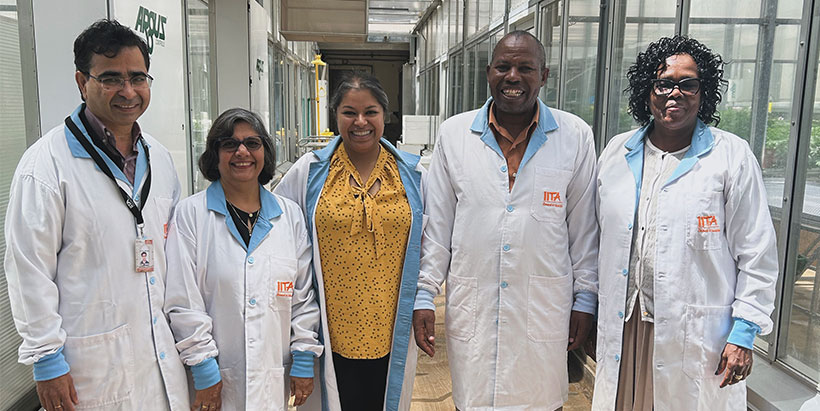
(From left) - Jai Tripathi and Leena Tripathi (IITA), Shannon Fernando-Rubera (Alabaster), Prof. Onguso (JKUAT) and Mercy Musom (GCN) during the visit to IITA Nairobi.
(From left) – Jai Tripathi and Leena Tripathi (IITA), Shannon Fernando-Rubera (Alabaster), Prof. Onguso (JKUAT) and Mercy Musom (GCN) during the visit to IITA Nairobi.

IITA, Alabaster International (Alabaster), and the Girl Child Network (GCN) have forged a strategic partnership to transform Enset cultivation in Ethiopia. This collaboration seeks to leverage each organization’s unique expertise and resources to tackle key challenges in Enset cultivation and utilization, focusing on tissue culture, bacterial wilt management, genomic sequencing, and gene editing of Enset.

Enset, often referred to as the “tree against hunger,” is a staple crop for over 20 million Ethiopians. However, it faces urgent and serious threats, particularly from diseases like bacterial wilt, which can devastate entire crops and lead to 100% yield losses if not managed effectively. This disease has also contributed to reducing landrace diversity, exacerbating food insecurity in certain regions. Traditional breeding methods have struggled to address these issues, making innovative research efforts critical.

During the visit to JKUAT.

This strategic collaboration is not just about advancing science but about making a significant and tangible impact on the lives of smallholder farmers, especially women, who depend on Enset for their livelihoods. The project aims to secure a sustainable and promising future for Enset cultivation by addressing challenges like bacterial wilt and enhancing tissue culture techniques.

The collaboration officially took shape when Alabaster representative Dr Shannon Fernando-Rubera and GCN colleague Mercy Musomi paid a courtesy visit to IITA Eastern Africa Hub Director Leena Tripathi. During their visit to IITA at the ILRI campus, the team explored the advanced biotechnology laboratories where Tripathi and her team are conducting cutting-edge research. The visit underscored the critical role of IITA in driving the success of this project.

IITA and GCN team during a tour of the screenhouse at JKUAT.

Further reinforcing this commitment, Tripathi recently led a delegation from IITA to Jomo Kenyatta University of Agriculture and Technology (JKUAT) in Juja, Kenya. The visit focused on assessing the progress made by JKUAT in collaboration with GCN, Alabaster, and Arba Minch University, Ethiopia, on Enset tissue culture. The work already done thus far in the JKUAT labs and greenhouse was remarkable. Tripathi is set to offer technical backstopping on the best practices needed to complete successful and sustained multiplication of Enset seedlings via tissue culture for both cultivated and wild Enset landraces. This guidance is crucial in ensuring the project’s long-term success.

As we move forward, we remain committed to ensuring that the benefits of our research reach the farmers who need them most, safeguarding a vital resource for millions of people.

Contributed by Rose Harriet Okech

Rwanda's Minister of Agriculture, Dr. Ildephonse Musafiri welcoming Dr. Simeon Ehui.
Rwanda’s Minister of Agriculture, Dr. Ildephonse Musafiri welcoming Dr. Simeon Ehui.

On the sidelines of the just concluded Africa Food Systems Forum (AFSF) held in Kigali, Rwanda, IITA Director General and CGIAR Regional Director for Continental Africa, Dr Simeon Ehui, met with Rwanda’s Minister of Agriculture, Dr Ildephonse Musafiri, to discuss strengthening agricultural research collaboration and food security efforts.

Highlighting IITA’s commitment to supporting Rwanda’s agricultural advancements, DG Ehui said IITA and CGIAR are committed to solving today’s—and tomorrow’s—interconnected food, land, water, and climate crises. “We are keen about exploring ways to contribute to what Rwanda is doing in research, agriculture, and food security,” DG Ehui said.

IITA Director General and CGIAR Regional Director for Continental Africa, Dr. Simeon Ehui during discussions with Rwanda's Minister of Agriculture, Dr. Ildephonse Musafiri.
IITA Director General and CGIAR Regional Director for Continental Africa, Dr. Simeon Ehui during discussions with Rwanda’s Minister of Agriculture, Dr. Ildephonse Musafiri.

“IITA’s goal is to transform agriculture and food security through our research efforts in Africa, and we are particularly interested in engaging policymakers and governments, as this is key to achieving our goals. Part of our visit to Rwanda is aimed at aligning our core areas of interest in research and agriculture, and I am here in my dual role as the CGIAR Director for Africa, so other CGIAR centers can come on board to recommend solutions for some of the areas raised during our discussions,” he explained further.

The discussions centered on enhancing agricultural productivity, promoting food security, and leveraging research innovations, and Dr Musafiri emphasized the need for practical solutions. The minister said there is a need to measure the impact while exploring existing technologies and how they can be scaled for impact. He added that several challenges exist along the path of scaling agricultural innovations.

Rwanda's Minister of Agriculture, Dr. Ildephonse Musafiri with IITA Director General and CGIAR Regional Director for Continental Africa, Dr. Simeon Ehui.
Rwanda’s Minister of Agriculture, Dr. Ildephonse Musafiri with IITA Director General and CGIAR Regional Director for Continental Africa, Dr. Simeon Ehui.

One key outcome of the meeting was the decision to hold a technical meeting between a team from IITA and the Ministry of Agriculture to explore potential areas of partnership in greater detail. Both parties agreed that a technical team would be constituted for further discussions and a formal visit to IITA headquarters in Nigeria to explore available innovations for potential adoption in Rwanda’s agriculture sector.

The minister also touched on the potential for joint proposal writing and pitching, looking to partner with CGIAR to secure resources and support for future projects. “The prospect of proposal writing and pitching in partnership with CGIAR is promising,” Dr Musafiri stated, signaling Rwanda’s openness to collaborative ventures that will advance the country’s agricultural agenda.

The meeting signals a new phase of collaboration for both IITA and the Rwanda Ministry of Agriculture. Both parties committed to working together to transform agriculture in Rwanda and across Africa.

Contributed by ‘Timilehin Osunde

IITA Director General and CGIAR Regional Director for Continental Africa, Dr. Simeon Ehui with Deputy Director General for Agriculture Development, Rwanda Agriculture and Animal Resources Development Board (RAB), Dr. Florence Uwamahoro.

As part of efforts to increase IITACGIAR‘s research efforts in Rwanda, IITA Director General and CGIAR Regional Director for Continental Africa, Dr Simeon Ehui, met with the Deputy Director General for Agriculture Development, Rwanda Agriculture and Animal Resources Development Board (RAB), Florence Uwamahoro, to discuss aligning of interest areas and expanding partnerships to ensure impactful agricultural research in the country.

The meeting centered on scaling research solutions to bolster Rwanda’s food security and highlighted the importance of aligning national programs with international research initiatives for agricultural transformation.

Dr. Simeon Ehui and Dr. Florence Uwamahoro with the IITA and RAB team.

During the discussions, DG Ehui emphasized the need for stronger collaborations with key stakeholders, particularly within Rwanda’s national agricultural programs, to ensure that research efforts produce tangible outcomes.

“Research without impact is futile. I care about partnerships with national programs because they are key to ensuring our research delivery is done. We want to use research as a solution to support food security in Rwanda,” DG Ehui said.

He further outlined IITA’s commitment to building the capacity of Rwanda’s national research systems and youth, stressing the need to prepare the next generation of agricultural leaders to carry on the work of today’s scientists.

According to DG Ehui, Rwanda must see the value addition from IITA’s presence. “The national research system is key to achieving the goal of transforming agriculture in Africa, and I appreciate the support Rwanda has offered to IITA Rwanda,” he added.

IITA Director General and CGIAR Regional Director for Continental Africa, Dr. Simeon Ehui during discussions with Deputy Director General for Agriculture Development, Rwanda Agriculture and Animal Resources Development Board (RAB), Dr. Florence Uwamahoro, and the IITA and RAB team.

Reinforcing the country’s focus on plant health, pest and disease management, and genetic improvement, Uwamahoro mentioned ongoing efforts to increase the adoption of improved crop varieties. She noted that despite the development of new cowpea varieties, adoption among farmers remains limited, explaining the need to increase farmers’ access to clean and improved cassava seed varieties, which will help meet the demand from local processing centers.

“There is a need for clean, improved seed varieties that can supply the cassava value chain in Rwanda,” Uwamohoro remarked. She also emphasized RAB’s commitment to enhancing research infrastructures, such as tissue culture labs and gene banks, while prioritizing capacity building and youth engagement. She said these efforts align with Rwanda’s national strategic plan for agriculture, which has been developed with the help of various partners.

The meeting also focused on ongoing collaboration to combat pressing agricultural challenges, such as managing pests like banana xanthomonas wilt (BXW) and cassava bacterial blight (CBB). The IITA representative pledged continued support in these areas, particularly in addressing aflatoxin contamination through research on Aflasafe, a biological control product, and scaling up digitization in pest control management.

Both parties agreed that a technical working group was needed to conduct a comprehensive needs assessment and develop an implementation plan based on the recommendations from the meeting. The partnership will further focus on capacity development, digital innovation, and scaling up pest management systems to secure Rwanda’s agricultural future.

As Rwanda embarks on this critical phase of agricultural transformation, the partnership between IITA and RAB is expected to be crucial in driving research-based solutions that will enhance food security and improve livelihoods across the country.


Contributed by ‘Timilehin Osunde

IFAD Associate Vice-President, Program Management Department, Dr. Donal Brown discussing with Dr. Simeon Ehui, and IITA Rwanda Country Representative Dr. Abdou Konlambigue, and Dr. Kehinde Makinde in the background

IITA and the International Fund for Agricultural Development (IFAD) in Rwanda have initiated discussions on strengthening their partnership to drive food security and sustainable agricultural development in the country. Focusing on aligning areas of interest in the future, the meeting which took place between IITA Director General and CGIAR Regional Director for Continental Africa, Dr Simeon Ehui, and IFAD Associate Vice-President, Program Management Department, Donal Brown, on the sidelines of the just concluded Africa Food Systems Forum (AFSF) 2024, explored potential opportunities.

During the meeting, DG Ehui expressed IITA and CGIAR’s commitment to identifying opportunities and aligning strategies that could further enhance food security in Rwanda and across the continent.

IITA Director General and CGIAR Regional Director for Continental Africa, Dr. Simeon Ehui during discussions with IFAD Associate Vice-President, Program Management Department, Dr. Donal Brown.

“We are open to exploring existing opportunities and how we can further push alignment forward,” he said. He emphasized the importance of leveraging IITA’s extensive presence across Africa to drive tangible impacts on food systems and agricultural sustainability.

Brown acknowledged IITA-CGIAR’s global and continental recognition in agricultural research and impact and outlined key timelines for collaboration, adding that these timelines are pivotal to resource mobilization and programming initiatives.

IITA Director General and CGIAR Regional Director for Continental Africa, Dr. Simeon Ehui with IFAD Associate Vice-President, Program Management Department, Dr. Donal Brown.

“Since food security and food systems are key priorities, we can work with these timelines to project the areas of collaboration discussed, especially in the coming year,” Brown said.

While grant opportunities for research are not much, Brown proposed collaboration in program development and scaling.

During the meeting, DG Ehui, who led a team from IITA to the IFAD Rwanda office in Kigali, emphasized the potential for joint research programs, particularly in countries where government collaborations are already in place. He expressed optimism about focusing efforts on impactful research initiatives.

“We can focus on research programs, especially in areas where we have governments collaborating,” he said, signaling the potential for targeted research and project-based collaboration. He also mentioned the possibility of working on specific projects and initiatives targeted at boosting agricultural productivity and improving nutrition in rural communities of developing countries by better adapting crops and soils to the changing climate.

 Dr. Simeon Ehui, Dr. Donal Brown with the IFAD and IITA team.
Dr. Simeon Ehui, Dr. Donal Brown with the IFAD and IITA team.

The meeting concluded with both parties reaffirming their commitment to working closely to address Rwanda and Africa’s food security challenges through innovative agricultural solutions and collaborative research. Discussions are set to continue in the coming months as they work towards concrete programming and project plans for 2025.

Contributed by ‘Timilehin Osunde

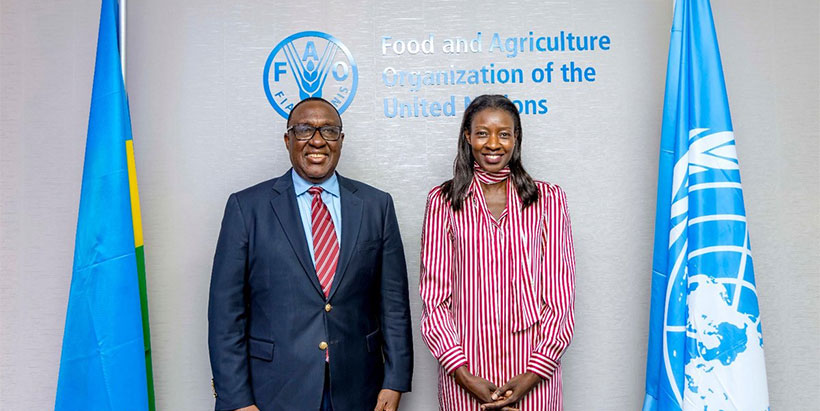
IITA Director General and CGIAR Regional Director for Continental Africa, Dr. Simeon Ehui with FAO Rwanda Country Representative Dr. Coumba Sow.

In a bid to explore ways to strengthen collaboration between IITA and the Food and Agriculture Organization (FAO) in Rwanda, IITA Director General and CGIAR Regional Director for Continental Africa, Dr Simeon Ehui, met with FAO Rwanda Country Representative Coumba Sow to discuss how their collaborative efforts could accelerate agricultural development in Africa.

The meeting featured a shared commitment to addressing challenges like food security, nutrition, plant health, and sustainable agricultural practices.

Sow acknowledged the strong and long-standing support from IITA. He also highlighted the FAO’s focus on improving lives through its “Better Life” programs, which emphasize inclusion, resilience, youth, and women empowerment. The FAO’s work extends to policy support, knowledge sharing, and capacity building to help governments design impactful agricultural investments. “We aim to provide governments with the tools they need to implement big, sustainable programs that focus on better nutrition and a better environment,” she explained.

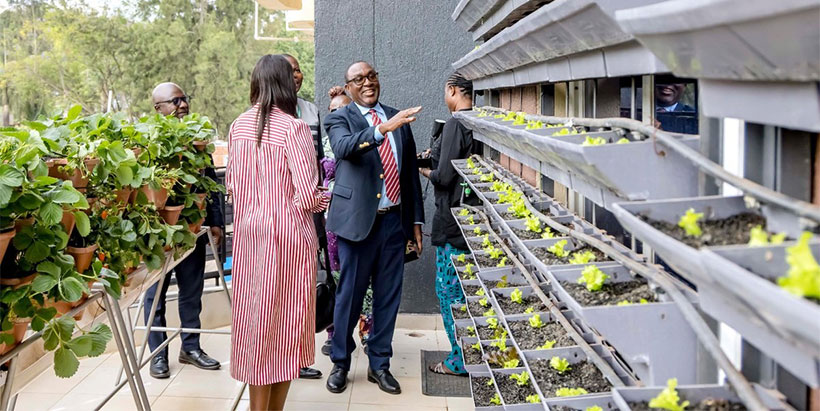
IITA Director General and CGIAR Regional Director for Continental Africa, Dr. Simeon Ehui with FAO Rwanda Country Representative Dr. Coumba Sow during a tour of FAO Rwanda's vertical farm.
IITA Director General and CGIAR Regional Director for Continental Africa, Dr. Simeon Ehui with FAO Rwanda Country Representative Dr. Coumba Sow during a tour of FAO Rwanda’s vertical farm.

DG Ehui said his visit gives an opportunity to explore potential areas of interest alignment. He emphasized that both organizations share common goals, particularly in food safety, pest and disease control, and crop improvement. “We work with support from USAID and the Bill & Melinda Gates Foundation, and our work in mechanization, such as cassava processing, aligns closely with FAO’s initiatives,” DG Ehui said.

He emphasized the importance of partnerships in scaling research innovations, noting that one of IITA’s priorities lies in partnerships for scaling its innovations. He added that this can only be done with support from governments and policymakers.

DG Ehui highlighted the improvement of cassava seed systems as a promising area for collaboration, highlighting IITA’s work in producing disease-free cassava stems through Semi-Autotrophic Hydroponics (SAH). “Our goal is to partner with FAO and governments to scale technologies like these for greater impact,” he said.

IITA Rwanda Country Representative Abdou Konlambigue echoed these sentiments by highlighting IITA’s work in improving cassava seed systems and digitizing pest and disease control in some of IITA’s mandate crops in Rwanda. He mentioned efforts to work with the government to scale these results to farmers, emphasizing the role of digital tools in data collection, particularly in nutrition. Konlambique also discussed phytosanitary measures, biological controls for Aflatoxin, and innovative approaches in a circular economy, like cassava peel conversion for livestock feed.

IITA Director General and CGIAR Regional Director for Continental Africa, Dr. Simeon Ehui, FAO Rwanda Country Representative Dr. Coumba Sow and the IITA and FAO team.

Reflecting on these insights, Sow pointed out how IITA’s digital tools could enhance FAO’s work in plant protection. “We are excited about exploring IITA’s content on plant health for rural farmers,” she said. Additionally, Sow noted that stunting in children remains a critical issue in Rwanda’s national agenda, making nutrition, value addition, and bio-fortification key areas where collaboration could yield significant results.

Discussions covered potential collaborations, analyzing new windows of opportunity for working together in postharvest management, small-scale processing, and value-chain development. The FAO team shared examples of their field activities in food safety and nutrition, which could benefit from closer alignment with IITA’s research and expertise.

DG Ehui expressed excitement about the many potential areas for collaboration. “I didn’t realize we had so many opportunities to work together,” he remarked. He was particularly interested in FAO’s work with youth, noting that IITA’s Youth Agripreneurs (IYA) program has been building capacity for young people across Africa with donor support.

He also mentioned potential collaboration areas on projects such as the EU-funded DeSIRA initiative, which focuses on supporting research and innovation and contributing to the climate-relevant, productive, and sustainable transformation of agriculture and food systems in low and middle-income countries.

As the meeting ended, FAO and IITA expressed optimism about building on the ongoing conversations and strengthening existing partnerships. Both parties emphasized the importance of involving key stakeholders and donors to ensure that their joint efforts lead to tangible impacts in Rwanda and across Africa’s agricultural landscape

Rwanda’s seed sector is crucial to the country’s agricultural development, food security, and economic growth. However, the industry faces significant challenges, including inadequate seed quality and ineffective management practices among seed companies. To address these issues, the Feed the Future/USAID-funded Great Lakes Accelerated Innovation Delivery Initiative Rapid Delivery Hub (AID-I GLR) Project, led by IITACGIAR, organized a comprehensive training program in August.

CEOs and seed production managers of Rwandan companies attended the training on Seed Business Management and Hybrid Maize Seed Production.

This training, conducted in partnership with Rwanda Agriculture and Animal Resources Development Board (RAB), AGRA Africa, and the Seed Systems Group (SSG), aimed to equip seed companies with the skills to enhance seed business management practices and hybrid maize seed production.

The recent assessment conducted by IITA highlighted several critical challenges that hinder the growth of Rwanda’s seed sector, including the lack of operational quality management systems and the inadequate quality of basic seed. Such challenges lead to lower seed quality, reduced crop yields, and decreased agricultural productivity and food security in the region. To overcome these obstacles, there is a need for targeted interventions that can strengthen the capacities of seed companies, particularly in the areas of seed business management and the production of high-quality seeds like hybrid maize.

The training focused on two main areas: seed business management and hybrid maize seed production. The primary aim was to enhance the capacity of seed companies to operate more efficiently and produce higher-quality seeds, thereby increasing their return on investment and contributing to the overall development of Rwanda’s agricultural sector.

Leaders and seed production managers from over 20 Rwanda seed companies producing seeds for key staple crops such as high-iron beans, hybrid maize, orange-fleshed sweet potatoes, vegetables, and soybeans participated in the program. Participants learned various strategies to improve seed management practices, focusing on increasing seed quality, optimizing business operations, and achieving better financial returns.

The training on seed business management was meant for Chief Executive Officers (CEOs) of seed companies. The training introduced the essential elements of a successful seed business and aimed to strengthen the capacities of selected companies in seed business management. It also supported these companies in developing a clear vision and strategies for building viable seed business models.

Dr John McRobert, Vice President of the Seed Systems Group, explaining the critical role of effective seed business management to participants

The participants were encouraged to cast a vision considering their social, environmental, and financial contexts, defining what they would like their companies to achieve in this context in 5 to 10 years. The hybrid maize seed production training focused on strengthening the capacity of production managers from selected companies to produce hybrid maize seeds and enhancing their confidence in hybrid maize seed production efforts. It addressed the issues related to botany and production practices and the importance of seed quality maintenance. It highlighted various types of hybrid maize such as single, double, three-way, and top cross hybrids, described how the different types of hybrids are produced and their contrasting features, and outlined the requirements to produce each category.

Vice President of Seed Systems Group Dr John McRobert and IITA Seed Systems Expert Dr Sam Ajala led the training sessions with the support of RAB plant breeder and Cereal Program Coordinator Dr Claver Ngaboyisonga. They emphasized the importance of establishing effective business practices in seed business management to improve the quality and sustainability of local maize hybrid seed production.

The feedback from the training participants was overwhelmingly positive. Kamashazi Nora, CEO of Bold Seeds Company, which specializes in soybean, maize, and bean seed production, expressed her satisfaction with the training. She shared her insights, stating, “This training has been incredibly beneficial to us. I have learned new aspects that I previously didn’t give much thought to, such as the importance of having a clear vision for my seed business and ensuring the quality of the seeds we distribute to farmers.”

Nora further emphasized the impact of the training on her company’s future: “With the skills I have gained, I feel more confident in leading Bold Seeds Company to new heights. This training has opened my eyes to the importance of strategic planning and staff management, which are crucial for the sustainability and growth of our seed business.”

The success of this training program marks a significant step toward addressing the challenges facing Rwanda’s seed sector. With continued support and capacity-building efforts, Rwanda is well-positioned to enhance food security and economic stability through a robust and efficient seed industry.

Contributed by Ritha Bumwe

The participants from Burundi and South-Sudan at the training.

Efforts to enhance agriculture breeding programs in countries, specifically those considered fragile, are crucial to addressing the ongoing food and water shortages in the current climate crises. Strong research programs equip countries with a pipeline of modern agriculture solutions that help these nations respond to climate shocks and erratic rainfall patterns. These solutions must ensure that breeding programs are paired with effective agronomy advice. This integrated approach, driven by collaboration among scientists across the continent, turns research into real-world solutions for farmers.

Through two MoUs between IITACGIAR and the Food and Agriculture Organization (FAO), supporting the African Development Bank’s Strengthening Emergency Preparedness and Response to Food Crisis (SEPAREF) project and the World Bank’s Resilient Agriculture Livelihood Project (RALP), a comprehensive five-day training program was organized for agronomists, breeders, seed certification officers, and extension agents from Burundi and South Sudan. Coordinated by the IITA Capacity Development Office (CDO), this training represents the first step in helping stakeholders and policymakers from both countries develop soybean and maize breeding programs tailored to the needs of these countries. The linkage of IITA to these projects results from TAAT’s efforts to link technologies to country investment projects funded by Multilateral Development Banks, namely the World Bank and the African Development Bank.

The TAAT Monitoring and Evaluation Expert and SEPAREF Coordinator, Rachel Zozo, highlighted the immense value of the training, noting that uniting national experts at IITA’s research station fosters collaboration, trust, and mutual gains. She also emphasized that this training is just the start of a long-term commitment to helping countries in fragile states develop their breeding programs that can contribute to feeding their people and achieving food security.

IITA Senior Plant Pathologist Alejandro Ortega-Beltran, encouraging the participants to adopt aflatoxin management in their countries.

The training emphasized research’s critical role in developing resilient and sustainable food production systems. The experts and scientists provided in-depth knowledge and practical skills to equip these frontline professionals with the necessary modern tools and techniques to establish breeding programs to help countries produce high-quality early-generation seeds (EGS) of maize and soybean—essential components in improving high-quality crop yields.

Participants learned about the development and selection of maize and soybean varieties, participated in field tours in the research fields, and observed cross-pollination techniques. Such practical demonstrations helped deepen understanding of the breeding methods and controls key to developing high-yielding and resilient crops. This experience created new partnerships between scientists and highlighted the importance of adapting agronomic practices to their local context.

Dr Luka Atwok, a Maize Breeder from the Ministry of Agriculture and Food Security (MAFS) in South Sudan, noted that the valuable knowledge gained from guiding the team through a wealth of new scientific information is the turning point for establishing a sustainable maize breeding program in South Sudan.

IITA Soybean Breeder Abebe Abush and Maize Breeder Abebe Menkir led the training on breeding high-yielding varieties. They focused on the scientific principles and practical applications that underpin successful crop improvement.


IITA Soybean Research Technician Sunday Ojo, demonstrating the process of crossing soybean plants on the field.

Nigeria National Agricultural Seed Council’s (NASC) South-West Regional Coordinator, Dr Adekunle Adeseko, introduced the participants to the importance of field and seed certification, assuring them that quality seeds would have to be identified and accessible through an established NASC of equivalent. He emphasized that certified seeds are crucial for increasing private-sector investment and supporting sustainable agricultural growth. ENABLE TAAT Business Development Officer Idowu Osun guided participants on agribusiness development and emphasized the importance of registering seed businesses with regulatory agencies for long-term success and compliance with industry standards.

IITA Senior Plant Pathologist Alejandro Ortega-Beltran urged participants from Burundi to engage in the ongoing integrated aflatoxin management efforts in their country, led by IITA and its partners. He also encouraged those from South Sudan to collaborate with IITA in establishing a mycotoxin control program. He also stressed that mycotoxin contamination is a significant concern in both countries. He expressed hope that the training would catalyze the implementation of effective management strategies, leading to safer food supplies and increased public health awareness.

TAAT Soybean Compact Coordinator David Ojo remarked that this training is a prime example of how IITA’s research and innovations remain central to the agricultural priorities of these countries. By nurturing these collaborations, IITA ensures its cutting-edge technologies are leveraged to promote sustainable agricultural growth and strengthen food security across Africa. He noted that this training is not just a one-time event but the beginning of a broader initiative to build the capacity of these countries to develop and maintain resilient farming systems.

The comprehensive training was an impactful first step, with positive feedback affirming that the information was well received. However, the journey does not end here. The strong appetite for further collaboration highlights a clear mandate to do more and build on this momentum, working closely with our Burundi and South Sudan partners to develop their research and breeding programs. By leveraging the expertise of IITA, CGIAR, and TAAT, we can translate the available knowledge into tangible results that will significantly enhance agricultural innovation and sustainability in these regions.

Contributed by Anita Akinyomade