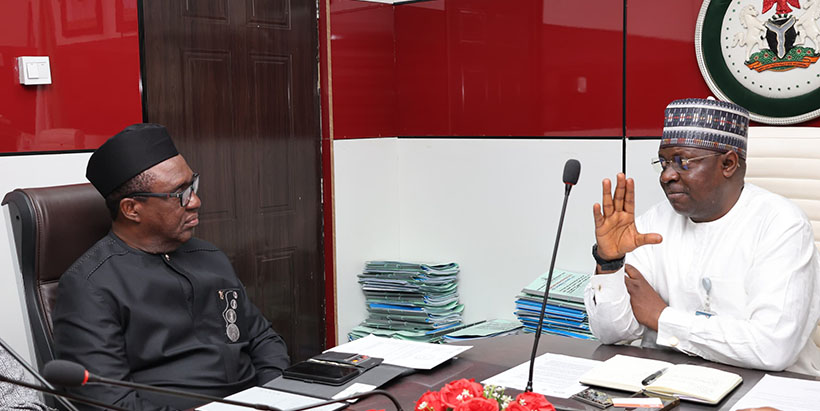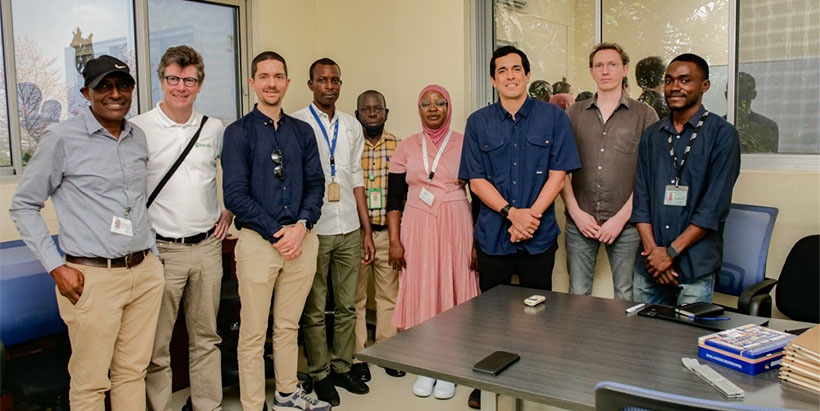
Dr Ibnou Dieng (extreme left), Joseph Uponi (l), Dr Martin Fregene (m), Dr Ennahli Lahcen (r), and Dr Samuel Mesele (extreme right).

The African Development Bank (AfDB) Director of Agriculture and Agro-Industry, Dr Martin Fregene, paid a working visit to IITA Director General and CGIAR Regional Director for Africa, Dr Simeon Ehui, at the institute’s headquarters in Ibadan recently. He also visited the Fertilizer and Soil Health Hub for West Africa and the Sahel, launched in June 2024.

The Regional Hub for Fertilizer and Soil Health for West Africa and the Sahel was established to support the implementation of the African Fertilizer and Soil Health Action Plan and Roadmap, which was developed from the Lome Declaration in 2023 by the Economic Community of West African States (ECOWAS).  The Hub will provide technical and financial support for fertilizer and soil health-related investments.

The 2006 Abuja Declaration focused on fertilizers to address the critical issue of low agricultural productivity; however, many farming households struggle not only with fertilizer accessibility but also with their proper use. The specific objectives of the Hub are organized around a set of key functions that address these challenges and build on the presented opportunities.

The visit aimed at exploring areas of alignment and strengthening collaborative efforts towards sustainable agriculture in the region. It highlighted the shared commitment between both organizations to a food-sufficient continent.

During Dr Fregene’s tour of the Hub, IITA Soil Scientist and Soils4Africa Project Coordinator Dr Samuel Mesele presented the Regional Hub’s mission and initiatives, emphasizing its crucial role in coordinating and providing technical assistance to countries in the region regarding fertilizer and soil health management.

He outlined the Hub’s 20 functions, bundled under seven focus areas: soil information, knowledge management and sharing, agronomy, capacity development, policy support, advocacy and awareness creation, and resource mobilization. Dr Mesele highlighted the Hub’s dedication to technical assistance in developing and implementing ongoing and upcoming fertilizer and soil health-related investments.

While giving a tour of the Hub, the IITA Analytical Services Manager, Joseph Uponi, emphasized its strategic role in contributing to the development of fertilizer technologies and soil systems in West Africa and the Sahel.

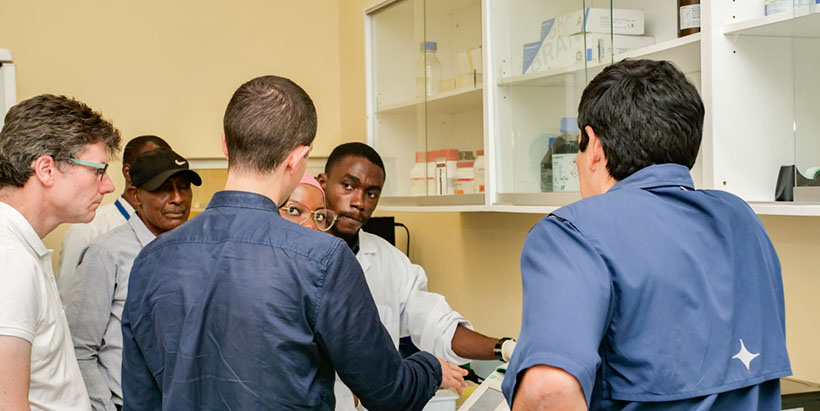
Uponi took Dr Fregene through the Regional Hub’s laboratory, displaying state-of-the-art equipment for soil analysis. He demonstrated the significance of providing precise fertilizer recommendations. He also emphasized the potential to strengthen national systems and optimize fertilizer use efficiently with increased support for plant and soil analytical laboratories across West Africa and the Sahel.

Dr Fregene commended the collaborative efforts of all the partners involved in the Regional Hub for their commitment to supporting smallholder farmers and African governments. He added that the Hub will serve as a valuable platform for collaboration with the AfDB.

Offering critical recommendations for the sustainable use of soil resources, he said he would explore integrating the Regional Hub into the AfDB’s project pipeline, with a focus on soil health.

Addressing the critical challenge of soil infertility, Dr Fregene reiterated the AfDB’s commitment to soil health, exemplified by the Technologies for African Agricultural Transformation (TAAT) project. He stressed the importance of long-term soil sustainability, emphasizing the need to prioritize soil health for future generations.

Dr Fregene’s visit underscores both organizations’ shared commitment to advancing soil health and sustainable agricultural practices across Africa. His engagement with the Hub’s initiatives highlights the importance of collaborative efforts in ensuring the region’s long-term agricultural productivity and food security.

IITA hosting the Regional Hub emphasizes the institute’s strategic role in transforming agriculture, helping farmers increase productivity, and improving soil health across Africa.

Contributed by Anita Akinyomade

Honorable Minister of State for Ministry of Agriculture and Food Security, H. E. Dr Aliyu Sabiu Abdullahi with IITA Director General, Dr Simeon Ehui.

The IITA Director General and CGIAR Regional Director for Continental Africa, Dr Simeon Ehui, recently embarked on a strategic mission to Nigeria’s Federal Capital Territory, Abuja, reinforcing partnerships and fostering collaboration to drive agrifood transformation across Africa.

During his visit, Dr Ehui engaged in high-level discussions with key stakeholders in agriculture and food security. He met with the Sierra Leone Ambassador to Nigeria, H. E. Dr Julius Sandy; Nigeria’s Minister of State for Agriculture and Food Security, H. E. Dr Aliyu Sabiu Abdullahi; the Chief of Protocol at the Ministry of Foreign Affairs, H. E. Wahab Akande; and the Permanent Secretary of the Ministry of Agriculture and Food Security, Dr Marcus Ogunbiyi. These meetings focused on deepening cooperation in agricultural research, technology adoption, and policies that promote food security.

Sierra Leone Ambassador to Nigeria, H. E. Dr Julius Sandy (l); Chief of Protocol at the Ministry of Foreign Affairs, H. E. Wahab Akande (m); IITA Director General and CGIAR Regional Director for Continental Africa, Dr Simeon Ehui (r).

Dr Ehui also strengthened diplomatic ties by connecting with the Senegal Ambassador to Nigeria, H. E. Nicolas Auguste Nyouky, and the Cote d’Ivoire Ambassador to Nigeria, H. E. Kalilou Traore, to discuss regional strategies for agricultural development.

Furthering discussions on financial and technical support for agrifood systems, he held insightful engagements with the World Bank Country Director for Nigeria – Western and Central Africa, Dr Ndiame Diop, and the Country Director of the French Development Agency (AFD) in Nigeria, Xavier Muron. These discussions centered on leveraging investments in agricultural research, enhancing private sector engagement, and deploying innovative, technology-driven solutions to improve food security and climate resilience.

IITA Director General, Dr Simeon Ehui during discussions with Permanent Secretary Ministry of Agriculture and Food Security, Dr Marcus Ogunbiyi.

Speaking on the various strategic engagements with policymakers and partners, Dr Ehui said in realizing the Africa that is food and nutrition sufficient, it is important to engage and collaborate with actors across board.

“At IITA, we are deeply committed to driving sustainable agricultural innovations that uplift farmers, empower youth, and support rural communities. Collaboration is the cornerstone of transforming food systems across Africa,” Dr Ehui emphasized.

This mission emphasizes IITA’s dedication to fostering multi-stakeholder partnerships that will catalyze positive change in Africa’s food and agriculture sector. By working together, stakeholders can create a more sustainable, resilient, and food-secure future for the continent.

Contributed by ‘Timilehin Osunde

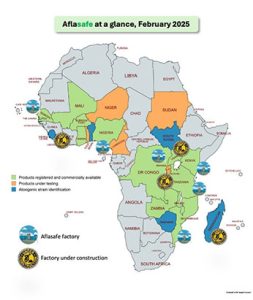
Status of Aflasafe product development, testing, and registration across Africa. Countries where Aflasafe factories are available or under construction are indicated.

Aflatoxin contamination remains a major challenge in sub-Saharan Africa (SSA), threatening food and feed safety, public health, and trade. Farmers, industries, and policymakers need effective, scalable solutions to protect staple crops such as maize, groundnut, and sorghum from aflatoxin.

One of the most promising innovations is biocontrol using native, atoxigenic Aspergillus flavus strains—applied in the field to outcompete toxin-producing fungi. While small-scale trials in Nigeria over 15 years ago demonstrated its potential, scaling up Aflasafe required overcoming significant manufacturing and commercialization barriers.

A recently published article documents how Aflasafe biocontrol products evolved from lab-based research to industrial-scale production, enabling widespread use across SSA. By refining manufacturing processes, developing fit-to-scale production models, and strengthening commercialization strategies, IITA has facilitated the production of thousands of tons of biocontrol products—leading to over a million tons of aflatoxin-safe crops.

Along with partners, the technology has been developed, registered, and transferred to private sector partners in Senegal, Tanzania, and Mozambique, as well as to the public/private sector in Kenya. Product development, testing, registration, and transference are currently at different stages in 23 SSA countries (Fig. 1). Aflasafe technology belongs to the first generation of non-seed technologies of CGIAR to transition successfully from laboratory prototypes to industry applications benefiting farmers and consumers at scale.

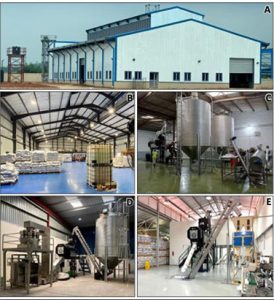
Manufacturing facilities constructed by HarvestField Industries Limited in Nigeria (A, B), BAMTAARE SA in Senegal (C), A to Z Textiles Limited in Tanzania (D), and Kenya Agriculture and Livestock Research Organization (KALRO) in Kenya (E).

This progress underscores the power of effective collaboration among research institutions, private-sector firms, and policymakers. Strengthening public-private partnerships, CGIAR-led research-for-development initiatives, and private-sector investment in manufacturing and distribution (Fig. 2)
– Other facilities have been constructed in Mozambique by AflaLivre, in DR Congo and Burundi through World Bank projects, while facilities are being constructed in Sierra Leone and Madagascar through World Bank projects – has been critical to overcoming barriers and accelerating adoption.

The key lesson? Innovation alone is insufficient; scaling solutions like Aflasafe requires developing industrial processes, strategic partnerships, effective commercialization strategies, and sustained investment. As climate change exacerbates aflatoxin risks, urgent action is needed to expand adoption and build resilient food safety systems.

Read the full story in Frontiers in Sustainable Food Systems: The challenge of industrialization of a nature-based solution that allows farmers to produce aflatoxin-safe crops in various African countries.

Contributed by Alejandro Ortega-Beltran

Dr Kanayo Nwanze (Photo credit: FAO).

The International Institute of Tropical Agriculture (IITA) joins the global agricultural and development community in mourning the passing of Dr Kanayo F. Nwanze, former President of the International Fund for Agricultural Development (IFAD) and a towering figure in Africa’s agricultural transformation.

Dr Nwanze dedicated his life to improving the livelihoods of smallholder farmers, advocating for sustainable agricultural practices, and fostering youth engagement in agribusiness. His leadership at IFAD was instrumental in driving policies and investments that empowered rural communities, ensuring food security, and advancing economic opportunities for millions especially youth across the continent.

His relationship with IITA was rooted in a shared vision for agricultural innovation and transformation, and youth engagement in Africa. Over the years, Dr Nwanze worked closely with IITA leadership, supporting initiatives that have had lasting impacts on food systems, youth engagement and employment, climate resilience, and rural development. His commitment to youth empowerment was particularly remarkable, as he championed programs that encouraged young Africans to see agriculture as a viable and profitable career path through IITA’s Youth in Agribusiness program.

“Dr Nwanze was a visionary leader who believed in the power of research and innovation to drive agricultural development. His unwavering support for IITA’s mission and his relentless advocacy for youth, smallholder farmers and rural communities will be remembered as a legacy of transformation,” said Dr Simeon Ehui, IITA Director General and CGIAR Regional Director for Continental Africa.

His contributions to Africa’s agricultural landscape extends far beyond policy and research. Dr Nwanze was a mentor, a leader, and a passionate advocate for inclusive development. His impact will continue to inspire future generations of agricultural leaders and policymakers.

IITA extends its deepest condolences to Dr Nwanze’s family, friends, and colleagues.

His legacy will forever remain a guiding force in the pursuit of a food-secure and prosperous Africa.

CGIAR mourns the loss of Dr. Kanayo F. Nwanze – CGIAR

Contributed by ’Timilehin Osunde

In the lively markets of Niger and Nigeria, every grain of cowpea tells a story of survival and sustenance. Yet, these grains face a silent enemy: contamination from harmful chemicals used to keep insects at bay during storage. For farmers and families, the struggle to keep food safe without risking health has long been an uphill battle. But an innovative solution is changing that narrative—a simple, airtight bag. 

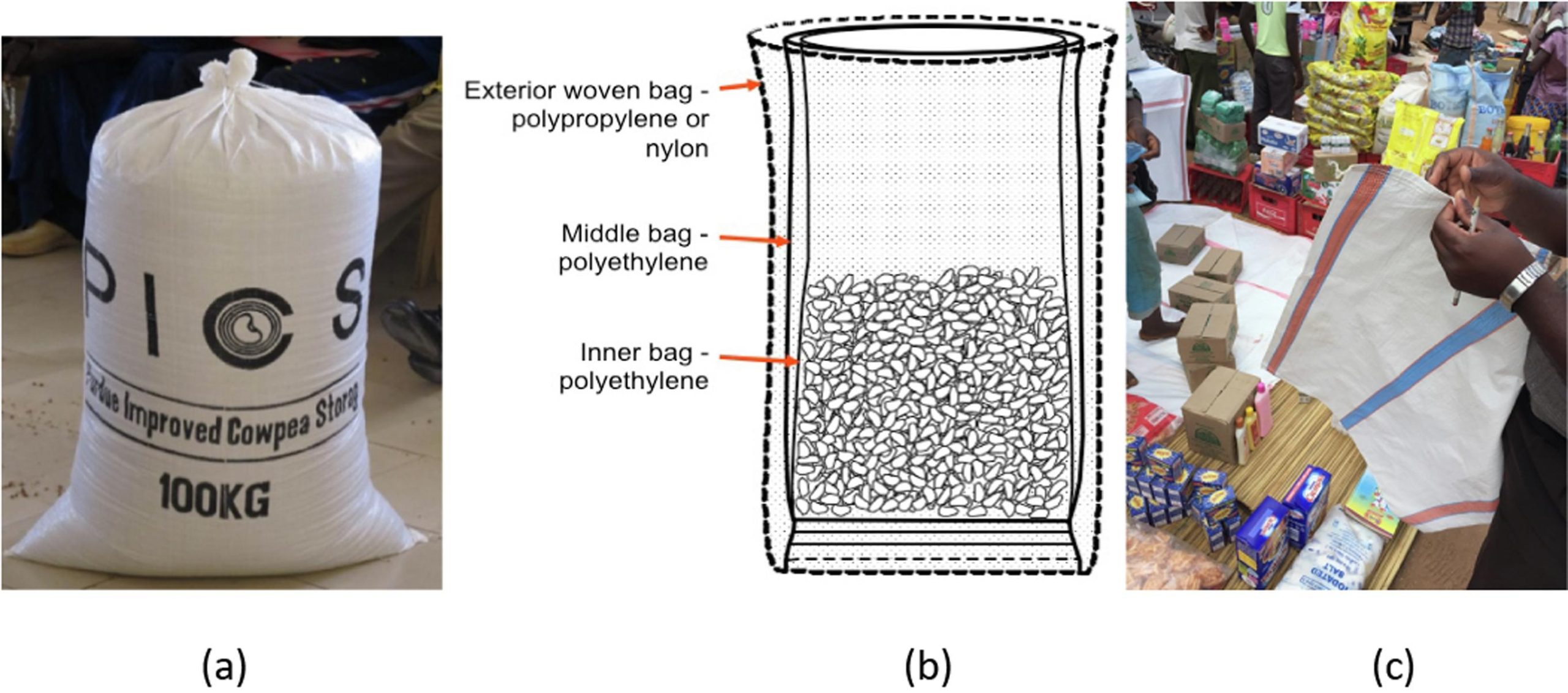
(a) Outside of PICS hermetic storage bag with the brand logo; (b) Interior design of PICS hermetic storage bag; (c) Generic, traditional woven storage bag with no branding.

These bags, known as hermetic storage bags, are revolutionizing food storage across rural Africa. By sealing out air and pests, they preserve grains without the need for toxic pesticides. This means families can store their harvests safely, eat healthier food, and earn more money by selling high-quality produce. 

But here’s the real breakthrough: when researchers from the Purdue University, USA, Institut National de la Recherche Agronomique du Niger (INRAN), and IITA, Ibadan during a study aimed at estimating the extent to which rural consumers in sub-Saharan Africa value quality signals about their food, conducted an experiment with a type of hermetic storage called PICS (Purdue Improved Crop Storage) bags in markets Niger and Northern Nigeria, they found something remarkable. Indeed, consumers were not just willing to use them—they were ready to pay extra for grain stored in them. 

Results from the study showed that buyers were willing to pay a premium of 13% to 20% more for grains stored in these chemical-free bags. This willingness to pay reflects growing awareness and demand for safer, healthier food in the region. 

“This isn’t just about storage,” said Dr Abdoulaye Tahirou, Director, IITA Sahel Hub. “It’s about trust and quality. Farmers and consumers are starting to see that safer storage means better lives.” 

The impact goes beyond individuals. By reducing the need for harmful chemicals, these bags contribute to a healthier environment and support the transition to sustainable agricultural practices. They also empower small-scale farmers to compete in larger markets where food safety standards are becoming stricter. 

As this innovation gains traction, it raises an important question: could these simple, affordable bags become the norm for food storage across Africa? The early signs are promising. Markets are responding positively, and with continued awareness campaigns, more households and farmers could benefit, especially in the Sahel region where many households depend on cowpea production for food and cash. These hermetic storage bags can help these smallholder households address storage losses and spoilage. 

With growing demand, there’s an opportunity to scale up the production and distribution of hermetic bags, making them more affordable and accessible. Partnerships between governments, research institutions, and private companies could ensure that this life-changing innovation reaches every corner of the continent. 

For smallholder farmers and farming families in Africa, the message is clear: a safer, healthier future for food is within reach, one hermetic bag at a time. 

Contributed by ‘Timilehin Osunde 

In Zambia, aquaculture is being championed as a solution to pressing challenges like poverty, hunger, and undernutrition while also fostering rural economic growth. Among the various fish species Zambian farmers cultivated, tilapia is the most prevalent. However, raising tilapia requires an adequate supply of essential nutrients like proteins, amino acids, vitamins, and energy sourced from carbohydrates and fats. To achieve optimal productivity, farmers must ensure their fish receive high-quality feed in sufficient quantities.

Farmers and researchers discuss resource management on the farm.

Tilapia feeding approaches are typically categorized into three types: natural feeding, complete feeding, and supplemental feeding. While complete feeding offers the most comprehensive nutritional solution, it remains largely inaccessible to farmers in northern Zambia due to limited infrastructure, undeveloped markets for commercial aquaculture inputs, and low household purchasing power.

Smallholder farmers often rely on supplementary feeds such as fishmeal, maize meal, and soybean meal, which, despite their nutritional benefits, are frequently unaffordable, unavailable, or directly competing with household food security needs. This challenge has driven research to focus on locally sourced, farm-generated feed alternatives that are affordable, nutritionally adequate, and non-competitive with human food needs.

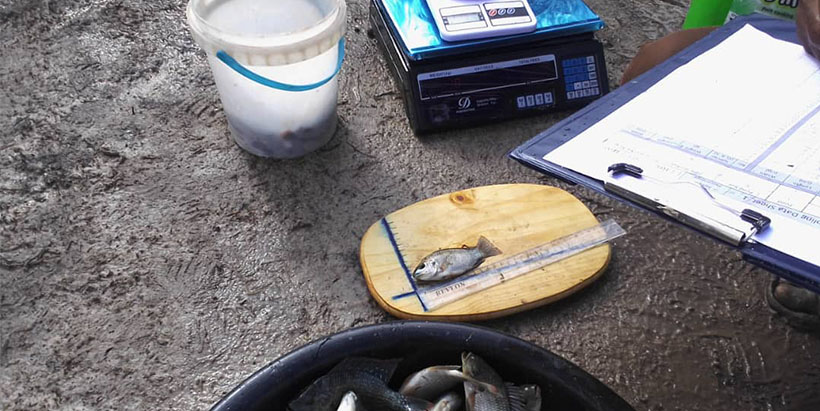
Researchers attended pond harvesting events on a subset of fish farms to collect measurements of yield, fish size, and fish species.

A study conducted in the Luwingu and Luponsoshi Districts of Zambia’s northern province explored feeding practices and their impacts on aquaculture productivity. Using a mixed-methods approach, researchers collected quantitative data through surveys and qualitative data via interviews, discussions, and observations.

The study revealed that most farmers used a combination of homemade feeds—mashes or crumbles from maize and soybeans—alongside food waste, vegetation, maize or rice bran, and, occasionally, commercial feeds. The most employed inputs were livestock manure, garden residues, and kitchen.

Despite these efforts, average fish yields remained low, except among a handful of intensive farmers who incorporated commercial feeds, chemical fertilizers, and diverse homemade feed ingredients. By contrast, low intensity feeding strategies relied solely on farm waste and termites. Key factors influencing feed intensity included household income, proximity to the towns, aquaculture experience, and access to extension services.

The study highlighted ways to boost aquaculture productivity and its contribution to poverty alleviation. First, strengthening commercial feed supply chains by investing in developing reliable commercial value chains to provide affordable, high-quality feeds is essential. Second, promoting microfinancing programs to increase smallholders’ disposable income can enhance access to commercial feeds and other critical inputs. Third, improving technical training, such as extension services and gender-sensitive training programs in aquaculture and integrated farm management can expand farmers’ feed formulation and resource management skills. Fourth, exploring locally adapted alternatives like maize bran, cassava meal, sweet potato meal, sunflower seeds, plant leaf meals, and insects can provide cost-effective and sustainable feed options. Special attention should be given to resources available during October–December, when feed scarcity is most acute.

The research team lead, Jacob W. Johnson, who was an IITA Research Fellow,  mentioned that innovative feeding strategies hold the potential to transform smallholder aquaculture in Zambia, improving productivity, reducing poverty, and ensuring better nutritional outcomes. “By addressing barriers such as limited infrastructure, low household incomes, and feed availability, Zambia can unlock the full potential of aquaculture to drive sustainable rural development,” he added.

Contributed by Ochuwa Favour Daramola


IITA and Biotalys team building on Michael Idu’s presentation on cowpea leaf-spot disease to fine-tune the project activities.

IITA–CGIAR hosted a three-day visit with scientists from Biotalys and representatives of Nigeria’s Ministry of Environment from 20 to 22 January 2025. The visit aimed to strengthen collaborative efforts in developing protein-based biocontrol solutions to address food security challenges in Nigeria. A key focus of the visit was to track the progress of a research project led by IITA graduate student Michael Iduh. His studies focus on identifying the causal agents of cowpea leaf-spot disease by Cercospora across different agroecological zones in Nigeria. The findings from this research will provide a foundation for developing targeted sustainable biocontrol solutions for cowpea farmers through the cutting-edge protein-based technology of Biotalys. The project involves the exchange of fungal genetic resources, which requires approval from the Ministry of Environment to comply with appropriate Access and Benefits sharing under the Convention of Biodiversity.

Apart from the laboratory activities in Pathology and Mycotoxin/Aflasafe Unit, IITA–CGIAR facilitated interactions with other units for the visiting Biotalys scientists and Ministry of Environment officers. The visitors interacted with scientists from cowpea, maize, yam, cassava breeding programs, and GRC, Virology, and GHU.

IITA and Biotalys team discussing progress of the project and optimizing laboratory protocols.

Hafsat Adeyemi, Assistant Chief Scientific Officer, Nigeria’s Ministry of Environment, expressed her appreciation for the training and its broad impact. Because of the importance of the project, Adeyemi assured the IITA and Biotalys teams of the delegate’s full support in obtaining the approval of the material transfer permits to facilitate the research work.  In addition, she highlighted the session on aflatoxins in maize and groundnuts as particularly eye-opening, recognizing the importance of mitigating this toxin in Nigerian food systems. “We’ve seen and learned a lot that we will take back with us, one of which is the danger of aflatoxins in maize,” she said. “We assure you of our full support and collaboration with IITA to disseminate crucial information about aflatoxins and IITA’s Aflasafe products to combat it. We can confidently stand as Aflasafe ambassadors now.”

Alejandro Ortega-Beltran, IITA–CGIAR Senior Plant Pathologist, emphasized the need for broader collaboration, proposing roundtable discussions among IITA, Biotalys, the Federal Ministry of Agriculture and Food Security, the Federal Ministry of Health and Social Welfare, and the Federal Ministry of Environment. “Bringing together stakeholders from these ministries will create a more cohesive and effective approach to addressing food security and food safety challenges,” he stated. He also suggested organizing a workshop on cowpea research funded by the Gates Foundation to keep stakeholders informed on cowpea innovations.

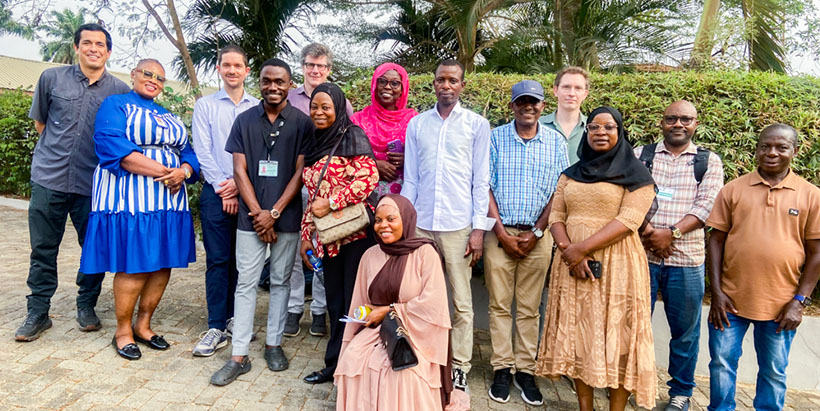
IITA, Biotalys, and the Nigerian Ministry of Environment teams at the end of the 3-day workshop, prepared to advance the project activities.

Carlo Boutton, Biotalys’ Chief Scientific Officer, welcomed the Ministry’s commitment to expediting the permit process. “Allowing the exchange of pathogens and pests for research has long-term economic value. The sooner we can conduct critical research, the sooner we can develop effective solutions that benefit farmers and the wider agricultural industry,” he remarked.

All training participants agreed to continue the collaboration to allow scientific innovations translate into practical solutions for smallholder farmers. As discussions and research progress, this partnership will contribute to deliver an effective, sustainable biocontrol solution to cowpea producers, ultimately improving food security in Nigeria and beyond. Nigerian Ministry of Environment to allow scientific innovations to translate into practical solutions for smallholder farmers. As discussions and research progress, this partnership will contribute to delivering an effective, sustainable biocontrol solution to cowpea producers, ultimately improving food security in Nigeria and beyond.

Contributed by Folake Oduntan and Alejandro Ortega-Beltran

Related Stories:

Aflasafe technology showcased at international, high-level biocontrol events

Transferring aflatoxin biocontrol experiences to partners from Mali, Niger, and Pakistan

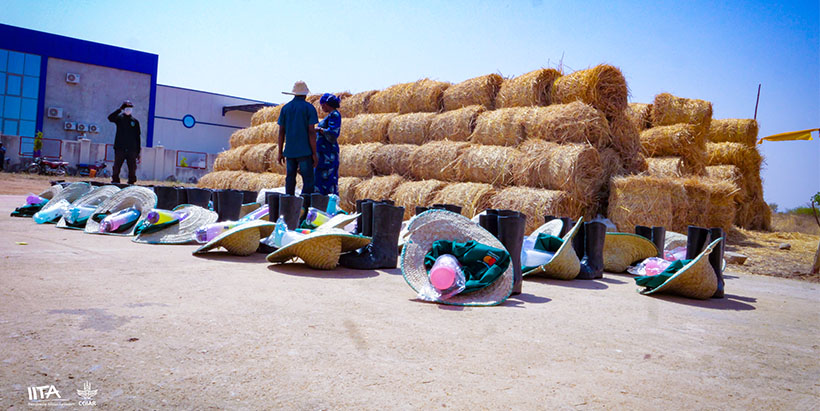
Bales of high-quality grasses, along with farm boots, hats, and overalls provided to the participants.

The youth in the agribusiness unit of IITA has provided employment opportunities for 500 youths along the dairy value chain in Adamawa State. The initiative, which was birth from the collaboration with Sebore International Farms, is targeted at unemployed young people in the state and aims to equip them with the technical and business skills required to thrive in the dairy sector.

The participants, who are the second cohorts of the initiative, will operate in various capacities in the communities. About 100 participants were trained as veterinary service providers who will render basic health services to dairy farmers and assist them with timely responses and first aid treatment for their cattle’s health-related challenges. Also, 300 youths were trained in dairy production and will supply milk to an established market in the state. The third category of youth who received training on feed and fodder production are expected to produce nutritious food for the cattle to improve their milk production.

While speaking during the participants’ graduation and input distribution ceremony, a representative of the Youth in Agribusiness unit, Adetola Adenmosun, mentioned that the initiative and collaboration with Sebore International Farms was to address some of the challenges faced by dairy farmers. According to her, the challenges include, but are not limited to, access to healthy cattle for quality milk and increased productivity, securing quality feed for optimal milk yield, and access to reliable veterinary services for health emergencies. While commending the youths for their resilience, she encouraged them to utilize the training and other resources provided to them to improve their businesses, livelihoods, and communities.

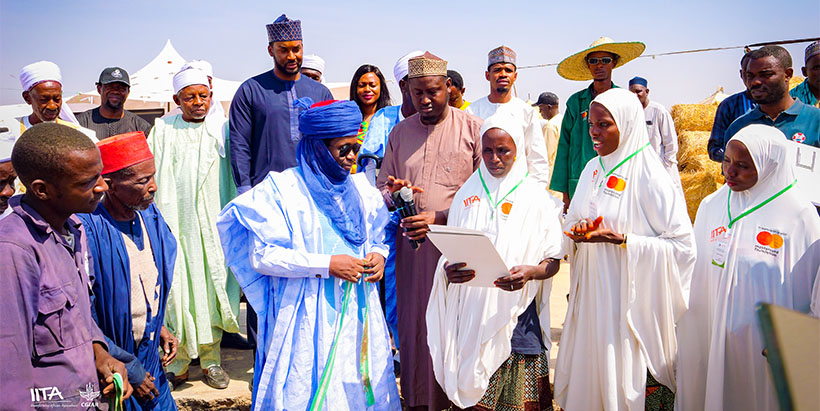
A women’s cooperative group receiving their certificate of registration and input from Mr. Ardo Bamanga Dalil, District Head of Mayo-Belwa, Adamawa State.

Also speaking at the event, the Managing Director of Sebore International Farm, Aminu Nyako, said it had become expedient to invest in the youth early enough to maximize their contributions to food security now and in the future.

“The future is the youths, and we must invest heavily right now to ensure that the youth have a place in dairy farming and agriculture in Adamawa State and the whole of Nigeria. For this reason, we ensured that the training and intervention by Sebore Farms in partnership with IITA are all-encompassing.”

“We have trained you, we have organized you into cooperatives, we have taught you how to take care of the cows, we have given you access to veterinary services, we have given you access to feed and fodder, how to cultivate the feed and fodder and access to market to sell your milk. This kind of intervention is completely end-to-end to integrate you into the dairy sector,” he added.

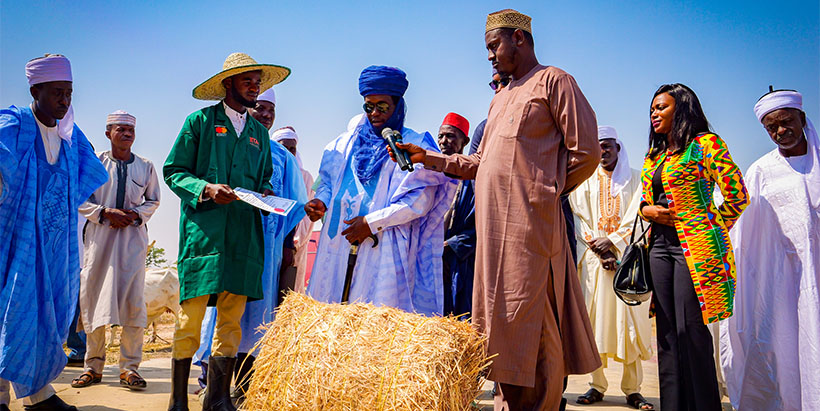
Ardo Bamanga Dalil presenting some high-quality feed to a participant in the feed and fodder unit.

The District Head of Mayo-Belwa Community, Ardo Bamanga Dalil, congratulated the farmers, and commended the partners for their contribution to providing jobs for young people.   “To our partners, your visionary leadership and unwavering support have created opportunities and instilled hope in the hearts of these young farmers and countless others who will benefit from their success. Like Oliver Twist, we humbly ask you to do more,” he said.

The event featured various sessions, including sensitization on financial inclusion and its crucial role in modern dairy agribusiness. Participants were also reminded of the best practices in modern dairy practices and veterinary care.

While applauding the intervention, one of the participants, Husseini Zakariyau, said, “Sebore Farms, in partnership with IITA, have invested their money, energy, and resources to provide training opportunities for us. The training was comprehensive; I learned how to identify illnesses in cattle, administer the proper medications, and apply treatments orally or through intravenous push (IV). This program gave us veterinary tool kits, enabling us to return to our communities and provide qualitative care for our cattle. I chose veterinary service to control common illnesses among our cattle, thereby helping my people and myself.”

Part of the input distributed to support the 500 farmers included the input of high-yielding cattle breeds, improved fodder varieties rich in nutrients, and essential veterinary care tool kits. The farmers were also organized into cooperatives based on their respective activities: 30 cooperatives for dairy producers, 10 for feed and fodder producers, and 10 for veterinary service providers. This structure ensures the businesses’ sustainability while strengthening members’ production capacity and profitability.

With improved cattle breeds, nutrient-rich fodder varieties, and essential veterinary tool kits now in their hands, these young farmers have been supported to significantly impact the dairy sector within Adamawa and the neighboring states.

Also, last year, about 300 farmers were trained in dairy production and supported with improved cattle breeds that can enhance milk production and supply.

For many of these young farmers, this initiative is a pathway to accessing dignified and fulfilling work, stability, and financial independence. With guaranteed access to the market through Sebore International Farms and strengthened production practices, these young dairy farmers are no longer at the mercy of fluctuating market conditions or outdated practices. Rather, they are becoming leaders in a growing dairy sector, contributing to food security, job creation, and economic development in Adamawa State. Their stories prove that with the right support, young people can redefine the future of agriculture.

Contributed by Jesutofunmi Robinson

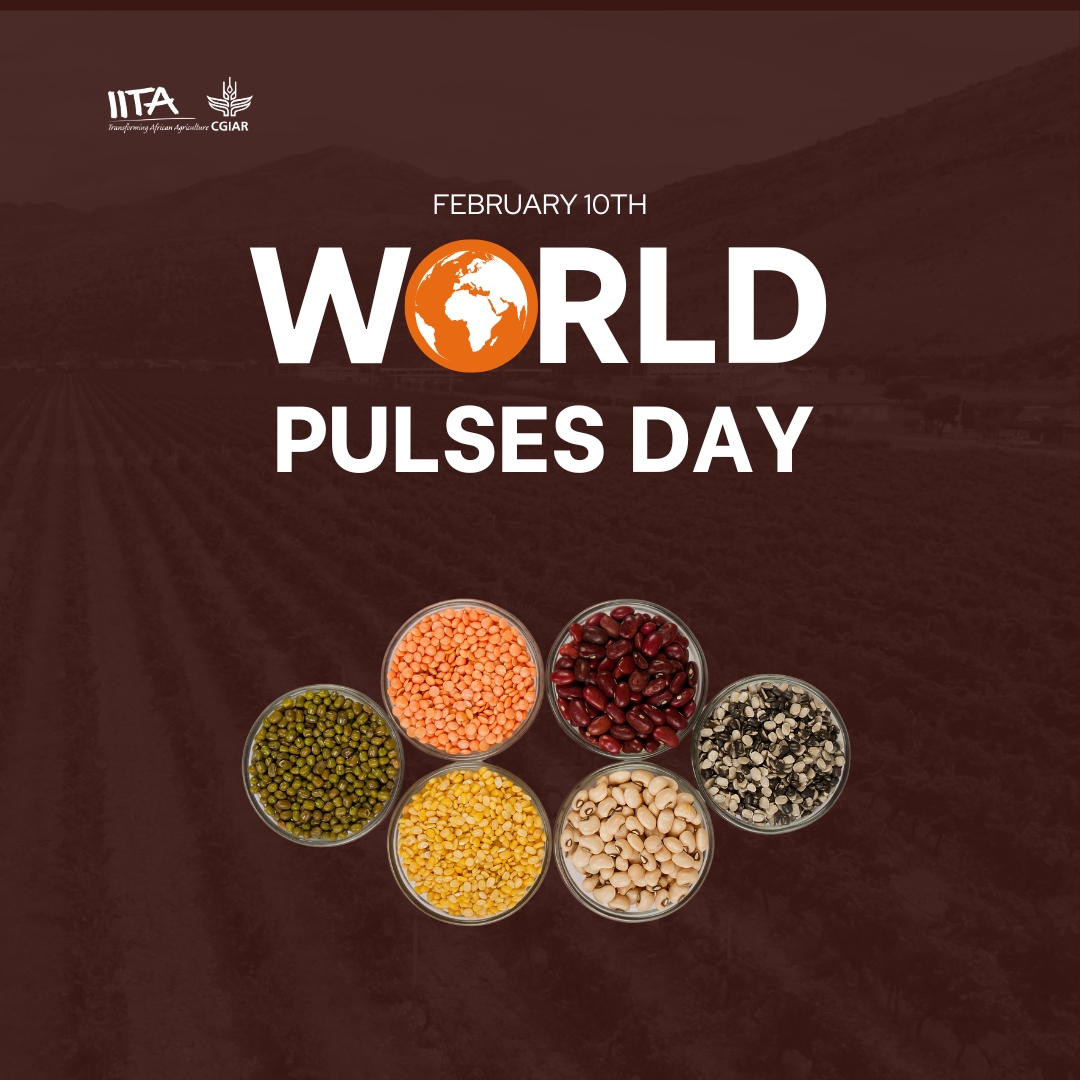
World Pulses Day e-card design

Growing up in Kenya, I looked forward to the occasions—once or twice a month—when meat was part of our meal and disliked the numerous days that we ate pulses—edible seeds of plants in the legume family. After I became a nutritionist and learned more about their nourishing value, I stopped seeing them as a boring dish and now regularly serve pulses to my family as a snack or in stews, sauces, or coconut milk.

Today, many Africans still underappreciate pulses as I did. World Pulses Day on February 10 is a chance for everyone to learn of their immense value—not just as nutritious seeds but as catalysts for transforming agrifood systems. Two climate-smart crops, Cowpea and Bambara groundnut, particularly deserve attention for their untapped potential.

Cowpea and Bambara groundnut are more than staple food crops; they could be lifelines for millions across sub-Saharan Africa. Cowpea, often referred to as “the poor man’s meat,” is renowned for its rich protein content and its ability to thrive in drought-prone areas. This makes it a critical food source for communities grappling with climate variability. Recent advances showcased at the 7th World Cowpea Research Conference in September 2024 highlight climate-resilient cowpea varieties with higher yields and improved nutritional profiles. These innovations provide smallholder farmers with a dependable crop, growing even in harsh environmental conditions, bolstering food security and economic resilience.

Bambara groundnut, on the other hand, is often called “the complete food” due to its nutrient density and resilience. It thrives in marginal soils where other crops fail, offering hope for combating food insecurity. At the International Institute of Tropical Agriculture (IITA) where I work, ongoing research is uncovering innovative ways to integrate Bambara groundnut into diverse farming systems across Africa. This pulse not only improves nutrition but also enhances household incomes and agricultural sustainability. Its dual role as a nutrient-dense food and an adaptable crop underscores its potential as a game-changer in the fight against hunger and malnutrition.

Pulses like Cowpea and Bambara groundnut are critical because they are uniquely positioned to counter the adverse effects of climate change. Their natural drought tolerance ensures consistent food production in arid and semi-arid regions. This resilience is crucial for communities, particularly in West Africa, which rely on these stable food sources amid increasingly unpredictable weather patterns. Additionally, pulses play a vital role in improving soil health. Through nitrogen fixation, they enrich soil fertility, reducing dependency on synthetic fertilizers and promoting sustainable agriculture. Moreover, compared to crops like rice and wheat, pulses are better for the environment as produce lower greenhouse gas emissions, helping to reduce pollution and climate change.

Despite their immense potential, Cowpea and Bambara groundnut remain underutilized due to limited private-sector investment and low consumer awareness. Bridging this gap requires strategic interventions to promote these crops as staples in both local and global markets. For instance, more private-sector investment in the value chains of Cowpea and Bambara groundnut can look at how investors led to quinoa’s integration into the mainstream and niche markets through innovative products such as fortified flours, snacks, healthy foods, and ready-to-eat meals.

Consumer awareness among the younger generation in Africa is another critical area of focus. They did not grow up eating pulses since meat is relatively more affordable. Public campaigns highlighting the nutritional and environmental benefits of pulses can transform perceptions and encourage widespread adoption. Educating communities about the versatility and health benefits of these crops can make them everyday staples, fostering healthier diets and sustainable consumption patterns. For smallholder farmers, government support must extend beyond awareness. Providing access to improved seed varieties, technical training, and market linkages is essential for empowering farmers to scale their operations sustainably. This holistic approach ensures that farmers maximize their benefits while contributing to the resilience of food systems.

The theme of this year’s World Pulses Day, “Pulses: Bringing Diversity to Agrifood Systems,” underscores the transformative power of crops like Cowpea and Bambara groundnut in building resilient food systems. However, realizing their full potential requires concerted efforts from all stakeholders, including governments, development agencies, and philanthropic organizations. Robust investment in research by entities like CGIAR through its research centers and in partnership with National Agricultural Research Systems (NARS), infrastructure improvements, and market development is critical to unlocking their value and ensuring they reach the communities that need them the most.

On this World Pulses Day, let us pledge to champion Cowpea and Bambara groundnut—not just as crops but as instruments of change. Together, we can make these pulses household names in Africa and vital contributors to food security, nutrition, and environmental sustainability.

Contributed by Mercy Lung’aho
Program Lead for Food Security, Nutrition and Health