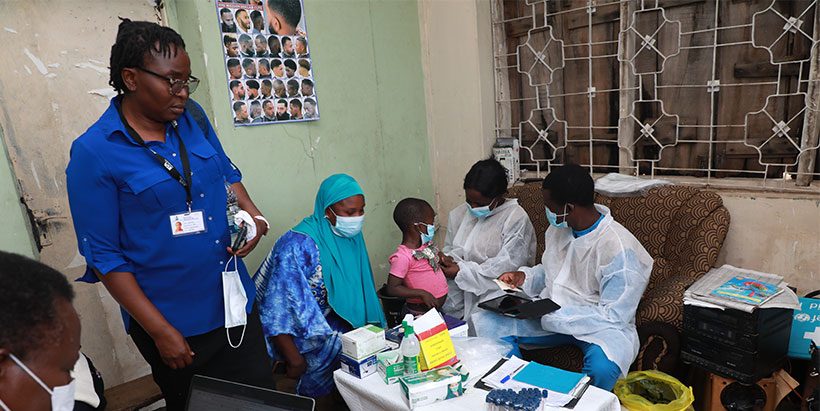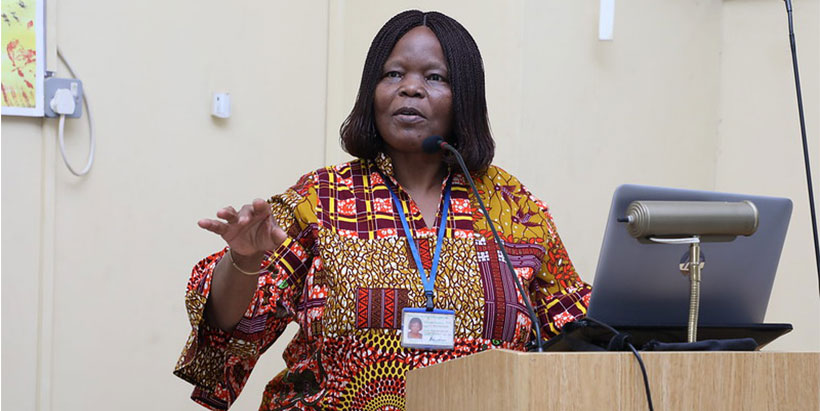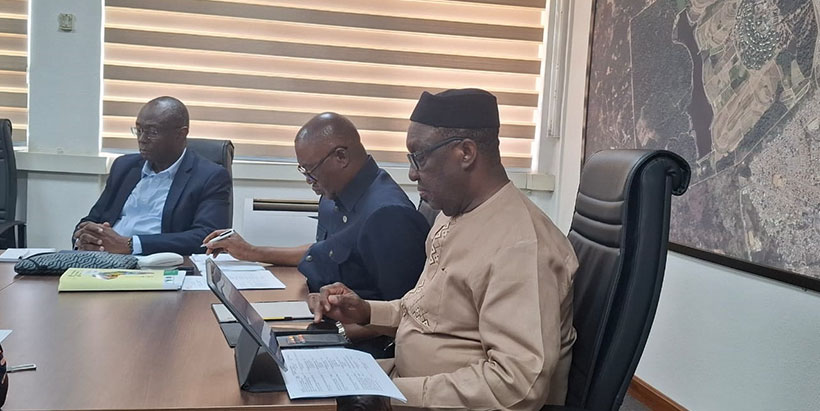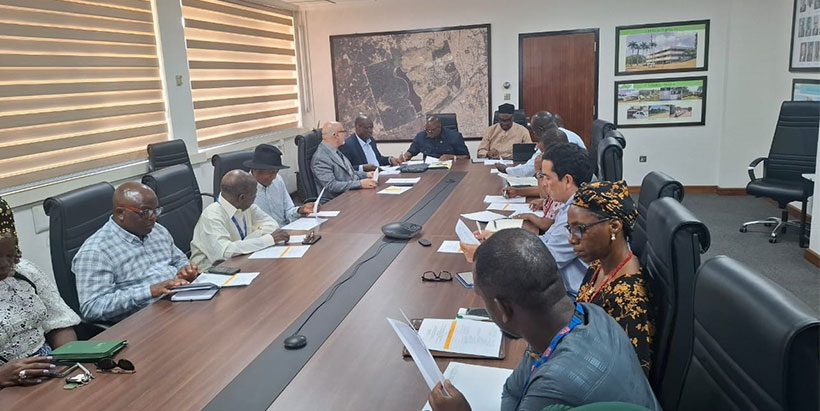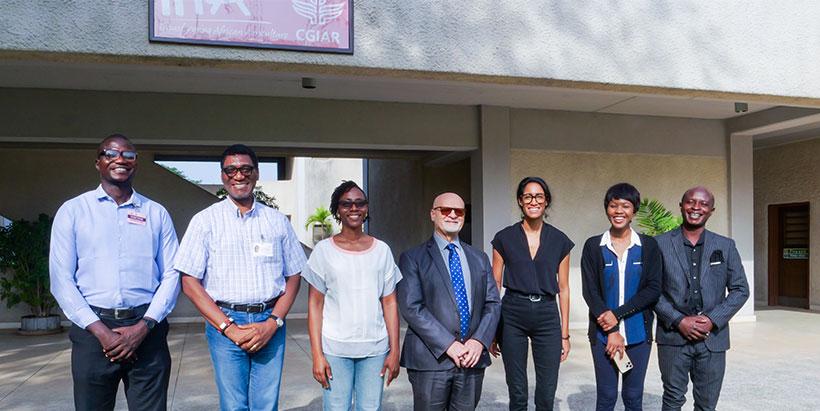
Beneficiaries of the digital initiative.

IITACGIAR, in collaboration with the Ogun State Ministry of Agriculture, is making significant strides in agricultural development through the Ogun State Farmer Information Management System (OGFIMS) initiative. This initiative, funded by the Ogun State Economic Transformation Project (OGSTEP) sponsored by the World Bank, aims to modernize the agricultural sector by leveraging technology and data-driven strategies.

On 13 December, a review retreat workshop was held to mark the completion of the digital registration of farmers and Value Chain Actors (VCAs) under the OGFIMS development project led by IITA. This registration effort is one of the key components of OGSTEP, designed to enhance the state’s capacity to support and connect key players in the agricultural sector.

The exercise involved 70 trained enumerators using digital survey tools to gather data. These enumerators were divided into four regional teams, each supported by two supervisors and two monitoring and evaluation  officers, forming a total team of 84. Between July and November 2024, the team registered 160,000 farmers and VCAs.

A member of IITA-OGFIMS team, Hector Igboko, giving detailed explanation on the OGFIMS interactive dashboard.

During the workshop, participants reviewed the fieldwork’s successes and challenges, analyzed the collected data, and proposed solutions for future improvements. The OGFIMS consultant, Dr Lydia Olufunmilola, presented key analytical insights.

The IITA-OGFIMS programmers, Busayo Ogunya and Tunde Ajayi, reviewed the digital registration form and identified enhancements to improve data accessibility and user experience. Hector Igboko, who also works with the programming team, showcased the OGFIMS interactive dashboard, which provides real-time insights, supports data-driven decision-making, and offers a deeper understanding of the agricultural sector’s economic activities.

The OGSTEP Agricultural Manager, Dr Oluseyi Olugbire, emphasized that the data collected would help design targeted interventions and connect farmers with agrifood value chain actors.

These connections will provide better access to inputs, services, finance, and markets, strengthening Ogun State’s agribusiness sector and driving sustainable economic growth.

The OGFIMS Project Lead, Dr Lava Kumar, highlighting the success of the digital registration process, said, “The successful digital registration of the farmers and VCAs has demonstrated the system’s functionality.”

He noted that upcoming modules such as e-Agroshop, e-Extension, and market information will further enhance the OGFIMS platform and benefit users.

The workshop concluded with a shared commitment to implementing the proposed improvements, ensuring the project’s ongoing effectiveness and success.

With initiatives like OGFIMS, the Ogun State government is partnering with IITA to champion the use of digital technology to transform agriculture, ultimately improving livelihoods and fostering economic resilience.

Xiaoyan Ma, Senior Manager of African Affairs and the CEO of IITA BIP at the IITA Business Incubation Platform Center.

Innovation scaling is critical to advancing agriculture in Africa, with the private sector playing a strategic role. In recognition of this role, IITA–CGIAR hosted the Senior Manager of African Affairs at the Beijing JingWa Agricultural Science & Technical Innovation Center, Xiaoyan Ma, at the headquarters in Ibadan recently.  

The visit aimed to foster collaboration and knowledge exchange in agricultural innovation and development between both organisations. 

During the visit, the Director of the Partnerships for Development Directorate (P4D) and IITA Business Incubation Platform (BIP) CEO, Adebowale Akande, provided insights into IITA’s work in the private sector under the BIP.  

He described it as a platform for incubating agricultural innovations and preparing them for commercialization while focusing on human capacity development. Akande emphasized the transformative impact of the youth incubation programs, which train young people and reshape their agricultural perspectives, yielding remarkable results across sub-Saharan Africa.  

Noting that the visit is coming after the IITA Director General Dr Simeon Ehui’s attendance at the World Agrifood Innovation (WAFI) Conference in China, Akande said the need for strategic partnerships was identified during the conference. 

Xiaoyan Ma, on a tour of the semi-autotropic hydroponics system for cassava propagation.

IITA Director of Strategic Planning and Chief of Staff, Ibnou Dieng, highlighted the alignment of Ma’s visit with IITA’s goal of diversifying its partnerships.  

“This visit is timely and aligns perfectly with our strategic objectives,” he remarked. 

Ma outlined potential areas for collaboration with IITA, including talent and knowledge exchange, investment and business incubation, demonstration and production projects, concept testing, product validation, and consultation services.  

She also presented an overview of JingWa’s innovation centers, such as the Dairy Innovation Demo Center, Horticulture Innovation Demo Center, and Orchard Innovation Demo Center. She noted the recent launch of the Dairy International Innovation Institute in January 2024. Additionally, she discussed JingWa’s funding model, which includes initial government sponsorship for five years and plans for sustainability through investor forums and paid training programs. 

Akande expressed interest in potential collaboration areas, such as serving as a bridge for JingWa’s establishment in Africa, joint efforts in concept testing and product validation, and capacity-building training programs.  

“Adopting your model for sustained funding would benefit us,” He said. 

Adding that the ideas explored during the visit would be documented, and IITA’s short- and long-term goals would be shared with Ma. 

Ma commended the productive discussions and expressed satisfaction with the outcomes, noting the success of their first in-person meeting. During her visit, she toured some of IITA’s facilities, including demonstration farms, a drip-system hydroponics facility for seed yam production, and the semi-autotropic hydroponics system for cassava propagation. 

The visit marked a significant step towards fostering collaboration between IITA and the Beijing JingWa Agricultural Science & Technical Innovation Center, strengthening their shared commitment to agricultural innovation and capacity development in Africa. 

Contributed by Ochuwa Favour Daramola 

Legendary Anastasio Paul Leventis (L) receiving a hand-painted art of his favourite bird from the Manager of IITA Forest Center, Adewale Awoyemi (R).

Since inception, IITA Forest Center has enjoyed the support of esteemed sponsors who appreciate the need to invest in nature and biodiversity conservation. On December 2, the IITA Forest Center celebrated the life and contributions of Anastasio Paul Leventis, a legendary conservationist and one of the first donors to the Center. His unwavering support, particularly for bird monitoring and surveys in southwest Nigeria, was instrumental in establishing the IITA Forest Center as a Key Biodiversity Area. This event highlighted his impact on African biodiversity conservation and his enduring legacy. 

The celebration was graced by distinguished guests, including Phil Hall, Board Chairman of the A.P. Leventis Ornithological Research Institute (APLORI); Ahmed Mantey, Chairman of the Leventis Foundation; IITA Deputy Director General for Corporate Services, Hilde Koper-Limbourg; IITA Forest Center Manager, Adewale Awoyemi; and staff of the IITA Forest Center. 

IITA Forest Center Staff with deep appreciation in group picture with legendary Anastasio Paul Leventis and guests from the Leventis Foundation.

As an avid bird enthusiast, Leventis began the day with birdwatching, including his favorite, the Ahanta Francolin. The event featured a captivating dance drama by Lead City University’s Dosu Music House, delivering a powerful message about conserving biodiversity for human well-being. 

In her opening remarks, Koper-Limbourg warmly welcomed Leventis and the Leventis Foundation team and praised the Forest Center’s commitment to biodiversity conservation despite numerous challenges. Awoyemi echoed this sentiment, expressing deep gratitude to Leventis for his transformative support, which has fueled the Center’s efforts to protect nature. 

A highlight of the event was the presentation of a hand-painted artwork of the Ahanta Francolin to Leventis, a token of appreciation for his invaluable contributions. Moved by the celebratory gesture and remarkable progress of the Forest Center, Leventis pledged continued support for the Forest Center, stating, “This is only the beginning. We assure you of our continued support of the IITA Forest Center for more groundbreaking conservation works.” 

Sir Phil Hall receiving his hand-painted art flanked by Manager of IITA Forest Center, Adewale Awoyemi; IITA DDG Corporate Services, Hilde Koper-Limbourg; IITA Forest Center

Phil Hall also applauded the Center’s achievements and promised to support efforts to secure additional funding and grants. To commemorate his contributions, IITA representatives presented Hall with a hand-painted portrait of himself holding a bird. 

The celebration concluded with a group lunch during which attendees were able to interact with the honored Leventis. The IITA Forest Center remains deeply inspired by its legacy and looks forward to advancing its mission to conserve biodiversity. 

Contributed by Folake Oduntan 

Related stories:
Reuniting roots: honoring pioneers and celebrating progress at IITA Forest Center
IITA Forest Center holds the second edition of Nigerian Bird Festival


The NFCMS team during the survey.

Ensuring the affordability and accessibility of nutritious food for all individuals is essential for improving food security in sub-Saharan Africa (SSA). Recognizing the urgency of this issue, IITACGIAR partnered with the Federal Government of Nigeria (FGN) to conduct the “National Food Consumption and Micronutrient Survey (NFCMS)” in 2021. This comprehensive, population-based study aimed to assess key nutritional challenges and inform effective policy interventions. 

As the lead implementing agency, IITA along with other partners evaluated the micronutrient status, body measurements (anthropometry), and dietary intake of women of reproductive age (WRA) aged 15 to 49. The survey included pregnant and lactating women, children aged 6 to 59 months, and non-pregnant feminine adolescents aged 10 to 14. The goal was to identify the primary factors contributing to poor nutrition across these vulnerable groups. 

The study was followed by a report highlighting persistent micronutrient deficiencies, particularly among women, with pregnant and breastfeeding women being the most affected. The findings revealed that low dietary diversity significantly contributes to inadequate micronutrient intake. Iron deficiency, exacerbated by inflammation and malaria, was identified as a major cause of anemia across all age groups.  

Additionally, vitamin A deficiency was prevalent among pregnant women and WRA, while zinc deficiency was linked to anemia in both WRA and preschool children. 

Dr Busie Maziya-Dixon, the survey principal investigator, and IITA Food and Nutrition Scientist addressing undernutrition disorders.

Dr Busie Maziya-Dixon, the survey principal investigator, IITA Food and Nutrition Scientist, and other members of the survey team emphasized the need to strengthen existing policy strategies like the “Agricultural sector food security and nutrition strategy.” These efforts are crucial for combating undernutrition and reducing micronutrient deficiency disorders. 

To address these challenges, the survey team recommended creating an enabling environment to support the production and consumption of bio-fortified crops. These crops, including orange-fleshed sweet potato (OFSP), are rich in essential nutrients and can help bridge the dietary gaps. OFSP, high in beta-carotene, improves vitamin A intake and offers a sustainable, food-based solution to mitigate deficiencies and related health issues, such as diarrhea, in developing countries. 

Promoting agricultural interventions and adopting bio-fortified crops could significantly enhance nutrition for children and WRA, leading to improved dietary diversity. These strategies advance food security and support healthier populations in Nigeria and across SSA. 

Through these targeted efforts, the Federal Government of Nigeria aims to enhance nutrition policies and achieve greater food security, ultimately improving health outcomes and resilience across the region. 

Contributed by Anita Akinyomade

In a world where digital platforms are reshaping communication and knowledge dissemination, IITACGIAR is a beacon of innovation scaling, and leveraging social media for agricultural transformation. By strategically utilizing these platforms, IITA has brought its research closer to the people it serves and achieved remarkable milestones that affirm its digital leadership. 

Social media platforms with IITA's presence.
Social media platforms with IITA’s presence.

Social media has become a vital tool for breaking barriers in research communication, providing a direct line to diverse audiences, including farmers, policymakers, scientists, donors, and the general public. For IITA, it is a vehicle for showcasing innovations, sharing success stories, advocating for agricultural policies, and engaging stakeholders across the globe. By tapping into the interactive and visual nature of platforms like LinkedIn, Flickr, YouTube, X (formerly Twitter), and Instagram, IITA ensures that its work resonates with audiences far beyond traditional boundaries. 

With consistent and strategic efforts, IITA has reached significant milestones that underscore its impact in the digital space for agricultural research. 

IITA’s Flickr account, a treasure trove of vivid imagery, captures the essence of agricultural research—from the trials in the field to the triumphs of innovation. With over 10 million views, these images have documented the institute’s activities and inspired global audiences with the beauty and importance of agricultural research. 

The research institute’s LinkedIn account, with over 140,000 followers, is a space for researchers and agriculture professionals worldwide who are seeking agricultural science and research knowledge.  

IITA’s YouTube channel is a virtual hub of engaging video content, including documentaries, farmer success stories, research findings, and expert interviews. With 1 million views, the channel serves as an educational resource, empowering farmers, students, and researchers with actionable information.  

On X, IITA leads critical conversations about food security, climate change, and agricultural innovation. The 62,000 followers on X receive timely updates, thought-provoking insights, and real-time event coverage. IITA fosters dialogue among key stakeholders and partners in global agriculture on X.  

With close to 7,000 followers on Instagram, IITA’s Instagram account deploys visually compelling content to appeal to younger audiences and those new to agriculture. The platform highlights stories of resilience, the role of youth in agriculture, and the institute’s community impact, fostering a deeper connection with its followers. 

Using visual storytelling by focusing on compelling images and videos, IITA’s social media strategy is rooted in principles like knowledge sharing, engagement, and real-time advocacy. 

Data showing IITA's milestones on social media.
Data showing IITA’s milestones on social media.

IITA captures the attention of a wide audience across Africa, America, Asia, and Europe, conveying complex research outcomes in relatable ways. Platforms like Flickr, Instagram, and YouTube have been particularly instrumental in this approach. 

Platforms like X provide avenues for disseminating actionable knowledge. Whether a video on climate-smart farming practices or a thread unpacking the latest research, IITA ensures its content is informative and impactful. 

From scientists to farmers and young aspiring agriculturists, IITA tailors content to meet the needs of various audience segments, ensuring inclusivity and relevance. 

During global events like World Food Day or International Women’s Day, IITA’s social media campaigns amplify critical issues and advocate for sustainable solutions, further solidifying its role as a thought leader. 

With these strategies, IITA’s social media efforts have increased its visibility and strengthened partnerships and collaborations. By showcasing success stories and ongoing projects, IITA attracts the attention of donors, development agencies, and governments, facilitating impactful collaborations that drive agricultural transformation across the continent. 

As the digital landscape evolves, IITA is poised to adopt emerging trends to further its mission. Initiatives on the horizon would include leveraging platforms like TikTok and Instagram reels to share quick, digestible content tailored for younger audiences; hosting X Spaces, webinars, and virtual tours to create immersive experiences for its audience; and utilizing AI tools to personalize content and measure impact. All of these will ensure that IITA’s social media strategy remains data-driven and effective. 

IITA’s social media journey is evidence of digital platforms’ power in advancing agricultural research and fostering global connections. As the institute continues to innovate, it invites everyone to join the movement by following its social media channels. Together, we can amplify the impact of agricultural research and cultivate a better future for Africa. 

Contributed by ’Timilehin Osunde 

Members of the IITA team, the International Water Management Institute (IWMI), the World Food Programme (WFP) and Koolboks Limited at the workshop in Lagos.

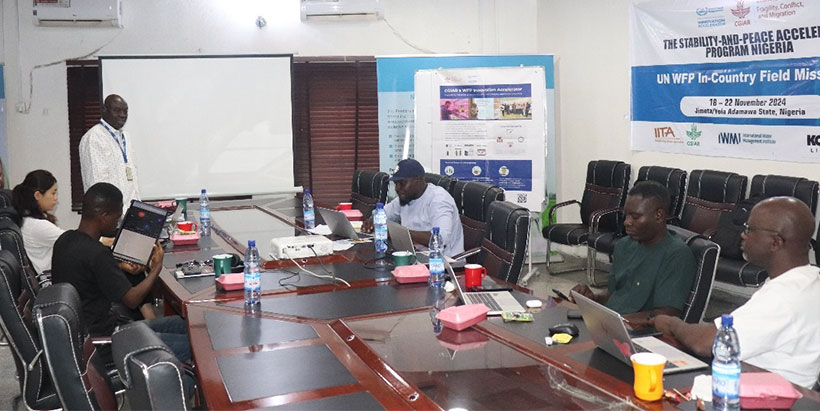
The IITA Yola office recently hosted a delegation from the World Food Programme (WFP) Innovation Accelerator for a field visit under the Fragility, Conflict, and Migration Innovation (FCMI) Accelerator program. The visit, from 18 to 22 November 2024, marked the second engagement of the WFP team in Nigeria. The first interaction occurred during a Boot Camp held in July 2024 to orient partners and stakeholders on the program’s objectives and prepare beneficiaries for the journey ahead.

The FCMI Accelerator collaborates with the WFP Innovation Accelerator and CGIAR centers, including IITA and the International Water Management Institute (IWMI). This program leverages expertise and resources to promote innovative solutions in fragile and conflict-affected (FCA) settings, with the overarching goal of achieving Sustainable Development Goal (SDG) 2: Zero Hunger. The initiative also supports SDG1 (No Poverty), SDG5 (Gender Equality), SDG13 (Climate Action), and SDG17 (Partnerships for the Goals).

During the field visit, the team assessed the deployment and impact of Koolboks’ solar-powered refrigeration systems in Northeast Nigeria. This innovative technology, piloted in Adamawa and Borno states for the Northeast market, aims to improve food preservation and storage capacities in vulnerable communities. Targeting critical locations such as public abattoirs, markets, and restaurants in Jimeta and Yola, the intervention addresses longstanding challenges posed by unreliable electricity, economic constraints, and frequent power outages.

Mr Quadri Shakiru (standing) during his presentation at the session at the IITA Yola office.

The delegation included Zehui Qiu from the WFP and Babatunde Ogunseye from Koolboks Limited, the innovators behind the solar refrigeration solution. Representing IITA were Quadri Shakiru, FCMI Focal Point Coordinator; Isaac Twalbwam Philip, Monitoring and Evaluation Officer; and Sini Ndazhea Luwa of the FCMI program. The visit culminated in a comprehensive evaluation of the market readiness and acceptance of the Koolboks technology, designed to address the critical challenge of food preservation in fragile and conflict-affected regions.

Solar-powered refrigeration systems is coming at a crucial time for Northeast Nigeria, a region grappling with frequent power outages, rising electricity tariffs, increased fuel costs, and heightened vulnerability during the dry season when food preservation needs are at the peak.

By ensuring reliable cold storage, the systems provide a sustainable and cost-effective solution that reduces post-harvest losses, enhances food security, and supports local economic activities, particularly among small and medium enterprises. The IITA Yola team and its partners highlighted the potential of these systems in improving the livelihoods of vulnerable populations. Extensive field evaluations in Jimeta and Yola received overwhelmingly positive feedback from end-users and stakeholders, underscoring the impact of the intervention.

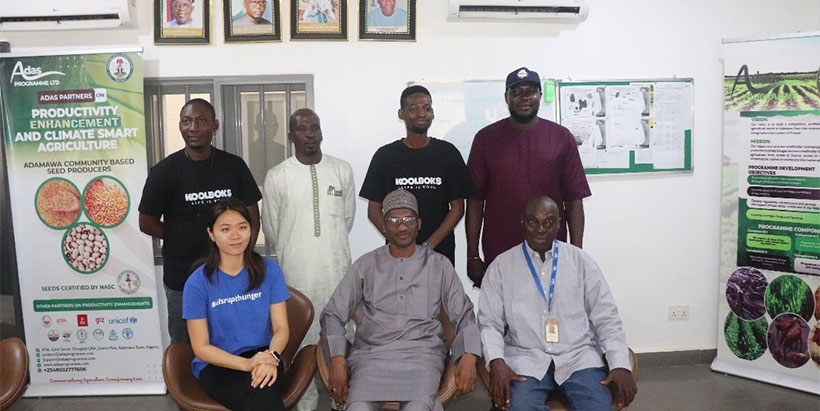
(front row, from left to right) Zehui Qiu, representing the WFP, Alhaji Yunusa Ibrahim Gafai, Lead Consultant and Chief Operating Officer of ADAS-P, Quadri Shakiru, Focal Person The Fragility, Conflict, and Migration Innovation (FCMI) Accelerator team on a visit to the the ADAS-P office in Yola.

The team reviewed findings following the field visit and strategized the next steps. Koolboks Limited was tasked with developing a strategy to meet the anticipated surge in demand for its refrigeration systems while ensuring consistent supply and deployment. Plans were also outlined to enhance community awareness and engagement, maximizing the adoption of the technology.

Additionally, discussions emphasized the need for a long-term sustainability framework to support the scaling of the intervention across other fragile and conflict-affected regions.

Introducing solar-powered refrigeration in Northeast Nigeria also offers broader implications beyond the region. As a scalable solution, it serves as a model for addressing similar challenges in other global FCA settings. Recommendations from the visit include:

  • Expanding the deployment of refrigeration systems to additional locations,
  • Encouraging community-led models through cooperatives and networks and
  • Strengthening monitoring and evaluation frameworks to track impact and identify areas for improvement.
  • Capacity-building efforts, such as end-user training sessions, will further ensure the systems’ efficiency and longevity.

The WFP team’s second visit to Nigeria emphasizes the progress and potential of the FCMI Accelerator program in driving impactful innovation for sustainable development. The engagement at the IITA Yola office also demonstrated the significant strides made in addressing food preservation challenges in Northeast Nigeria. It reveals immense opportunities for scaling the initiative to achieve broader impacts.

IITA remains at the forefront of fostering resilient and sustainable food systems, leveraging its expertise and partnerships to address pressing global challenges. Through initiatives like the FCMI Accelerator program, IITA reaffirms its commitment to advancing innovative solutions for the most vulnerable communities, ensuring no one is left behind in pursuing sustainable development.

Contributed by Olorunfemi Adedeji

Dr Simeon Ehui with AfDB Director General for Nigeria, Dr Abdul Kamara and AfDB Chief Agro-Industry Officer, Dr Chukwuma Ezedinma during discussions.

In a bid to advance partnership efforts between IITACGIAR and the African Development Bank (AfDB), the Director General for Nigeria, Dr Abdul Kamara, accompanied by AfDB Chief Agro-Industry Officer, Dr Chukwuma Ezedinma, met with IITA Director General and CGIAR Regional Director for Continental Africa, Dr Simeon Ehui, at IITA headquarters in Ibadan.

This engagement emphasized the importance of collaboration in advancing food security and agricultural transformation across Africa.

Welcoming Dr Kamara, Dr Ehui expressed enthusiasm for the visit. “It’s a pleasure to have the AfDB team at IITA. Beyond our professional relationship, I am proud of Dr Kamara’s leadership in this critical role for our shared vision of a food-secure continent,” Dr Ehui remarked.

The visit underscored IITA’s contributions to agricultural research and innovation. The delegation explored cutting-edge work in cassava, maize, food safety (including biocontrol innovations like Aflasafe), youth engagement, and the Technologies for African Agricultural Transformation (TAAT) program.

The IITA research and Management teams during discussions with the AfDB team.

Dr Kamara commended IITA’s efforts, emphasizing the need to align research outputs with scalable innovations while addressing challenges.

“We must think ahead—exploring opportunities for future programs like TAAT 3 and integrating gender and climate considerations into our efforts,” he stated. He highlighted the significance of program preparation and feasibility studies to maximize impact, noting, “It’s not just about funding; it’s about ensuring tangible outcomes.”

Dr Ezedinma commended IITA’s progress over the years and advocated for a focus on scaling innovations and formalizing approaches to transform agriculture. He also stressed the importance of leveraging lessons from previous initiatives, such as State Project Implementation Units (SPIUs) and Special Agro-Industrial Processing Zones (SAPZs), to inform future programs.

Dr Simeon Ehui with AfDB Director General for Nigeria, Dr Abdul Kamara, AfDB Chief Agro-Industry Officer, Dr Chukwuma Ezedinma, and some members of IITA Management team.

Following the brief from some of IITA’s researchers present at the meeting, Dr Ehui said IITA is focused on leveraging strategic partnerships to scale innovations that can transform the food systems’ landscape. AfDB is one of the significant allies the institute has worked closely with over the years.

Looking at ways to further streamline collaborations with IITA, Dr Kamara said his office will dedicate a focal point to ensure seamless interactions. Speaking on youth engagement, he commended the IITA Youth program, adding that youth-led agribusinesses need business-friendly loan rates and entrepreneurship ecosystems that will strengthen agriculture value chains.

Following a tour of IITA’s facilities, during which the visitors saw first-hand some of the existing technologies at IITA, Dr Kamara highlighted the importance of scaling and market access for technologies like Aflasafe and the need to leverage partnerships with policymakers.

Speaking on engaging the government and policymakers, Dr Ehui said this is necessary for innovation to scale and impact, as state actors are critical in the process of scaling.

Discussions also focused on soil systems, climate change, food safety, nutrition, and seed systems. “We can take advantage of the existing technologies at IITA to make the change that we all seek to transform Africa and the lives of millions,” Dr Ehui said.

Reaffirmed AfDB’s commitment to impactful partnerships with IITA, envisioning transformative results for Nigeria and the broader continent, “I look forward to working with IITA to bridge critical gaps and drive change in Africa’s agricultural landscape,” Dr Kamara added.

This visit reinforced the shared commitment of IITA and AfDB to harness innovative solutions, foster collaboration, and scale impact to ensure sustainable food systems across Africa.

Contributed by ’Timilehin Osunde.

Leslie Kouadio (L), CERFAM’s Communication Advocacy and Marketing Officer and Sapna Gorajia (R), CERFAM’s Programme Policy and Partnerships officer listening to IITA Deputy Director General Partnerships for Delivery, Kenton Dashiell.

Partners from the Regional Center of Excellence against Hunger and Malnutrition (CERFAM), Côte d’Ivoire, visited IITA-CGIAR on 20 November. Established through a partnership between Côte d’Ivoire’s government and the UN World Food Program (WFP), CERFAM aims to combat hunger and malnutrition across Africa.

Titilayo Falade, IITA Food Safety Scientist and Coordinator of the Food Safety for Africa Project, and a team of scientists, lecturers, and researchers working on the HealthyDiets4Africa Project received the partners at the IITA headquarters in Ibadan. In a brief meeting with IITA Deputy Director General Partnerships for Delivery, Kenton Dashiell, the CERFAM team stated the purpose of their visit, which was to gather and learn best practices to replicate in other regions of their engagement.

Sapna Gorajia, CERFAM’s Programme Policy and Partnerships Officer, said, “We are meeting stakeholders to learn from their best practices. Within the HealthyDiets4Africa Project, we aim to gather insights to improve our interventions in countries that need them most. We map and monitor partner policies while ensuring effective communication and visibility for shared initiatives.” Accompanying her was Leslie Kouadio, CERFAM’s Communication Advocacy and Marketing Officer.

CERFAM and IITA team working on the HealthyDiets4Africa Project with IITA DDG Partnerships for Delivery, Kenton Dashiell.

Dashiell emphasized the critical importance of nutrition-focused research. “All our efforts—whether in crop breeding, storage, mechanization, or processing—must ultimately benefit the health and nutrition of millions of Africans,” he stated, drawing from his extensive experience in agricultural research, partnerships, delivery, and his passion for nutrition. He highlighted CGIAR’s cross-institutional nutrition program, encouraging further collaborations between CERFAM and IITA.

Further discussions on food safety and IITA’s interventions with focus on biocontrol measures gave the opportunity for aligning some areas of mutual interests.

This was followed by a tour of the institute to see activities at the laboratories and fields related to the project and living labs at the Akinyele Abattoir, Entojutu Sustainable Development Foundation and Harvestfield Industries Limited. Thereafter, the team visited IITA Benin station to see the activities at the station and with living lab partners. These initiatives showcase IITA’s commitment to sustainable agriculture and food security.

By the end of the visit, both teams reaffirmed their commitment to shared goals. The CERFAM team seeing IITA’s groundbreaking work is poised to replicate successful models across Africa. For both organizations, the collaboration underscores the power of partnerships in driving the fight against hunger and malnutrition—a mission critical to the continent’s future.

Contributed by Folake Oduntan

Related Stories:

https://www.iita.org/news-item/black-soldier-fly-adoption-increases-among-farmers-in-northern-nigeria/

https://www.iita.org/news-item/iita-and-wfp-strengthen-ties-to-achieve-a-world-free-from-hunger/

IITA DDG P4D Kenton Dashiell and chairmen of Akinyele and Ibadan South-East LG during the meeting.

As part of efforts to implement the Food Safety for Africa (FS4A) project in Oyo State, Nigeria, IITACGIAR hosted representatives from Akinyele and Ibadan South-East local government areas on 19 November to formalize their partnership. This milestone agreement underscores IITA’s commitment to addressing food safety challenges, particularly in the informal sector, through grassroots-driven initiatives.

The FS4A project aims to transform food safety systems in Africa by improving local markets, enhancing food security, and fostering regional trade while minimizing negative impacts on the environment, biodiversity, health, and society. The project leverages its consortium’s expertise, networks, and tools to create sustainable solutions to these challenges.

Regarding the project’s objectives, Titilayo Falade, Aflasafe, Pathology Scientist and FS4A Project Coordinator, emphasized the collaboration’s focus on mitigating food safety risks within the informal sector.

“This partnership represents a shared vision and commitment to achieving a common goal – ensuring safer food practices and enhancing the well-being of grassroots communities,” she said.

Representatives of Akinyele and Ibadan South-East after signing of MoU with IITA.

Wole Akinleye, Executive Chairman of Akinyele LG, reflected on the insights gained from his engagement with the FS4A initiative. He noted the hazardous nature of informal market systems and their detrimental effects on food safety programs. To address these challenges, Mr. Akinleye underlined the need for intentional, grassroot-driven systems that raise awareness and promote food safety initiatives. He expressed gratitude to IITA for its dual approach of introducing improved crop varieties and educating stakeholders on essential food safety practices.

Honorable Emmanuel Alawode, Executive Chairman of Ibadan South-East LG, expressed his support by pledging his administration’s full support for the initiative. He affirmed readiness to collaborate on this transformative project to strengthen the local food system framework and safeguard public health.

The formalization of the partnership was marked by the signing of a Memorandum of Understanding (MoU) by the three parties, including IITA, which IITA Head of Legal Services, Morenike Abu, facilitated. This MoU paves the way for the project’s implementation.

Reflecting on IITA’s mission, IITA Deputy Director General Partnerships for Delivery (DDG-P4D) Kenton Dashiell, , expressed enthusiasm about the collaboration.

“We are delighted to partner with you. This initiative holds great potential to serve as a model for extending similar projects to other local governments across Oyo State and Nigeria,” he said.

Dashiell encouraged the stakeholders to fully embrace the project, highlighting its role as a pioneer in advancing Nigeria’s nutritional safety.

This partnership represents a significant step in the fight to improve food safety systems across sub-Saharan Africa, with Oyo State positioned as a key player in driving transformative change from the grassroots.

Contributed by Anita Akinyomade

Related stories: http://www.iita.org/news-item/overcoming-food-safety-challenges-in-the-informal-sector/

http://www.iita.org/news-item/addressing-food-safety-challenges-through-collaborative-efforts/