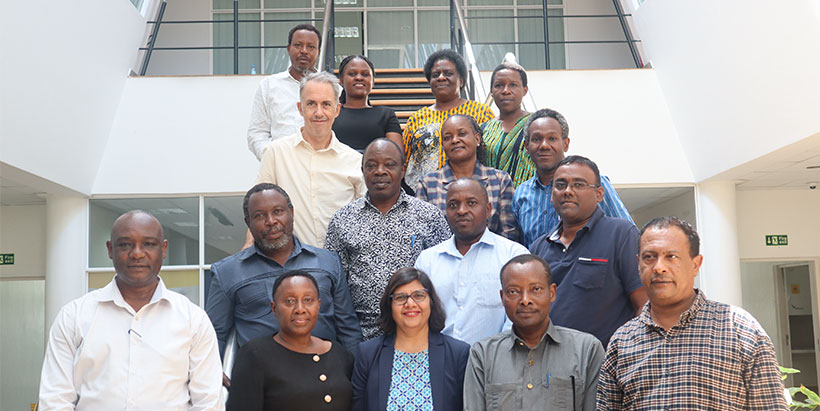
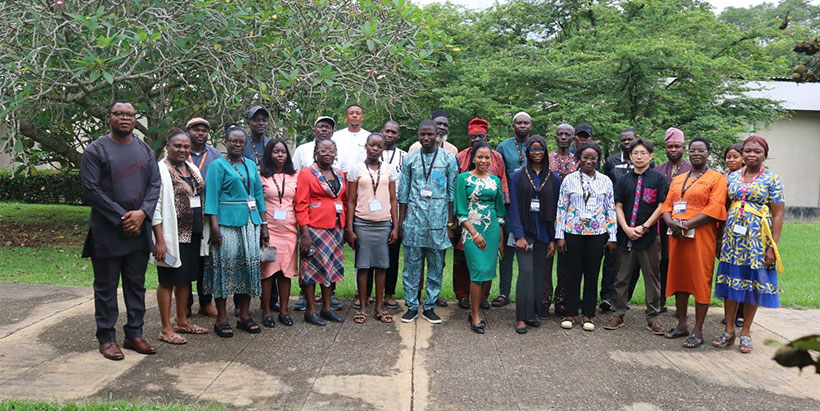
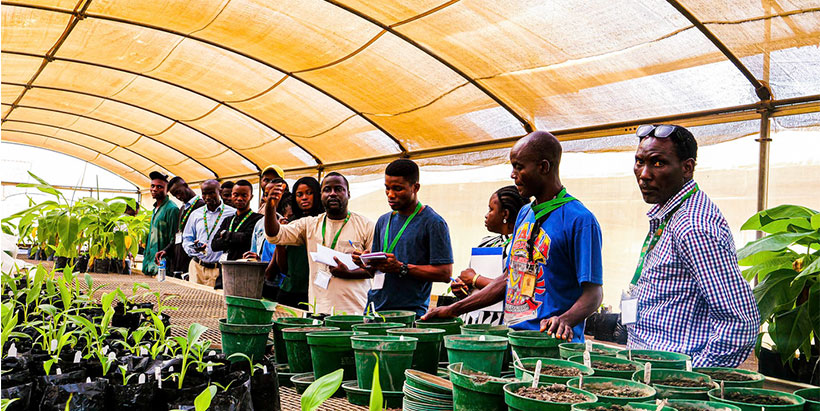
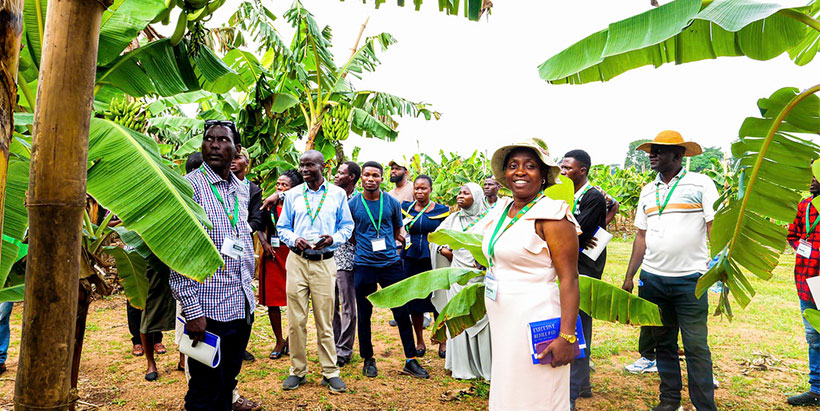
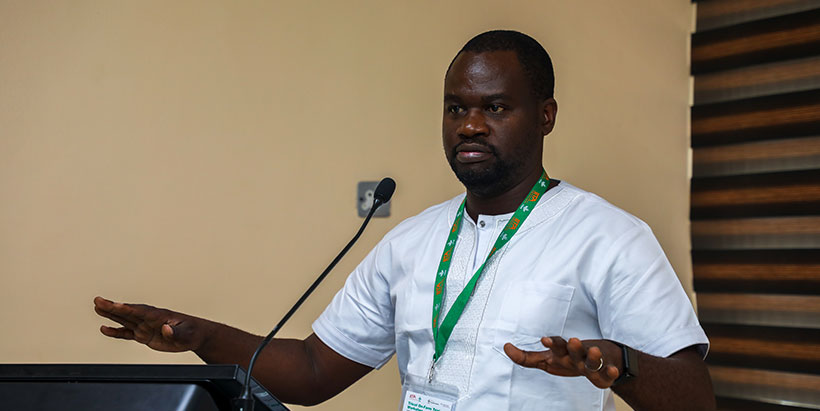
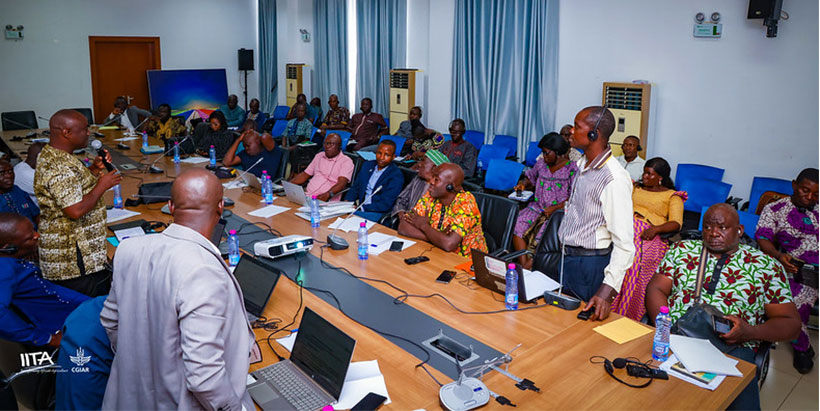
The IITA and TARI team after the meeting in Tanzania. (Photo: Gloriana Ndibalema/IITA).
To strengthen partnerships and foster agricultural research, IITA Eastern Africa hub, led by Dr Leena Tripathi, recently hosted Dr Thomas Bwana, the new Director General of the Tanzania Agricultural Research Institute (TARI). The visit provided a platform for Dr Bwana to gain insights into IITA’s ongoing projects and discuss collaborative strategies to advance Tanzania’s agricultural sector.
During the meeting, Dr Tripathi presented IITA’s core competencies, emphasizing its focus on genetic innovation, resilient agri-food systems, and systems transformation. She highlighted the hub’s work on plant health through crop improvement and seed systems, which aligns closely with TARI’s operational pillars. “When you explained TARI’s platforms, it became evident that we operate on similar frameworks. IITA collaborates with advanced institutes; for research innovation, and partner with national research organizations like TARI,” she remarked.
Discussions also centered on managing invasive plant diseases like Banana Bunch Top Disease (BBTD) and Fusarium Tropical Race 4 (TR4), which pose major threats to banana cultivation in Tanzania. Sharing updates on the progress in breeding TR4-resistant banana varieties, Dr Tripathi said joint efforts with TARI and the Tanzania Plant Health and Pesticides Authority (TPHPA) is helping to control the spread of BBTD in the country.
The importance of creating awareness and using communication to disseminate information to farmers was raised Dr Bwana suggesting the use of social media platforms like WhatsApp to connect farmers to scientists for real-time problem-solving said, “Scientists cannot be in the field every day, but if farmers are well informed about the diseases, they can easily reach out through these platforms.”
The TARI team emphasized the need to strengthen capacity-building initiatives, including skill development and refresher courses through training, scholarships, and exchange visits. “We need to improve efficiency in capacity building, particularly in areas like internships, research expertise, and effective science communication,” Dr Bwana said.
With IITA recognizing the importance of capacity development in strengthening research for development (R4D), the institute has facilitated both formal and informal training initiatives as part of its strategy to enhance food security and alleviate poverty in the region. Through its capacity development program, thousands of professionals across sub-Saharan Africa have gained valuable expertise, with countless others benefiting indirectly from the knowledge these professionals share with their communities. The objective is to enhance the capacity of partners within national agricultural research and extension systems.
Both IITA and TARI recognized the long-standing collaboration between them, while celebrating shared accomplishments and identifying areas for improvement to ensure the sustainable scaling of agricultural solutions to the smallholder farmers in Tanzania.
Reaffirming commitment to strengthening partnerships and leveraging their shared vision, both IITA and TARI will be working together to address the pressing challenges facing Tanzania’s agricultural sector and transform food systems in the country.
Contributed by Rashid Hadi.
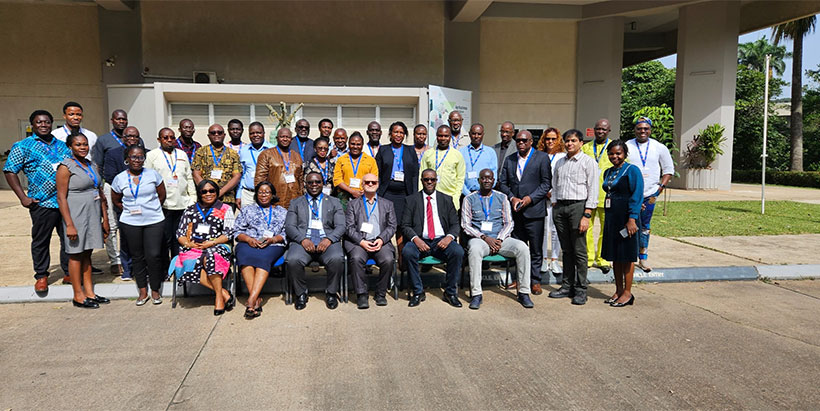
On 7 and 8 November 2024, IITA–CGIAR hosted the “Expert consultation workshop on addressing phytosanitary bottlenecks to improve germplasm exchange in Africa” at its headquarters in Ibadan, Nigeria. The workshop brought together key stakeholders, including Heads of Quarantine Agencies from nine African nations (Benin, Cameroon, Côte d’Ivoire, Ethiopia, Ghana, Kenya, Nigeria, Uganda, and Zimbabwe), representatives from the Food and Agriculture Organization Regional Office for Africa (FAORAF), CABI, and the African Union Inter-African Phytosanitary Council (AU-IAPSC).
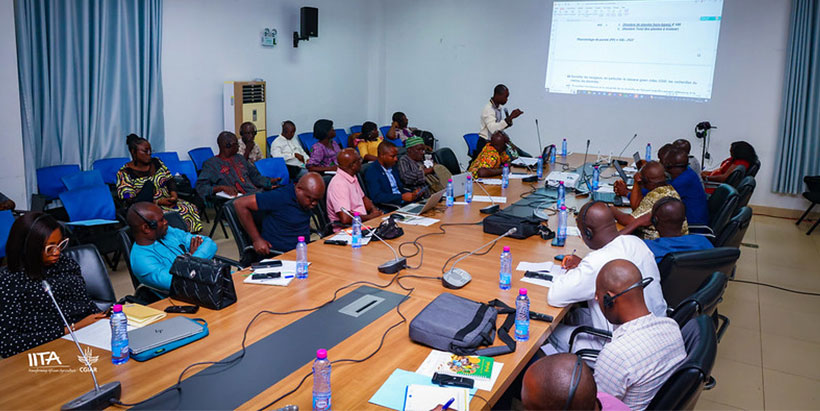
Participants from different stakeholder organisations during the workshop.
The primary aim was to address critical challenges, explore opportunities, and outline actionable steps for harmonizing protocols for germplasm exchange to enhance agricultural productivity across sub-Saharan Africa (SSA).
Dr Kenton Dashiell, IITA Deputy Director General for Partnerships for Delivery, opened the workshop, emphasizing the significance of international collaboration between CGIAR and national partners. He highlighted how access to germplasm is fundamental for research and called for stronger ties between national plant protection organizations and academia to facilitate safe transboundary germplasm movement.
The IITA Plant Health Program Lead, Dr Lava Kumar, explained the crucial role of CGIAR’s genebanks and breeding programs in global agricultural research. He detailed rigorous phytosanitary measures used by CGIAR Germplasm Health Units (GHUs) to ensure compliance with international standards and mitigate pest risks during germplasm distribution. With CGIAR facilitating approximately 1,000 annual international exchanges involving over 100 countries, Dr Kumar stressed the need to address delays caused by phytosanitary challenges, which can result in missed planting seasons and other repercussions.
Dr David Chikoye, IITA R4D Director for Resilient Agri-Food Systems, raised urgent concerns about informal germplasm exchange through porous borders. He identified this as a significant pathway for pest spread and underscored the immediate need to tackle emerging pests and diseases that threaten food security. Dr Chikoye further advocated for integrated approaches, including genetic solutions, which rely on access to germplasm.
Introducing the Plant Health Strategy for Africa (PHSA), Dr Saliou Niassy, AU-IAPSC Coordinator said this is critical to harmonize phytosanitary capacities across member states. He highlighted the importance of germplasm accessibility and improved crop varieties in building resilient agricultural systems, achieving zero hunger, and addressing climate change challenges in line with the Malabo Declaration. He conveyed the unwavering commitment of AU-IAPSC to addressing bottlenecks for safe germplasm exchange and trade on the continent.
Dr Akindele Ogunfunmilayo, Head of the Plant Quarantine Directorate of Nigerian Agricultural Quarantine Services (NAQS), speaking during the workshop said it was a timely approach towards improving germplasm distribution, and lauded IITA and CGIAR’s contributions to national and regional biosecurity and agricultural development.
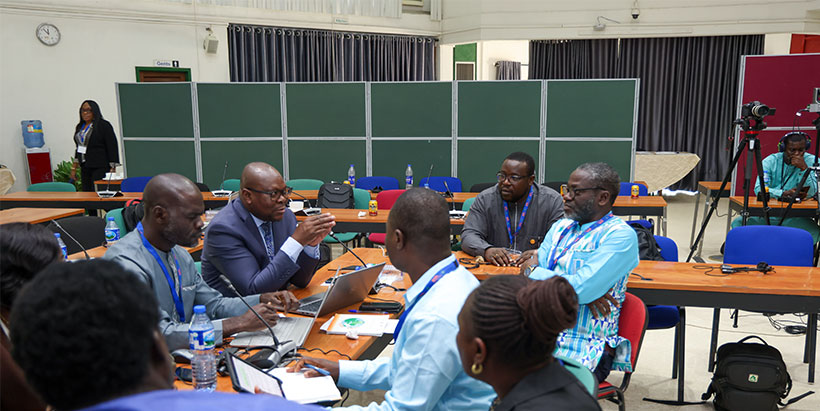
Breakout session during the consultation workshop.
The workshop sessions featured expert presentations on the opportunities and challenges associated with germplasm exchange. Participants, including quarantine regulators and plant breeders, shared insights on developing harmonized procedures for SSA.
Key highlights included:
Breeding Programs and Genebank Management:Dr John Derera (CGIAR) and Dr Mushoriwa Hapson (IITA) underscored the global impact of CGIAR’s breeding programs and international nurseries, emphasizing the need for streamlined procedures to accelerate germplasm delivery.
Germplasm Seed and Microbial Germplasm Exchange:Dr Olaniyi Oyatomi, the Manager of the IITA Seed Bank, and Dr Marie-Noelle Ndjiondjop, Head of the AfricaRice genebank, discussed genebank seed flow management, while Dr Alejandro Ortega-Beltran highlighted the role of microbial germplasm in biocontrol programs like AflaSafe.
FAO Genebanks Standards: Jean Baptist Bahama from FORAF highlighted the scope of a harmonized framework in the FAO Genebanks Standards. The seed system specialists, Dr Delphine Amah and Morufat Balogun, stressed the importance of flexible procedures for the regional exchange of clonal plant propagation materials.
Quarantine Practices and Challenges: Representatives from national quarantine agencies shared existing protocols for germplasm import and export, identifying gaps such as outdated pest lists, inadequate seed health testing capacity, and funding shortages. They also noted regionally harmonized efforts, including the East African Community (EAC) supported by KEPHIS and Southern African Development Community (SADC) initiatives. Dr Benoit Gnonlonfin from CABI shared the experience of harmonizing SPS measures in the ECOWAS region.
Systems Approach: Representatives from AfricaRice, Geoffrey Onaga; ILRI, Dawit Woubit, and IITA, Lava Kumar, shared systems approaches used in CGIAR GHUs to produce, conserve, and distribute clean germplasm in collaboration with the national plant production organizations.
The discussions converged on the pressing need for a harmonized framework to facilitate safe germplasm exchange in SSA. Expert recommendations included:
Identifying Priority Crops for Harmonization: Partners established priority crops for developing harmonized germplasm exchange protocols.
Capacity Building: Targeted training and technical support for officials in plant quarantine regulatory agencies.
Raising Awareness: Information to stakeholders on the risks of informal exchanges, best procedures used during formal exchange of germplasm seed and the benefits of standardized procedures to improve agrifood systems.
Facility Accreditation: A system for accrediting germplasm health facilities by the national plant protection organizations as per the ISPM-45.
During breakout sessions, participants developed a roadmap for implementing harmonized procedures, focusing on:
Coordinating efforts among regional and national organizations.
Addressing capacity gaps in plant quarantine organizations.
Promoting mutual recognition of phytosanitary measures among African nations.
Dr Kumar outlined a way-forward plan to implement the harmonized exchange procedures for priority crops while addressing capacity-building needs. The workshop underscored the critical importance of regional collaboration in improving germplasm exchange systems. By aligning efforts across sub-Saharan Africa (SSA), stakeholders aim to create resilient agricultural systems capable of meeting the challenges of food security, climate change, and sustainable farming. Enhanced phytosanitary measures and streamlined procedures will ensure that germplasm’s safe and efficient movement drives innovation and productivity in African agriculture.
Contributed by Anita Akinyomade and Lava Kumar
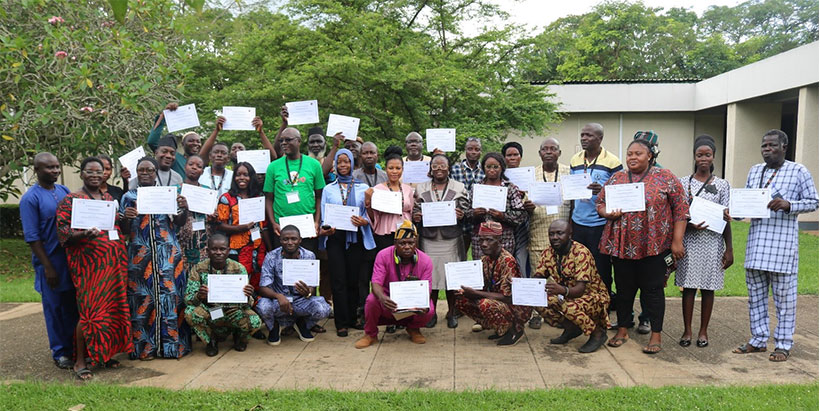
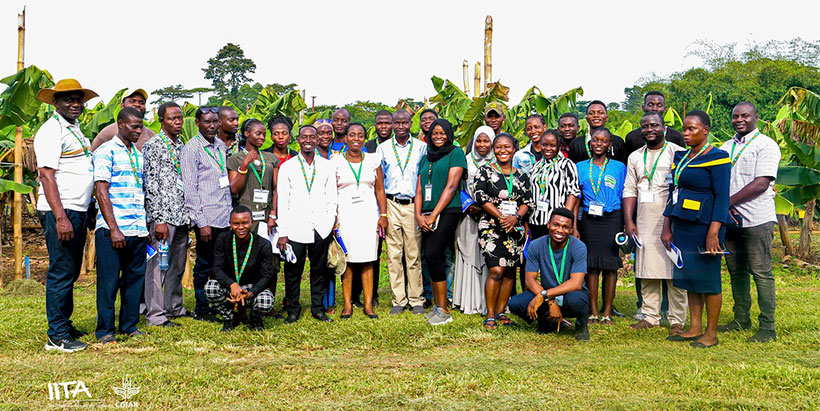
Participants with their certificates at the end of the training.
IITA-Yam Breeding Program engaged yam farmers from across southwest Nigeria in hands-on seedling and farm management training recently. This practical approach was designed to enhance smallholder farmers’ knowledge and skills on modern techniques, new technologies, and best agronomy practices to maximize land space and increase yield and income.
The training, which took place between 17 and 18 October 2024, allowed all the participants to observe, participate, and learn about various aspects of yam production and management.
The training objectives included:
Knowledge transfer: Participants were equipped with the modern skills and knowledge needed to improve productivity, adopt new technologies, and implement sustainable farming practices.
Exposure to best practices: Participants were allowed to see successful yam farming operations and learn directly from experts.
Hands-on training: Participants were provided practical demonstrations where they physically participated in the activities, ensuring they gained practical experience in yam farming techniques.
Networking opportunities: Participants were able to connect for a common goal, fostering agricultural experts, extension officers, and industry players such as seed suppliers or buyers.
Participants after the training.
The participants benefitted from a well-structured training module on Land Preparation and Soil Management, Seed Yam Selection and Preparation, Planting Techniques, Crop Management, Harvesting Techniques, Post-Harvest Management, Marketing, Field Demonstrations, Practical Sessions, Extension Support, Follow-Up and Access to Resources.
Seedling and farm management training are critical tools in helping yam farmers across the southwest region of Nigeria improve their skills, adopt modern farm technologies, and boost productivity. The training provided the participants with technical knowledge and empowered them to make informed decisions, connect with markets, and increase their income sustainably.
At the end of the training, participants were awarded an end-of-training certificate and provided with improved seed yams to help them implement the newly acquired techniques on their respective farms.
Contributed by Emmanuel Onasanya
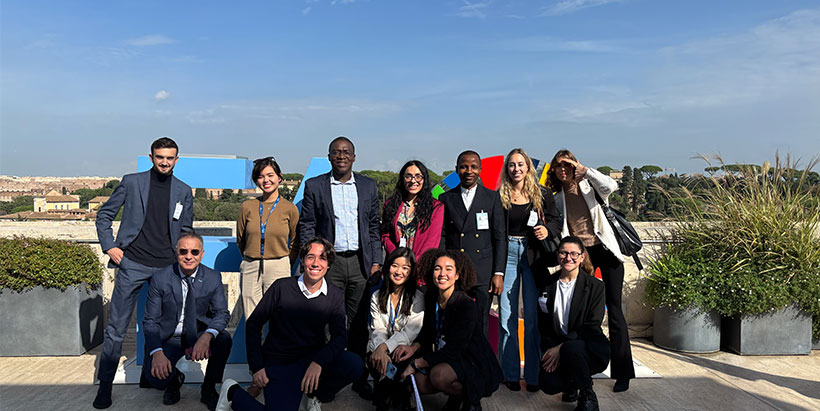
Particpants after the side event.
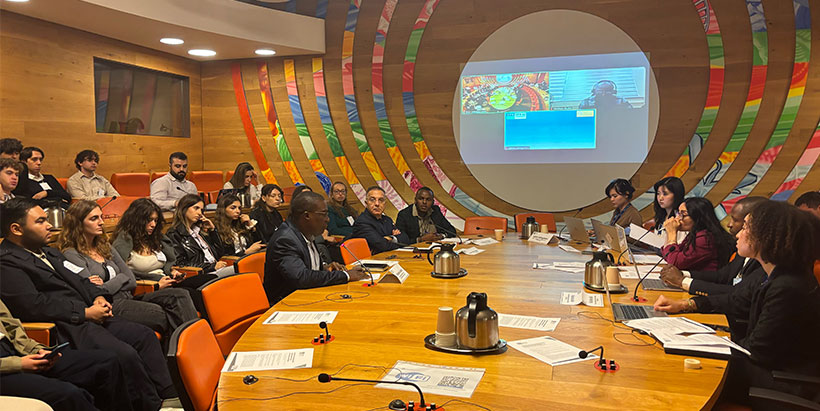
The International Fund for Agricultural Development (IFAD) and IITA co-organized a side event under the Zero Hunger Project at the 52nd Committee on World Food Security (CFS) session on 25 October at FAO headquarters in Rome. This event highlighted the crucial role of policy frameworks in facilitating technology trials, scaling innovations, and building cross-sector partnerships to address food security. Speakers included representatives from diverse stakeholder groups, such as government agencies from Nigeria and Togo, research institutions like the Conseil Ouest et Centre Africain pour la Recherche et le Développement Agricoles (CORAF) and the Institut Togolais de Recherche Agronomique (ITRA), civil society organizations like the Mazingira Institute in Nairobi, and private-sector entities. Together, they shared insights into advancing agricultural policy and accelerating technology adoption across Africa.
The event, themed “Pathways for achieving zero hunger through policy, innovation, and partnership,” was facilitated by Dr Viviane Fillipi, IFAD Program Officer, and it offered a comprehensive overview of strategies to bridge the science-policy divide. It underscored the importance of strong collaboration among government bodies, research institutions, and the private sector. Adebowale Akande, the project lead, highlighted ongoing initiatives in Nigeria and Togo under the Zero Hunger Project, focusing on the sustainable boost of agricultural productivity through technology adoption and evidence-based policy initiatives aimed at empowering decision-makers.
Participants during the side event.
Oyewale Abioye, an IITA Project Management Specialist who leads the project’s Monitoring, Evaluation, and Learning (MEL), outlined the project’s theory of change, which began with policy mapping to identify existing gaps, followed by technical assessments to capitalize on the expertise and technological resources provided by IITA and AfricaRice. These efforts laid the groundwork for developing policy options aligned with government strategies. Abioye noted that findings identified key areas for improvement, including seed system enhancements and strengthening of extension services through digital tools to empower farmers and extension agents.
Panelists from the project’s two focal countries of Nigeria and Togo include Dr Tighankoumi Gmakouba Zero Hunger Togo Cassava Focal Point; Dr Abraham Shaibu, Rice Seed System Specialist, AfricaRice; and Regina Okore, Director of Extension, Ebonyi State Ministry of Agriculture, Abakaliki, shared project insights by highlighting the impact of the project on extension services, which include the use of digital use and development of seed protocols for staple crops such as cassava, yam, and sweet potato in Togo and promoting increased productivity and sustainability. Their presentations underscored the transformative potential of targeted training and technology adoption in advancing local agricultural development.
The event also offered an opportunity to explore the challenges and potential of collaborative approaches to food security as outlined by Akande and CORAF Director of Research Dr Emmanuel Njukwe when they emphasized significant obstacles such as limited access to mechanization and the need for adaptable, context-specific technology solutions. They further stressed the importance of gender-sensitive, inclusive approaches and harmonized data collection to foster effective policy integration and broader adoption.
A recurring theme was the importance of grassroots involvement in integrating traditional knowledge and supporting smallholder farmers with accessible, practical solutions. Panelists advocated for grassroots engagement as essential to developing affordable and culturally relevant technologies that meet the needs of smallholder farmers, ensuring that agricultural innovation remains accessible and impactful at all levels.
Contributed by Oyewale Abioye
NIHORT and IITA staff after one of the field trainings.
For two transformative weeks, the IITA–CGIAR Plantain Breeding Program welcomed a team from NIHORT, marking a new chapter in advancing plantain and banana production for food security across Nigeria and Africa. The training, held from 28 October to 8 November, was designed to create a skilled professional base capable of undertaking the activities in the different stages of the plantain breeding pipeline to deliver improved varieties and high-quality planting materials to the farmers, a critical need as demand for healthy crops continues to rise.
The NIHORT participants immersed themselves in diverse learning areas, from tissue culture and macro propagation to field management and digital data capture. They gained essential skills for developing resilient plantain and banana crops through these modules. Indoor sessions offered insights into the unique characteristics of plantains, prevalent diseases, and the importance of enhancing plantain seed systems. These foundational lectures delivered by Moses Nyine (Breeder), Yao Kolombia (Pathologist) and Delphine Amah (Breeder and seed systems expert) prepared them for hands-on experience as they visited laboratories, propagator sheds, and IITA’s plantain fields under the mentorship of experts. Grouped by their primary interests, participants worked closely with specialists, learning practical techniques they would later pass on, creating a “train-the-trainer” ripple effect to expand expertise across Nigeria and beyond.
IITA staff, Temitope Ademulegun training the NIHORT staff in one of the plantain/banana breeding screenhouses.
Reflecting on the experience, participants expressed awe at the knowledge gained. One of them responded, “The field experience was awesome. We learned about the morphology of plantain, how to distinguish between plantain and banana from an early stage, how to carve (or just use prepare) suckers for macro propagation, how to select the ideal land for plantation, and which sucker is best for propagation.”
The training also introduced NIHORT to MusaBase, a global database for banana breeding that further enriches their tools for data-driven breeding practices. This development marked a new digital phase for NIHORT, as they joined the worldwide network advancing banana and plantain breeding research.
In further support, the IITA Accelerated Breeding Initiative, led by Rony Swennen, provided NIHORT with a new HP printer, five tablets, and a desktop computer to enhance their capability to record, analyze, and share valuable data in their work.
IITA Plantain Breeder, Moses Nyine training the NIHORT staff on different aspects of plantain improvement in the field.
The closing ceremony was a time of gratitude and mutual exchange of gifts. Ibitoye Dorcas Olubunmi, the Plantain and Banana Breeder at NIHORT, expressed appreciation to IITA, remarking, “Much trust has been invested into all of us. Let us go out there, be fruitful and multiply.” Delphine Amah, PROSSIVA Coordinator and Plantain Breeder at IITA-CGIAR, reinforced the partnership’s value: “We appreciate this partnership and commend your commitment and dedication throughout this training period. We assure you of our continued support—once you enter the plantain and banana breeding program, you will become a part of the family.”She added that participants can tap into the PROSSIVA package to build successful businesses from plantain and bananas, emphasizing the integral role of the participants in the partnership.
This growing partnership between IITA-CGIAR and NIHORT signifies a future ripe with potential. By equipping dedicated individuals with the knowledge and tools to sustainably propagate plantain and banana crops, the IITA-CGIAR Plantain Breeding Program sows the seeds for stronger food systems and improved livelihoods across the continent.
IITA–CGIAR hosted a two-day “Tricot on-farm trial workshop” at the institute’s headquarters in Ibadan on 4 and 5 October. The workshop was designed to enhance the implementation of soybean on-farm trials by integrating the Triadic Comparison of Technologies (Tricot) approach. This approach prioritizes farmers’ context to overcome the limitations associated with traditional trials, thereby fostering soybean productivity in Africa.
IITA Product Manager, Dean Muungani facilitating during the tricot on-farm trials workshop
IITA Product Manager for Grain Crops, Dean Muungani, introduced participants to the Tricot Trial Scheme, an innovative approach to advancing the agricultural sector. He explained that the scheme employs decentralized, real-world testing, allowing for broader geographical representation in agricultural trials. This approach ensures more representative data from diverse regions, compensating for potential variations in data quality while providing valuable insights for more targeted agricultural solutions.
As an IITA Postdoctoral Fellow in Soybean Breeding, Abush Abebe exposed the participants to an in-depth knowledge of soybean, focusing on techniques to develop high-yielding varieties and various agronomic practices.
Participants during breakout session at the workshop.
The workshop facilitated discussions identifying key collaboration areas focusing on the geographic regions for implementing Tricot on-farm trials in 2025. Participants also considered the target groups, best crop varieties, technologies to be deployed, and agroecological practices. A particular emphasis was placed on enhancing the uses of soybeans to meet the growing demand in Nigeria, ensuring the trials are aligned with both market needs and sustainable agricultural practices.
Senior Cassava Breeding Research Supervisor Bello Abolore shared success stories from recent cassava experimental designs and trial establishment. He highlighted the effective use of the Tricot approach in training, evaluation, and data collection throughout the trials. Participants were also introduced to the ODK Collect app, a digital tool used for efficient data collection in the field, further demonstrating the integration of digital solutions into agricultural research.
The workshop concluded with a practical demonstration of how to plant a soybean Tricot Trial, allowing participants to understand the process and its challenges. This interactive session, along with the forging of partnerships, was a key part of the workshop, with the overarching goal of fostering soybean productivity in Africa.
Soybean National Coordinator and NCRI Chief Research Officer Shaahu Aondover said, “It is crucial to implement strict phytosanitary measures to ensure that all planting materials are free from pathogens before their release into the country, as this is essential for safeguarding crop health, ensuring the success of soybean cultivation in Nigeria.”
Contributed by Anita Akinyomade
In a significant step towards improving the quality of seeds and strengthening the agricultural sector in Togo, IITA has successfully trained 35 seed certification officers from six regions of the country. The officers, hailing from the Maritime, Kara, Savanna, Plateau East, Plateau West, and Central regions, underwent an intensive training program focused on the certification protocols for yam, cassava, and sweet potato, key crops in Togo’s agricultural landscape. IITA’s extensive experience in agricultural improvement ensures the quality and effectiveness of the training.
One of the participants asking questions from the facilitator during the capacity building session.
The primary objective of the training was to equip certification officers with the knowledge and practical skills required to apply the newly developed seed certification protocols for these vegetatively propagated crops. These protocols are part of a broader initiative under the Zero Hunger Project, which aims to ensure that the seed system in Togo meets both national and international standards, ultimately boosting agricultural productivity and food security. During the training, the officers were guided through the technical and procedural requirements for certifying yam, cassava, and sweet potato seeds. The sessions covered a wide range of critical topics, including identifying diseases and pests of interest, the importance of maintaining appropriate spacing between varieties within farms, and the need for strategic distancing between farms to prevent the spread of diseases. The certification officers were also trained to monitor and manage seed production fields effectively, ensuring that seed quality and safety standards are followed throughout production.
Participants listening to a facilitator during the capacity building session.
After the training, the Director of Agricultural Seeds and Plants for Togo (DSP), Solisama Djobo, and IITA Project Management Specialist Oyewale Abioye addressed the officers, highlighting the importance of the training in strengthening Togo’s seed certification system and encouraged them to apply what they had learned in their daily work. Djobo expressed his confidence that the new certification protocols for yam, cassava, and sweet potato would greatly enhance seed production standards nationwide. He also emphasized the critical role of the officers in Togo’s agricultural transformation: “The success of Togo’s agricultural transformation depends on the quality of our seeds, and the work you do as seed certification officers is critical to this effort. By following the procedures outlined in these protocols, you will help ensure that our farmers have access to clean, high-quality planting materials, ultimately improving food security and farmers’ incomes.”
Abioye echoed these sentiments, stressing the need for strict adherence to the certification protocols. “This training provides the tools needed to elevate Togo’s seed systems to international standards. We expect you will take this knowledge into the field and ensure that the protocols are implemented effectively so vegetatively propagated crops such as yam, cassava, and sweet potato can thrive.”
When the certification officers return to their respective regions, they will have the knowledge and skills to ensure that Togo’s seed production meets the highest standards. Understanding the potential of this training to significantly improve Togo’s agricultural landscape, this training is expected to impact the country’s agricultural landscape, contributing to a stronger, more food-secure Togo.
Contributed by Oyewale Abioye
Participants during the launch in Togo.
IITA–CGIAR and the Ministry of Agriculture, Village Water Supply, and Rural Development, Togo, have officially launched three new seed certification protocols on 30 September under the Agricultural Transformation in Nigeria’s Federal States and Togolese Regions Towards Achieving Zero Hunger Project. This project is funded by the International Fund for Agricultural Development (IFAD), a key supporter of agricultural development initiatives worldwide. These protocols focus on yam, cassava, and sweet potato and aim to boost the quality of seeds produced in the country, ensuring a more robust agricultural system that can improve food security and enhance farmers’ incomes.
Speaking at the launch, Anani Kodjogan Kpadenou, Director of Plant Sectors, Ministry of Agriculture, welcomed Togo National Association of Certified Seeds representatives and other ministry officials. He expressed enthusiasm for the new protocols, noting that they are a significant addition to the existing ones for crops like rice and soybean. These new protocols are crucial as they ensure seed producers comply with standards and users adopt the correct practices, enhancing the quality of seeds and the robustness of the agricultural system.
IITA Business Incubation Platform CEO and Director of Private Sector Engagement, Debo Akande speaking at the launch.
Kpadenou underscored the longstanding collaboration between IITA and the Togolese government. IITA has been a key player in supporting the presidential initiative on agricultural transformation and establishing the Semi Autotrophic Hydroponics (SAH) Laboratory through the Technologies for African Agricultural Transformation (TAAT) program. This collaboration has significantly contributed to providing clean planting materials. The new protocols are expected to build on these efforts, ensuring that farmers and private sector actors are well-equipped to produce and access high-quality seeds.
Solisama Djobo, Director of Agricultural Seeds and Plants for Togo (DSP), expressed his gratitude to IITA and IFAD—Zero Hunger Project donors—for their continuous financial and technical support. He noted that the seed certification protocols conform to international standards and will improve access to quality seeds, which is essential for food security. Djobo also highlighted the inclusive nature of the protocol development process, which involved input from seed certification officers across the country and technical leadership from IITA, making them an integral part of the project.
IITA Business Incubation Platform CEO and Director of Private Sector Engagement, Debo Akande, who also leads the Zero Hunger Project, emphasized the importance of science-driven agriculture in Togo. He highlighted that agriculture is not guided by science in many countries, which affects productivity. The introduction of science-driven agriculture brings innovation, and this project focuses on strengthening the seed system in Togo. Akande’s insights aimed to enlighten the audience about the project’s innovative approach.
Participants after the launch of the seed certification protocols.
He further emphasized that Togo, and not IITA, owns the project. The protocols will guide private sector engagement in the seed sector. “This is a pilot initiative, and we hope it can be scaled up to reach more farmers. IITA will continue to offer its support, but the success of this project lies in the country’s ability to take it forward,” he added.
The new seed certification protocols mark a significant step forward in improving agricultural productivity and food security in Togo. They promise a more sustainable and prosperous future for the country’s farmers, instilling hope and optimism in all involved.
High-ranking officials from AGRA, USAID, IITA, and local administration in Rwanda visit an agrodealer in Rwamagana District, Eastern Province, Rwanda.
30 August 2024, Rwamagana District, Rwanda – The Assistant to the Administrator for the Bureau for Resilience, Environment, and Food Security (REFS) at the United States Agency for International Development (USAID) and Deputy Coordinator for Development of Feed the Future, Dina Esposito, led a delegation comprising Alliance for a Green Revolution in Africa (AGRA) President Dr Agnes Kalibata, USAID Bureau for Resilience and Food Security Chief Scientist Dr Rob Bertram, IITA Country Representative and Chief of Party of the Great Lakes Accelerated Innovation Delivery Initiative Rapid Delivery Hub (AID-I Great Lakes) Abdou (Matieyedou) Konlambigue, and Rwamagana District Mayor Mbonyumuvunyi Radjab to visit some of AID-I Great Lakes Project’s sites in Rwanda to assess firsthand the progress being made to enhance Rwanda’s seed systems.
The visitors directly engaged with scaling partners, including Emma Uwera, a seed entrepreneur and owner of I&J Harvest Ltd, and other agrodealers. They were also shown the Rwanda Agriculture and Animal Resources Development Board (RAB) seed certification processes.
Emma Uwera, standing in front (in a white top), explains her company’s role in improving the availability, adoption, and sustainability of the seed system in Rwanda.
The visitors commended the project’s role in improving the livelihoods of smallholder farmers through access to disease-resistant, nutrient-rich seeds and scaling sustainable practices across the country.
The delegation had lively and extensive interactions with AID-I Great Lakes scaling partners across various levels, giving them on-the-ground insights into the tangible and transformative support provided by Feed the Future/USAID and the project’s profound effect on improving the livelihoods of some of Rwanda’s smallholder farmers.
Emma narrated the process of producing high-quality bean seeds and the pivotal role of AID-I Great Lakes in expanding her business to several new locations in Rwanda. This expansion has not only increased seed accessibility for farmers, but also promoted the adoption of good agronomic practices.
She works closely with RAB, acquiring early-generation seeds to produce clean seeds that are distributed to farmers through agrodealers across different districts. Recognizing the challenge of persuading agrodealers to stock bean seeds owing to low market demand and lack of subsidies, Emma has established on-site innovative show-and-tell, a proven effective marketing tool through demonstration plots near agrodealer shops. These plots showcase the superior quality and yield of the new seeds, enabling farmers to make informed purchasing decisions—knowing what to expect regarding crop performance and management, including optimizing production.
Highlighting the potential impact of these efforts, Konlambigue underscored the importance of replacing old seeds with disease-resistant varieties rich in nutrients like iron and zinc, which also promise higher yields.
RAB Director General Dr Telesphore Ndabamenye expressed optimism about the laboratory’s progress and acknowledged the critical role of the private sector in expediting seed testing and certification through collaboration with RAB.
At the RAB-RICA seed testing laboratory: (left to right) Dr Telesphore Ndabamenye, Director General of RAB; Dr Rob Bertram, Chief Scientist, USAID’s Bureau for Resilience and Food Security; Mark Cyubahiro Bagabe, PhD, Director General of RICA; Dina Esposito, Assistant to the Administrator for the Bureau for Resilience, Environment, and Food Security (REFS), USAID and Feed the Future Deputy Coordinator for Development; Fidele Nizeyimana, Seed Systems Expert, AGRA; Jessie Snaza (partially hidden), Economic Growth Deputy Office Director at USAID; Jessica Torrens-Spence, Director of the Economic Growth Office, USAID/Rwanda and Burundi; Adam Gerstenmier, Chief of Party USAID/Partnership for Inclusive Agriculture Transformation in Africa (PIATA) and Chief of Strategic Initiatives at AGRA; and Martin Niyondora, a laboratory technician explaining the seed certification process to the delegation.
Esposito praised AID-I Great Lakes collaborative efforts: “The work being done here is a model of what can be achieved through partnership and innovation. We must continue to focus on scalability, ensuring that this success is replicated beyond the project’s timeframe and made sustainable in the long run for farmers and seed entrepreneurs.”